|
India - A Spiritual Giant
Lin
Yutang
(1895-1976) Chinese
scholar, author
of Wisdom of China and India, has
said:
"India produced too much religion and China too little." A
trickle of Indian religious spirit overflowed to China and inundated the whole
of Eastern Asia. It would seem logical and appropriate that any one suffering
from a deficiency of the religious spirit should turn to India rather than to
any other country in the world."
It is apparent that only in India is
religion still a living emotion. "
(source: The
Wisdom of China and India - By Lin Yutang Random House September 1955 ASIN 0394607597 p. 3-4)
J. P. Couchoud has
observed:
India has "man gone to the farthest
limit of his religious faculty. Consequently, religious tales is one of India's
richest traditions." in
the book Asiatic Mythology - J. Hackin Crescent
Books Place of Publication: New York p. 115).
(For more refer to chapter on India
and China). For more
refer to chapter on Greater
India: Suvarnabhumi and Sacred
Angkor
Top of Page
India's Fabulous legends:
It has long been recognized that India's
tales of gods and goddesses are closely related to those of ancient Greece, Rome
and the Nordic and Germanic peoples. So similar are they, indeed that even the
days of the week, both in India and in the West, continue to be named after the
same deities, who represented the same planets: Sun for Sunday, Moon for Monday,
Mars for Tuesday, Mercury for Wednesday (Woden's day in Norse legend), Jupiter
for Thursday (Thor's day in Scandinavia; Brihaspati,
or Jupiter's day in India),
Venus for Friday, and Saturn for Saturday.
While on a tour of the Parthenon, a
guide will tell you that the Greek legends came from India......
(source: The
Hindu Way of Awakening - By J Donald Walters p. 46 - 47). For
more refer to chapter on India
and Greece and Hinduisms
influence).
Top of Page
Democracy on Ashoka's Rock Edict
Ashoka,
(273 BC - 232 BC) the most trusted son of Bindusara and the grandson of
Chandragupta Maurya, was a brave soldier. He was the most famous of the Mauryan
kings and was one of the greatest rulers of India. During his father's reign, he
was the governor of Ujjain and Taxila. Having sidelined all claims to the throne
from his brothers, Ashoka was coronated as an emperor. Ashoka
extended the Maurya Empire to the whole of India except the deep south and the
south-east, reaching out even into Central Asia.
For propagation of Buddhism, he started inscribing edicts on rocks and pillars
at places where people could easily read them. These pillars and rocks are still
found in India, spreading their message of love and peace for the last two
thousand years.
A ringing declaration of Mauryan Emperor, Ashoka at
the conclusion of his first rock edict:
esahi vidhi ya
iyam: dhammena palana, dhammena vidhane,
dhammena sukhiyana, dhammena gotiti.
The word dhamma or dharma is usually translated
"law'' although it
could also mean "tradition'' or "truth''. If we choose the common meaning,
Ashoka's declaration becomes:
For this is my rule:
government by the law, of the law;
prosperity by the law, protection by the law.
This sounds like the invocation in Lincoln's
Gettysburg address!
Top of Page
Antiquity and Origin of the
Term ‘Hindu’
The anti-Hindu
historians like Romila Thapar and D.N. Jha
have opined that the word ‘Hindu’ was given currency by the Arabs in the 8th
century. They however, do not explain the basis of their conclusion nor do they
cite any evidence in support of their claim. Even Arab Muslim writers do not
make such an extravagant claim.
Another theory propounded
by European writers is that the word
‘Hindu’ is a Persian corruption of ‘Sindhu’ resulting from the Persian
practice of replacing ‘S’ with ‘H’. Even here, no evidence is cited. In
fact the word
Persia
itself contains ‘S’ which should have become ‘Perhia’ if this theory
was correct.
Epigraphic
Evidence
The
Hamadan
,
Persepolis
and Naqsh-I-Rustam Inscriptions of Persian monarch Darius mention a people
‘Hidu’ as included in his empire. These inscriptions are dated between
520-485 B.C. This fact establishes that the term ‘Hi(n)du’ was current more
than 500 years before Christ.
Xerexes, successor of
Darius, in his inscriptions at
Persepolis
, gives names of countries under his rule. The list includes ‘Hidu’.
Xerexes was ruling between 485-465 B.C. On a tomb in
Persepolis
, in another inscription assigned to Artaxerexes (404-395 B.C.), there are
three figures above which are inscribed ‘iyam Qataguviya’ (this is
Satygidian), ‘iyam Ga(n)dariya’ (this is Gandhara) and ‘iyam Hi(n)duviya’
(this is Hi(n)du). The Asokan inscriptions (3rd century B.C.) repeatedly use
expressions like ‘Hida’ for ‘
India
’ and ‘Hida loka’ for ‘Indian nation’.
‘Hida’ and its
derivative forms are used more than 70 times in the Ashokan inscriptions. For
instance in the Jaugadha, separate rock edict II, the lines 3 & 4, read:
All men are my people. I
desire for my people that they may be provided with all welfare and happiness. I
desire for my people, including the people of Hind and beyond and I desire for
all men.
The Edict further, says in
lines 7 & 8 Dhamma may be followed and the people of Hind and beyond
may be served. The Ashokan inscriptions establish the antiquity of the name
‘Hind’ for
India
to at least third century B.C.
Evidence
from Pahlvi Avesta
In the Avesta, Hapta-Hindu
is used for Sanskrit Sapta-Sindhu, the Avesta being dated variously between
5000-1000 B.C. This indicates that the term ‘Hindu’ is as old as the word
‘Sindhu.’ Sindhu is a Vedik term used in the Rigveda. And therefore,
‘Hindu’ is as ancient as the Rigveda.
In the Avestan Gatha ‘Shatir’,
163rd Verse speaks of the visit of Veda Vyas to the court of Gustashp and in the
presence of Zorashtra, Veda Vyas introduces himself saying ‘man marde am Hind
jijad.’ (I am man born in ‘Hind.’) Veda Vyas was an elder contemporary of
Shri Krishna (3100 B.C.).
Greek
Usage
The Greek term ‘Indoi’
is a softened form of ‘Hindu’ where the initial ‘H’ was dropped as the
Greek alphabet has no aspirate. This term ‘Indoi’ was used in Greek
literature by Hekataeus (late 6th century B.C.) and Herodotus (early 5th century
B.C.), thus establishing that the Greeks were using this derivative of
‘Hindu’ as early as 6th century B.C.
Note: The anti-Hindu historians
like Romila Thapar and D.N. Jha have opined that the word ‘Hindu’ was given
currency by the Arabs in the 8th century. They however, do not explain the basis
of their conclusion nor do they cite any evidence in support of their claim.
Even Arab Muslim writers do not make such an extravagant claim.
The
Hebrew Bible
The Hebrew bible uses
‘Hodu’ for
India
, which is a Judaic form of ‘Hindu’. The Hebrew Bible (Old Testament) is
considered earlier than 300 B.C. Today’s Hebrew spoken in
Israel
also uses Hodu for India.
The
Chinese Testimony
The Chinese used the term
‘Hien-tu’ for ‘Hindu’ about 100 B.C.11 While describing movements of the
Sai-Wang (100 B.C.), the Chinese annals state that the Sai-Wang went towards the
South and passing Hien-tu reached Ki-Pin.
Later Chinese travellers
Fa-Hien (5th century A.D.) and Huen-Tsang (7th century A.D.) use a slightly
modified term ‘Yintu’ but the affinity to ‘Hindu’ is still retained.
This term ‘Yintu’ continues to be used till today
Pre-Islamic
Arabic Literature
Sair-ul-Okul is an
anthology of ancient Arabic poetry available in the Turkish library
Makhtab-e-Sultania in
Istanbul
. In this anthology is included a poem by Prophet Mohammed’s uncle Omar-bin-e-Hassham.
The poem is in praise of Mahadev (Shiva), and uses ‘Hind’ for
India
and ‘Hindu’ for Indians. Some verses are quoted below:
Wa Abaloha ajabu armeeman
Mahadevo Manojail ilamuddin minhum wa sayattaru
If but once one worships Mahadev with
devotion, One will attain the ultimate salvation.
Wa sahabi Kay yam feema
Kamil Hinda e
Yauman
,
Wa
Yakulam na latabahan foeennak Tawajjaru. (Oh
Lord grant me but one day’s sojourn in Hind, Where one can attain spiritual
bliss.)
Massayare akhalakan
hasanan Kullahum, Najumam aja at Summa gabul Hindu.
(But one pilgrimage there gets one all merit,
And the company of great Hindu saints.)
The same anthology has
another poem by Labi-bin-e Akhtab bin-e Turfa who is dated 2300 years before
Mohammed i.e. 1700 B.C. This poem also uses ‘Hind’ for
India
and ‘Hindu’ for Indian. The poem also mentions the four Vedas Sama, Yajur,
Rig and Athar. This poem is quoted on columns in the Laxmi Narayan Mandir in
New Delhi
, popularly known as Birla Mandir (
Temple
)
Some verses are as
follows:
Aya muwarekal araj
yushaiya noha minar Hinda e, wa aradakallha manyonaifail jikaratun. (Oh
the Divine
land
of
Hind
, blessed art thou, thou art chosen land showered with divine knowledge.)
Wahalatjali Yatun ainana
sahabi akhatun jikra, Wahajayahi yonajjalur rasu minal Hindatun. (That
celetial knowledge shines with such brilliance, Through the words of Hindu
saints in fourfold abundance.)
Yakuloonallaha ya ahlal
araf alameen kullahum, fattabe-u jikaratul Veda bukkun malam yonajjaylatun. (God
enjoins on all, follow with devotion, path shown by Veda with divine percept.)
Wahowa alamus Sama wal
Yajur minallahay Tanajeelan, Fa e noma ya akhigo mutibayan Yobasshariyona jatun.
(Overflowing with knowledge are Sama and Yajur
for Man, Brothers, follow the path which guides you to salvation.)
Wa isa nain huma Rig Athar
nasahin ka
Khuwatun
,
Wa
asanat Ala-udan wabowa masha e ratun (Also
the two Rig and Athar(va) teach us fraternity, taking shelter under their
lusture, dispels darkness.)
‘Hindu’
in Sanskrit Literature
Another doubt created by
the modern day anglicized historian is that the term ‘Hindu’ is not found
used in Sanskrit literature. This misconception can be dispelled by quoting from
Sanskrit works15 : Meru tantra (es#rU=) (4th to 6th century A.D.), a Shaiva
text, comments on ‘Hindu’.
Hindu
is one who discards the mean and the ignoble.
The same idea is expressed
in Shabda Kalpadruma.
Brihaspati Agam says,
Starting
from Himalaya up to Indu waters is this God-created country
Hindustan
Parijat Haran Natak
describes Hindu as,
Hindu is one who with
penance washes one’s sins and evil thoughts and with arms destroys one’s
enemies.
Madhava Digvijaya states,
One who meditates on Omkar
as the primeal sound, believes in karma & reincarnation, has reverence for
the cow, who is devoted to Bharat, and abhors evil, is deserving of being called
Hindu.
Vriddha Smriti defines
Hindu as,
One who abhors the mean
and the ignoble, and is of noblebearing, who reveres the Veda, the cow, and the
deity, is a Hindu.
Similarly other Sanskrit
works which use the term ‘Hindu’ are, Kalika Puran, Bhavishya Puran, Adbhut
Kosh, Medini Kosh, Ram Kosh etc. Even Kalidas has used a derivative form ‘Haindava.’
‘Hindu’
and ‘Sindhu’
Another theory says that
‘Hindu’ originated from the Persian practice of replacing ‘S’ with
‘H’. This does not seem to be true is evident from the fact that Sindh has
not become Hind and both Sindh and Hind exist in Persian as well as Arabic. The
inscriptions of Darius and Xerexes which describe
India
as Hi(n)du, also use the term ‘Sugd’ for Sogdiana. This ‘Sugd’ should
have become ‘Hugd’ as per this theory. The Pahlvi inscription of Shahpur II,
uses ‘S’ in Shakastan and Tuxaristan.
But it cannot be denied
that Hindu is a form of Sindhu. It needs to be realised that this change from S
to H is common in Saurashtra where Sorath becomes Horath, Somnath becomes
Homnath and so on. The form Hindu is therefore, likely to have come from
Saurashtra. It should also be noted that as per Nirukta rules of grammar, in the
Vedik language, replacement of S with H is permitted
Conclusion
Epigraphic evidence takes
the antiquity of ‘Hindu’ back to at least 500 B.C. Use of ‘Hindu’ as
part of ‘Hapta-Hindu’ in the Avesta suggests that ‘Hindu’ is as old as
‘Sindhu’ and therefore, belongs to the Vedic age. Regarding the origin of
‘Hindu’ from ‘Sindhu’, the Saurashtran practice of pronouncing ‘H’
in place of ‘S’ provides the answer.
(source: Antiquity
and Origin of the Term ‘Hindu’
- By Dr. Murlidhar H.
Pahoja).
Top of Page
Cultural Unity of India
According to Jawaharlal
Nehru: "Right from
the beginning, culturally India has been one, because she had the same
background, the same traditions, the same religions, the same heroes and
heroines, the same old tales, the same learned language (Sanskrit), the village
panchayats, the same ideology, and polity. To the average Indian the whole of
India was a kind of punya-bhumi
- a holy land - while
the rest of the world was largely 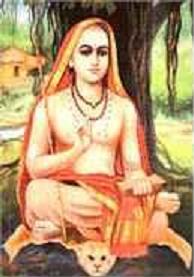 peopled by mlechchhas and barbarians.
Sankaracharya
chose the four corners of India for his maths,
or the headquarters of his order of sanyasins, shows how he regarded India as a
cultural unit. And the great success which met his campaign all over the country
in a very short time also shows how intellectual and cultural currents traveled
rapidly from one end of the country to another."
(source: Glimpses
of World History - By Jawaharlal Nehru
p. 129).
According to Ronald
B. Inden: " The
unity underlying the obvious diversity of India may be summed up in the word
"Hinduism."
(source: Imagining
India - By Ronald B. Inden
p. 86)
Dr. S Radhakrishnan: "In spite of the divisions, there is an inner cohesion among the Hindu society
from the Himalayas to the Cape Comorin."
(source: The
Hindu View of Life - By Sir. Sarvepalli Radhakrishnan
p. 73-77).
Cultural unity seems far more enduring than
any artificial geographic or political unity.
Girilal Jain,
late editor of Times of India: " It is about time we recognize that we are
not a nation in the European sense of the term, that is, we are not a fragment
of a civilization claiming to be a nation on the basis of accidents of history
which is what every major European nation is. We are a people primarily
by virtue of the continuity and coherence of our civilization which has survived
all shocks. And though inevitably weakened as a result of foreign invasions,
conquests and rule for almost a whole millennium, it is once again ready to
resume its march."
(source:
Hindu
Phenomenon - By Girilal Jain
South Asia Books 1998 ISBN 8174760105 p. 21). For more refer to chapter on Glimpses
VIII).
For
more refer to chapter on Greater
India: Suvarnabhumi and Sacred
Angkor
Top of Page
Tansen - One of Nine Jewels
 Tansen
is considered to be one of the greatest musicians that ever lived. He was the
court musician of the famous Mogul Emperor Akbar (16th century). He
was so highly valued in the court that he was called one of the "Nine
Jewels" in his court (navarathna). Tansen
is considered to be one of the greatest musicians that ever lived. He was the
court musician of the famous Mogul Emperor Akbar (16th century). He
was so highly valued in the court that he was called one of the "Nine
Jewels" in his court (navarathna).
The details of Tansen's life are incomplete. He
was born in a Hindu community and had his musical training under the great Swami
Haridas. He then went to the court of the Raja Ram Baghela, a great patron
of the arts. From there he migrated to the court of Akbar. It
is said that Tansen could work miracles with his singing. This is
called nada siddha in Sanskrit. He is supposed to have
acquired such supernatural abilities through the association with the saintly
Swami Haridas. It is said that on occasion he could create rain by
singing the monsoon rag Megh Malhar. It is also said that he could create fire by
singing rag Dipak.
Many rag are ascribed to Tansen. Such rag as Mian ki Malhar, Mian ki Todi and Darbari Kanada are the most
famous. Today his followers are refered to as "Senia Gharana"
Tansen,
the court musician of Emperor Akbar, once plunged the palace precincts in
darkness by chanting a night raga, or melody, at Akbar's request, while the sun
was still high in the sky.
(For more refer to chapter on Hindu
Music).
Top of Page
Aurangzeb's great mosque on Benaras Ghat:
 In the eighteenth century, Aurangzeb's
great mosque above Panchganga ghat dominated the Benaras waterfront. Built on
the site of a vast Hindu temple it helped explain the dearth of pre-Islamic
architecture in the sacred city. Yet Benaras remained a center of Hindu
scholarship where the first Orientalists sought the keys to India's past. In the eighteenth century, Aurangzeb's
great mosque above Panchganga ghat dominated the Benaras waterfront. Built on
the site of a vast Hindu temple it helped explain the dearth of pre-Islamic
architecture in the sacred city. Yet Benaras remained a center of Hindu
scholarship where the first Orientalists sought the keys to India's past.
(source:
India Discovered - By John Keay HarperCollins
ASIN 0002178591 May 1992 p. 32).
Babri Masjid - A
Symbol of slavery ?
The disputed structure at Ayodhya
was a "symbol of slavery" and an "insult to the nation" as
it was known by the name of an "aggressor."
The example of Rhodesia (now
Zimbabwe) which changed the names of buildings, cities and roads after gaining
independence, shows that Rhodesians did this despite the fact that their
erstwhile (White) rulers belonged to the same religion....
(For more refer to chapter on Islamic
Onslaught and Glimpses
VIII). For more refer to
chapter on Greater India:
Suvarnabhumi and Sacred
Angkor
Watch History
of Ayodhya - videogoogle.com.
Top of Page
Christian Missionaries damaged Easter
Island History
Missionaries
did more damage to the Easter island's history than even the Peruvian slave
traders, which carted off most of the island's population. Those who escaped by
hiding in the island's many caves were "saved" by these missionaries,
who proceeded to destroy all the islander's wooden sculptures, religious
artifacts and most importantly, the Rongo- Rongo
tablets, which contained a
record of the lost language of the Rapa Nui. So few of these tablets remain that
no one has been able to decipher them satisfactorily.
(For more refer to
chapter on India
on Pacific Waves).
Infamous British Jail or Kala Pani
Once the capital of the group of islands strewn in this part of the Bay of
Bengal, it is home to the (in) famous Cellular Jail or the Kala Pani, now declared a National Monument.
 In
1788 AD, the East India Company, in the process of consolidating their foothold
in India, summoned the services of Lieutenant Archibald Blair of the Navy,
handing him a crisp, short brief - to discover, survey and recommend available
sites to which revolutionaries, seditionists and later, convicts could be
deported. After a year of scouting in the Bay of Bengal, Lieutenant Blair found
an island and named it Port Cornwallis (now Port Blair). He found yet another
small island located on the eastern entrance of Port Blair and called it Ross
Island. In
1788 AD, the East India Company, in the process of consolidating their foothold
in India, summoned the services of Lieutenant Archibald Blair of the Navy,
handing him a crisp, short brief - to discover, survey and recommend available
sites to which revolutionaries, seditionists and later, convicts could be
deported. After a year of scouting in the Bay of Bengal, Lieutenant Blair found
an island and named it Port Cornwallis (now Port Blair). He found yet another
small island located on the eastern entrance of Port Blair and called it Ross
Island.
In 1857, as more and more areas of India joined the
rebellion against the East India Company, in what was the first Indian struggle
for Independence, the British found it difficult to deal with the surging number
of rebels. In an attempt to douse the blazing
flames of nationalism, they thought it prudent to segregate them from the rest
of the population. A committee was set up to survey and report on the
establishment of a penal settlement in the Andaman Islands. Dr
James Patterson Walker, an experienced jail superintendent, with four other
European officers, 773 convicts, an Indian overseer Muttan Dass, two doctors -
Nawab Khan and Karim Baksh - and a guard of 50 men left Calcutta on 4 March,
1858. This lot formed the first group of penal settlers in the Andamans.
Immediately upon arrival, Dr Walker put the convicts,
still in chains and fetters, to work. Crude grass and bamboo barracks were
constructed for the convicts and thick forests ordered to be cleared. Due to
their restricted movement and falling trees, many convicts perished. About 86
convicts, recaptured while escaping, were executed by hanging within a single
day and their bodies buried together with their iron fetters.
(source: http://www.indiagov.org/perspec/sept99/ross.htm)
 Veer Vinayak
Damador
Savarkar (1883–1966)
Barrister, Indian patriot, revolutionary,
hero of freedom struggle and author of
Six
Glorious Epochs of Indian History. In
1911 he was sentenced to life imprisonment on the Andaman Islands. This is the
site where whippings used to take place, all under the supervision of the
Anglo-Indian jailors, the room where Savarkar was locked up for so many years,
the room where prisoners were hanged three at a time and the hole through which
the bodies were removed outside of the prison wall to be cast into the sea, are
all there. It was here that Savarkar was incarcerated along with thousands of
freedom fighters, remains a symbol of indescribable colonial cruelty as also of
freedom-loving humanity's undying spirit of resistance. After spending 16 years
in Andamans, Savarkar was transferred to the Ratnagiri jail and then kept under
a house arrest. Veer Vinayak
Damador
Savarkar (1883–1966)
Barrister, Indian patriot, revolutionary,
hero of freedom struggle and author of
Six
Glorious Epochs of Indian History. In
1911 he was sentenced to life imprisonment on the Andaman Islands. This is the
site where whippings used to take place, all under the supervision of the
Anglo-Indian jailors, the room where Savarkar was locked up for so many years,
the room where prisoners were hanged three at a time and the hole through which
the bodies were removed outside of the prison wall to be cast into the sea, are
all there. It was here that Savarkar was incarcerated along with thousands of
freedom fighters, remains a symbol of indescribable colonial cruelty as also of
freedom-loving humanity's undying spirit of resistance. After spending 16 years
in Andamans, Savarkar was transferred to the Ratnagiri jail and then kept under
a house arrest.
(For more information on please visit Veer
Savarkar Remembering
Veer Savarkar and Veer
Savarkar Vindicated: A reply to a Marxist Calumny - By J. D. Joglekar). (For more refer to:
History
of Andaman Cellular Jail).
On 26th Feb 2003, Swatantrya Veer Savarkar's
PunyaTeethi day, when his portrait was unveiled in Lok-Sabha.
Prime
Minister Indira Gandhi said " Savarkar
was a great figure of contemporary India and his name is by-word for daring and
patriotism. He was cast in a mould of a classic revolutionary and countless
people drew inspiration from him."
 In
1970 she had released a postal stamp recognizing the sacrifice and valor
of Veer Savarkar to the national struggle and she personally ordered a
documentary to be made on his life. She also donated Rs 11,000 from her personal
account to the Veer Savarkar Trust. In
1970 she had released a postal stamp recognizing the sacrifice and valor
of Veer Savarkar to the national struggle and she personally ordered a
documentary to be made on his life. She also donated Rs 11,000 from her personal
account to the Veer Savarkar Trust.
Please refer to Swatantrya Veer Savarkar: The Eternal
Hero - By Dhananjay Kheer Sangam Books Ltd, London,
2nd Ed, 1988, 569 pages ISBN 086132 182 0
The Andaman Cellular
Jail is a historic monument that symbolises British tyranny. It was
here that the revolutionaries of 1857, the Wahabi Movement, the Moplah Uprising,
the Gadar Party, the Lahore Conspiracy Case and Chittagong Revolt were dumped by
the British, in the hope that cut off from the mainland, they would be dead and
forgotten. "The 13x8 feet cells where we were put in solitary
confinement,'' "had moss on the walls and insects crawling all over
the floor. We were fed rotis with insects and boiled wild grass as sabzi.
We were given stored rain water to drink and even that was rationed. When we
went on a hunger strike they force-fed us through tubes, as a result of which
many died.'' says 89-year-old veteran freedom fighter and revolutionary,
Vishwanath Mathur.
(source: Kala
Pani old-boys Net Work - For more refer to chapter on Glimpses
V).
Top of Page
Nation, Secularism and
Hinduism
According to
Girilal
Jain, editor of
The Times of India, says:
"The nation concept is the product
of developments over centuries in Europe. It does not represent only the triumph
of the province over the priest; it represents the triumph of an altogether new
approach to life. Along with its twin brother, secularism, it represents the
triumph of matter over spirit, and of reason over intellect which the Hindus
call buddhi. The nation is a new god. Millions and millions have been killed and
maimed in the name of the nation. This god could not have arisen without the
help of its twin brother, secularism. A nation must by definition be secular
because it can rise only on the corpse of religion.
Communism is an unnecessary ugly face of
secularism, just as it is an unnecessary crude face of modern Western
civilization as such, that is gross materialism unrelieved by the residue of
Christianity in the shape of humanism." Nazism, Fascism and Communism have
been expressions of the same Semitic spirit in the secular realm.
The concept of nation itself is, in fact,
alien to the Hindu temperament and genius. Such a concept is essentially Semitic
in character even if it arose in western Europe in the eighteenth century. The
nation concept too emphasizes the exclusion of those who do not belong to the
charmed circle (territorial or linguistic or ethnic) as much as it emphasizes
the inclusion of those who fall within the circle. By contrast, the essential
spirit of Hinduism is 'inclusivist' and not 'exclusivisit' by definition. In
that sense the Hindu fight is anxious to renew themselves in the spirit of their
civilization and the state and the political and intellectual class trapped in
the debris in which the British managed to bury our people before they
left."
(source:
Hindu
Phenomenon - By Girilal Jain
South Asia Books 1998 ISBN 8174760105 p. 134-135).
For
more refer to chapter on Greater
India: Suvarnabhumi and Sacred
Angkor
Top of Page
Can Savitri be a Muslim name?
Certainly not in India. But Muslim Indonesians
have plenty of Savitris, Gayathris, Leelas, Pushpas and even Seetas among
themselves. Indonesia adopted Islam as a faith but continued to hold on to
the vestiges of Hindu culture. So you have Sukarnoputri for the current
vice president. Bhasa Indonesia has umpteen number of Sanskrit words. Cultural
aspects of Diwali and Holi are still observed by Indonesians. Pakistani Punjabis
celebrate Basant Panchami and Lori. Bangladeshi women still sport bindi and
sindoor and wear saris. In South India, Kali poth
is Muslim equivalent for Hindu manglasutra. It
symbolizes
suhaag. History
and cultural past cannot be disowned.Cultural pluralism broadens the vision,
fosters creativity, increases tolerance and builds bridges with others.
(source:
http://www.islamicvoice.com/december.2000/viewpoint.htm#sav).
Top of Page
Cultural
Orphans of India? or Pakistan-Identity crisis?
In my opinion the division of
the Indian sub-continent was the biggest blunder in the history of mankind.-- Exiled
leader of Muttahida Quami Movement, Altaf Hussain.
Pakistan came into being on
August 14, 1947 by order of the Governor-General of undivided India. A state was
created overnight by government with the concurrence of political leaders. Well,
nations are not invented like a machine, or a pharmaceutical cure for a disease.
Nations evolve over a large span of historical period
in distinct geographical areas. They grow on a common soil and climate. They
have a common heritage, culture and art, language and beliefs, racial affinity
and shared social norms and traditions. They have a common identity.
The Muslims came to India as conquerors from Afghanistan and central Asia and
installed their kingdom as conquerors. Mohammad Ghori invaded India for its
fabulous wealth. Babur came as a fortune seeker after losing his kingdom of
Farghana in central Asia. These conquerors were joined by other Muslim
adventurers and fortune seekers from Arab lands, central Asian countries,
Turkey, Iran and remote corners of the Muslim world. The process of immigration
from foreign Muslim lands continued for several centuries. The Muslim converts
of India added to their numbers. As a class, the multinational, multiracial,
multilingual group of Muslims in India always considered themselves conquerors,
seldom as Indians. Even the royal blood of Muslim emperors and kings was diluted
by marriages of convenience with Hindu princesses. The Muslim of India was a
mixture of dozens of nationalities who, as immigrants, distinguished themselves
as Muslims, seldom if ever, as Indians. The Muslims of India had no national
identity like the later British rulers. When the British lost their empire they
retreated to their homeland. The Muslims had nowhere to go when they lost their
empire. No Muslim country offered them asylum. They had no homeland and no
identifiable nationality except the natural one which they repudiated.
To escape from the perpetual rule of the Hindu majority in a democratic India
they claimed the status of a separate "Muslim nation".... The
problem of identity and nationhood was never solved. The consequences
were soon visible on the ground in the ugly shape of tribalism, ethnicism,
regionalism and provincialism, sectarian feuds, conflicts, murders, fratricide
and language riots.
(source: http://www.dawn.com/weekly/books/books2.htm)
Top of Page
Easter Island and Indus Valley
Seals
 One
of the puzzle that is quite fascinating is that on Easter Island, 2600
miles off the coast of Chile in the middle of the Pacific Ocean, un deciphered
hieroglyphics have been found that match those of Mohenjadaro, the ancient Aryan
city of Indus Valley region. This is not possible unless the Vedic Aryans had
been there nearly 5,000 years ago. One
of the puzzle that is quite fascinating is that on Easter Island, 2600
miles off the coast of Chile in the middle of the Pacific Ocean, un deciphered
hieroglyphics have been found that match those of Mohenjadaro, the ancient Aryan
city of Indus Valley region. This is not possible unless the Vedic Aryans had
been there nearly 5,000 years ago.
(source: Proof
of Vedic Culture's Global Existence - By Stephen Knapp
World Relief Network October 2000
ISBN 0961741066 p. 253).
Characters similar to those on the Indus
seals have also been found on tablets excavated from Easter Island. This
discovery has presented a difficult problem for the pre-historian. It is not
known if the two belong to a common source, if one provided the model for the
other, or if the similarity is purely accidental due to in accuracies of
drawing. If the Indus models traveled about 13,000 miles eastward, it seems
strange that the characters should have remained unaltered, because figures
generally do not remain identical during prolonged transmission. And, if the
seals were actually made in the Indus Valley and taken to the Easter Island,
what is the explanation for the difference in arrangement between the two groups
of seals?
(source: Indian and World Civilization
- By D. P. Singhal Michigan
State Univ Pr November 1969 ASIN 0870131435 p. 4). (For more refer to chapter on
India on
Pacific Waves).
For
more refer to chapter on Greater
India: Suvarnabhumi and Sacred
Angkor
Top of Page
Veterinary science in Ancient
India
 Since animals were regarded as a part of
the same cosmos as humans, it is not surprising that animal life was keenly
protected and veterinary medicine was a distinct branch of science with its own
hospitals and scholars. Numerous texts, especially of the postclassical period, Visnudharmottara
Mahapurana for example, mention veterinary
medicine. Megasthenes refers to the kind of treatment which was later to be
incorporated in Palakapyamuni's Hastya yur Veda
and similar treatises. Salihotra
was the most eminent authority on horse breeding and hippiatry.
Juadudatta
gives a detailed account of the medical
treatment of cows in his Asva-Vaidyaka. Since animals were regarded as a part of
the same cosmos as humans, it is not surprising that animal life was keenly
protected and veterinary medicine was a distinct branch of science with its own
hospitals and scholars. Numerous texts, especially of the postclassical period, Visnudharmottara
Mahapurana for example, mention veterinary
medicine. Megasthenes refers to the kind of treatment which was later to be
incorporated in Palakapyamuni's Hastya yur Veda
and similar treatises. Salihotra
was the most eminent authority on horse breeding and hippiatry.
Juadudatta
gives a detailed account of the medical
treatment of cows in his Asva-Vaidyaka.
(source: Indian and World Civilization
- By D. P. Singhal Michigan
State Univ Pr November 1969 ASIN 0870131435 p.187-188). For more refer to
chapter on Hindu
Culture II).
Top of Page
Alexander - scourge of Mankind?
 According to an Indian scholar,
Radha Kumud
Mookerji, designating Alexander as the
precursor of the recognized scourges of mankind, points out that this contact
"was achieved at the cost of untold suffering inflicted upon India -
massacre, rapine, and plunder on a scale till then without precedent in her
annals, but repeated in the later days by more successful invaders like Sutlan
Mahmud, Tamerlane, and Nadir Shah." According to an Indian scholar,
Radha Kumud
Mookerji, designating Alexander as the
precursor of the recognized scourges of mankind, points out that this contact
"was achieved at the cost of untold suffering inflicted upon India -
massacre, rapine, and plunder on a scale till then without precedent in her
annals, but repeated in the later days by more successful invaders like Sutlan
Mahmud, Tamerlane, and Nadir Shah."
(source: History and Culture of the Indian
People - R. C. Majumdar Publisher:
Bhartiya Vidya Bhavan).
E. Badian,
has said: "The story of Alexander the Great appears to us as an almost
embarrassingly perfect illustration of the man who conquered the world, only to
lose his soul. After fighting, scheming and murdering in pursuit of the secure
tenure of absolute power, he found himself at last on a lonely pinnacle over an
abyss, with no use for his power and security unattainable...Alexander
illustrates with startling clarity the ultimate loneliness of supreme
power."
(source: Studies in Greek and Roman
History - By E. Badian p. 204).
For
more refer to chapter on Greater
India: Suvarnabhumi and Sacred
Angkor
Top of Page
Yehudi Menuhin on Indian classical
music
"Indian
classical music, compared with our Western music, is like a pure crystal.
It forms a complete perfected world of its own, which any admixture could only
debase. It has, quite logically and rightly, rejected those innovations which
have led the development of Western music into the multiple channels which have
enabled our art to absorb every influence under the sun. Freedom of development
in Indian music is accorded the performer, the individual, who, within fixed
limits, is free to improvise without any restraint imposed externally by other
voices, whether concordance or discordant - but not to the basic style, which
excludes polyphony and modulation."
(source: Indian
and Western Music - Yehudi Menuhin, Hemisphere,
April 1962, p. 5)
" While Western music speaks of the
wonders of God's creation, Eastern music hints at the inner beauty of the Divine
in man and in the world. Indian music requires
of its hearers something of that mood of divine discontent, of yearning for the
infinite and impossible."
(source: Mrs. Mann cited
in H. A. Popley, The Music of India
LP publications ISBN 81-86142-87-8 p. 136). For more refer to chapter on Hindu
Music).
Top of Page
Santiago - the Battle cry against
Non-Christians
 "Santiago" was the battle cry, and the name would often be
shouted out by the soldiers in their massacre of the Indians. Santiago
Matamoros, St.
James the Slayer of Muslims, was the patron saint of the Christian armies of
King Ferdinand and Queen Isabella when they crushed Granada, the last Muslim
community that was left in Spain in 1492. The cry "Santiago" became a
call for the heavenly power to purge the Earth of all non-Christians infidels,
no matter if they were Muslims or Jews in Europe, Hindus or natives of the
Americas. "Santiago" was the battle cry, and the name would often be
shouted out by the soldiers in their massacre of the Indians. Santiago
Matamoros, St.
James the Slayer of Muslims, was the patron saint of the Christian armies of
King Ferdinand and Queen Isabella when they crushed Granada, the last Muslim
community that was left in Spain in 1492. The cry "Santiago" became a
call for the heavenly power to purge the Earth of all non-Christians infidels,
no matter if they were Muslims or Jews in Europe, Hindus or natives of the
Americas.
(source: The
Universal Path to Enlightenment - By Stephen Knapp World
Relief Network September 1992 ISBN 0961741023 volume one Two. p. 122).
Watch
An
Invasion through Conversion
- videoyahoo.com
Top of Page
Sambhota and Tibet
Sambhota
is the Sanskrit title meaning the good Bhotiya, or Tibetan. The Tibetans call
their country Bodi from which is derived Bhota, by which name Indians called
Tibet. The inhabitants of Bhota were thus known as Bhotias.
Indian Interest in Astronomy
A passage from the Aitareya
Brahmana, which dates from about two thousand
years before Copernicus and centuries before Hipporchus, illustrates Indian
interest in astronomy:
"The sun never sets nor rises; when people think to themselves the sun is
setting, he only changes about after reaching the end of the day, and makes
night below and day to what is on the other side. Then when people think he
rises in the morning, he only shifts himself about after reaching the end of the
night, and makes day below and night to what is on the other side. In fact he
never does set at all."
(source: Indian and World Civilization
- By D. P. Singhal Michigan
State Univ Pr November 1969 ASIN 0870131435 p. 397). For more refer to
chapter on Hindu
Culture I).
Top of Page
Vedic
Macedonia
USA, Jan 14 (VNN) — In 1977, a royal tomb was
found at Vergina, near Saloniaca, in Macedonia, Greece. All the evidence proves
it to be the tomb of King Philip, the father of Alexander the Great. However,
Western scholars were puzzled because of the many artifacts, within the tomb of
an obvious Indian/Vedic nature. Because of these artifacts, some experts dated
the tomb to a time after Alexander's. This theory is no longer being accepted.
In Michael Wood's series, In the Footsteps of Alexander the Great, he presents 2
sculpted portraits of Alexander and Philip. Archeologists accept these sculpted
portraits of Alexander, as the only ones made during his lifetime.
 Philip's portrait is also recognized as being made in his lifetime. Where were
these portraits found? They were found in the Macedonian tomb, discovered in
1977, thus confirming that the tomb is definitely from before Alexander's march
to Asia.
Philip's portrait is also recognized as being made in his lifetime. Where were
these portraits found? They were found in the Macedonian tomb, discovered in
1977, thus confirming that the tomb is definitely from before Alexander's march
to Asia.
The question is, "Why does King Philip's tomb have
so many Indian influences? How is it possible if the Greek and Indian cultures
had no direct contact until Alexander's Asian campaigns?"
The answer is simple.
Because Greek culture is an offshoot of Vedic culture, it is only logical that
there would be strong Indian influences in Greek art, religion and culture. The
tomb of King Philip is also more than proof of Greece's vedic past. It is a
smoking gun exposing the extreme prejudice involved in the cover up of the
world's ancient Vedic heritage. Though western scholars now admit the tomb to be
Philip's, they are mute about the evidences proving Greece's Vedic heritage.Some
of the items found in the tomb, include a large ceremonial gold sheild,
decorated with Vedic Svastikas, a beautiful frescoe, still in full color, of a
lion hunt. Clearly defined, in this frescoe, are boundry markers tied around
trees. This is a recognized feature of Indian Royal hunting grounds and yet they
are clearly seen in this 2300 year old Macedonian frescoe. A royal diadem was
also found of the type worn by Asian Kings and Princes and gold solar emblems
remeniscient of the Solar Dynasty (Surya Vamsha) were found in abundance.
How many important finds have gone unrecognized by the
mainstream academic community, that has no will nor ability to recognize Vedic
artifacts.
(source: http://www.vnn.org/world/WD0001/WD14-5273.html).
For more refer to chapter on Greater
India: Suvarnabhumi and Sacred
Angkor
Top of Page
India in Greece
Many scholars have asserted that the
Greeks borrowed heavily from India. According to Greek tradition, Thales,
Empedocles, and others traveled to the East to
study philosophy. The mystical resemblances and parallels at times are too close
and too frequent to be purely coincidental. Features which are attributed to an
Indian origin are much in character with Indian thought and alien to Greek
attitudes.
Enfield
says: "India was visited by Pythagoras, Anaxardes, Pyrrho, and others, who
afterwards became eminent philosophers in Greece." There are authorities
who suggest that Plato had found his way to the bank of the Ganges.
(source:
E. Pococke
has asserted that Greek
civilization, not accepting its language, is a local variation of an Indian
culture taken to Greece by early colonists from India. India in Greece.
(source:
India in Greece - By Edward Pococke
London. 1852)
James Princep author
of Essays on Indian Antiquities.
London, 1858,
is recorded to have observed that "Greek
was nothing more than Sanskrit turned topsy-turvy."
(source: D.S.
Mahalanbois, "A New Light
on Plato" Modern Review,
August 1963, p.
142.)
Talking of Plato's mysticism, Strutfield
says that "India, always the home of
mystical devotion, probably contributed the major share."
(source: Mysticism
and Catholicism p. 74.).
Hopkins
says "Plato is full of
Samkhyan
thought worked out by him but taken from Pythagoras. Discussing the historical
genesis of Greek antiquity,
J. P. Mayer
observes: " Egyptian, Persian and Indian cultural influences were absorbed
into the Greek world from very early times." (source:
Political Thought, The
European Tradition,
p.7)
Sir William Jones
has pointed out, "it is
impossible to read Vedanta or the many fine compositions in illustration of it
without believing that Pythagoras and Plato derived their sublime theories from
the same fountain with the Indian sages."
(source: Hindu
Phenomenon - By Girilal Jain
South Asia Books 1998 ISBN 8174760105
p- 35-36)
H. T. Colebrooke,
the great Orientalist, states significantly that "a greater degree of
similarity exists between the Indian doctrine and that of the earlier than the
late Greeks." He goes on to conclude that Greek philosophy, especially
between Pythagoras and Plato, was indebted to Indian thought. (source: Royal
Asiatic Transactions. I.)
A contemporary scholar of Western political thought, John
Bowle, briefly but categorically declares that
Plato was influenced by Indian ideals.
(source: A New Outline of World
History.
p. 91).
Top of Page
Western Science and Hinduism
The
Western scientific background originates from the pre-Christian Greeks, who like
the Hindus were accused of being pagans.
Christianity had no real philosophy or science or intellectual culture of its
own, but in due course of time it adapted the pagan
philosophies of the Greeks, along with Greek
medicine, science and other cultural forms. On the contrary, Indian culture has
had its own tradition of rational philosophy much like the Greeks as we can see
in the Upanishads, Sankhya, Nyaya Vaiseshika and the Buddhist schools combined
with ethical and meditational disciplines." Thus Western science has more
in common with the oriental religions and with Hindu and Buddhist than the
Judeo-Christian tradition. The basis of Western science is to be found in the
free inquiry of the Greeks. The Church has never been on the cutting edge of
science -- on the contrary, it has been the one persecuting scientists. The list
of those who earned the wrath of the Church reads like a Who's Who of Science:
Copernicus, Bruno, Galileo, Descartes, Tycho Brahe, Newton, Halley, Darwin,
Hubble, even Bertrand Russell.
Top of Page
Chinese learnt Indian
mathematics
How
well developed algebra was in India can be easily realized when it is compared
with the work of Diophantus, who is looked upon as a fountainhead of Western
mathematical thought. According to Thomas Heath,
"The Europeans were anticipated by the Hindus in the symbolic form of algebra,
and Williams points out that the Chinese were familiar with Indian mathematics,
and, in fact, continued to study it long after the period of intellectual
intercourse between India and China had ceased."
(source: Cited in Sarkar,
Hindu Achievements in Exact Science, p. 14).
For
more refer to chapter on Greater
India: Suvarnabhumi and Sacred
Angkor
Top of Page
Cecil Rhodes and World Domination
Is it an honor to hold a Rhodes
Scholarship?
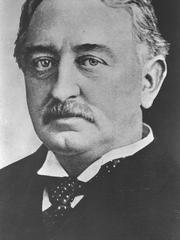 What
was the intent of Cecil Rhodes? It is world
domination. His biographer, Sarah Millin,
wrote: "The government of the world was Rhodes' simple desire." His
own Confession of Faith was written into his first will dated 1877 which states:
"I contend that we are the finest race in the world and that the more of
the world we inhabit the better it is for the human race." By the way, he
was Caucasian. His plan for world domination was
to create: ". . so great a power as to hereafter render wars
impossible." One should note there is a
difference between the concept of world peace and the concept of world
domination. professor, Carroll Quigley, stated in 1949 - "The [Rhodes]
scholarships were merely a facade to conceal the secret society, or, more
accurately, they were to be one of the instruments by which members of the
secret society could carry out Rhodes' purpose." What
was the intent of Cecil Rhodes? It is world
domination. His biographer, Sarah Millin,
wrote: "The government of the world was Rhodes' simple desire." His
own Confession of Faith was written into his first will dated 1877 which states:
"I contend that we are the finest race in the world and that the more of
the world we inhabit the better it is for the human race." By the way, he
was Caucasian. His plan for world domination was
to create: ". . so great a power as to hereafter render wars
impossible." One should note there is a
difference between the concept of world peace and the concept of world
domination. professor, Carroll Quigley, stated in 1949 - "The [Rhodes]
scholarships were merely a facade to conceal the secret society, or, more
accurately, they were to be one of the instruments by which members of the
secret society could carry out Rhodes' purpose."
(source:http://www.rebsutherland.com/TheRhodesScholarship.htm
http://www.fwkc.com/encyclopedia/low/articles/r/r022000724f.html)
Cecil Rhodes dream
was to see British possessions running from the Cape to Cairo. Traveling between
Britain's Oxford University and the diamond mines of Kimberley, Rhodes gained by
the age of thirty both a classics degree and one of the world's largest personal
fortunes. Although his imperial ambitions were thwarted - his last words were
reported to be : "So little done, so much to do."
"If there be a
God," he once said, "I think what he would like me to do is to paint
as much Africa British red as possible."
(source: Colonial
Overlords: Time Frame Ad 1850-1900 - Time-Life
Books. The Scramble for Africa ASIN 0809464667 Noon of the Raj. p. 94-96).
For more refer to chapter on European
Imperialism).
Top of Page
Ancient Rome and Indian jewels
Of the jewels, the Romans were specially
fond of beryls and pearls. The two beryls mines that existed in South India at
Padiyur and Vaniyambadi were a great source of wealth.
Sacred Thread Ceremony
 This introduces the male child to a teacher (guru) in order to receive
education, marking the entry of the child into the Brahmacharya Ashrama (period
of studentship), the first of the four stages of life. This samskara is
performed from the fifth to the eighth year of age, when the male child is
invested with a sacred thread (consisting of three strands) to be worn around
the neck and waist. The three symbolize the following three debts that the child
repays during his adult life: debt to one's parents, debt to one's guru, and
debt to God.
This introduces the male child to a teacher (guru) in order to receive
education, marking the entry of the child into the Brahmacharya Ashrama (period
of studentship), the first of the four stages of life. This samskara is
performed from the fifth to the eighth year of age, when the male child is
invested with a sacred thread (consisting of three strands) to be worn around
the neck and waist. The three symbolize the following three debts that the child
repays during his adult life: debt to one's parents, debt to one's guru, and
debt to God.
The sacred thread is intended to be a constant reminder of one's individual
duties and obligations. At the time of marriage and as a part of the wedding
ceremony, the bridegroom is invested with three more strands of the sacred
thread, which symbolize three more debts that he repays to his spouse. Thus the
six-stranded thread around the neck of a Hindu is a reminder of the six debts
that he must repay during adulthood.
(source: The Hindu Mind - By Bansi Pandit.
p 253-254)
Top of Page
Yavana - The Greeks
Ancient Indians, it appears originally
used the term Yavana for the Ionian-Greeks, but later for all foreigners from
the West. Yavanapuri was the Greek city-state.
Mountain Worship
Situated on the borders of Macedon and
Thessaly, the 9600 foot high Mount Olympus was as sacred for the Greeks as were
the Himalayas
for the Hindus. The Greeks believed that the summit of Olympus reached the upper
air where Zeus had his throne surrounded by the other gods and goddesses of
Greek mythology. The Canaanites also chose the mountain Saphon, as the abode of
their pantheon, and Mount Sinai as the meeting-place of Moses and Jehovah.
The Art of
Spelling
D. Bethune McCartee, a well-known American
scholar, writes: "The art of spelling was invented neither by the Chinese
or the Japanese. Its introduction into both these countries, (and, as we are
convinced, in Corea as well), was the result of the labors of ...the early
Buddhist missionaries. In all the three
countries...the system of spelling is most undoubtedly of Sanskrit
origin."
(source: cited in W. E. Griffin, Corea - The Hermit
Nation p. 338).
Top of Page
Ancient India and Scandinavia?
Indian commerce and culture possibly traveled even further
west than Rome to Scandinavia. This possibility is suggested by the second
century inscriptions found at Junnar in western India which refer to the
benefactions of two Yavanas, Irila and Cita, who have been interpreted as the
amber merchants
of Scandinavia. Kushan coins have been discovered in Gaul and
Scandinavia.
The excavations carried out in the mid-nineteen fifties on a small
island called Lillion, or Helgo, in Lake Malaren, about 20 miles west of
Stockholm, uncovered many foreign objects, including an exquisite bronze statue
of the Buddha seated on a lotus throne.
For
more refer to chapter on Greater
India: Suvarnabhumi and Sacred
Angkor
Top of Page
Fairy-lore of
India
Theodore Gomprez
says:
"Practically the entire fairy-lore of the Occident is derived from
India. No one disputes this assertion today, but no one as yet can give a
completely clear account of the ways and means by which its journey was
accomplished." (source: Great Thinkers,
Volumes I-II translated by Laurie Magnus, Vol. IV, by G.G. Berry. London: 1901-1912
p. 95).
"It may also be a complete revelation
to find that the fabulous Hindu mind is responsible for the genre of animal
fables and many stories of the Arabian Nights type, in which Buddhist and
non-Buddhist literature abounds."
(source: The
Wisdom of China and India - By Lin Yutang
p. 6).
H.
G. Rawlinson writes: " Numerous European
fairy stories, to be found in Grimm or Hans Andersen, including the magic
mirror, the seven-leagued boots, Jack and the beanstalk, and the purse of
Fortunatus, have been traced to Indian sources." In his article, "India
in European Literature and Thought" in The
Legacy of India, " Many of them are to be
found in the Gesta Romanorum, the Decameron, and the Merchant of Venice, is
found in the romance of Barlaam and Josaphat, which is too clearly the story of
Buddha, who was changed into a Christian garb, and later canonized as a
Christian saint as St. Josephat! And everyone of course knows the story of the
Milkmaid who dreamt of her wedding and overthrew the milk pail, now to be
recognized in its original form as the story of the Brahmin's Dream, included in
the selections from the Panchatantra."
(source: The
Wisdom of China and India - By Lin Yutang
p. 6-7)
India has produced a vast, rich
imaginative literature and philosophy, and that Indian culture is highly
creative and in fact has enriched the world literature with the droll humor that
we associate with the Arabian Nights.
(For
more refer to chapter on India and China). For
more refer to chapter on Greater
India: Suvarnabhumi and Sacred
Angkor
Top of Page
Christ spend his youth in India?
The celebration of the birthday of Christ
might lose a little sheen if we seriously pursue the question, where did Jesus
spend 18 years of his life, between the ages of 12 and 30? Both history and
gospels, are completely silent about the life of Jesus before his 30th year.
 A Chilean diplomat Miguel Serrano
in his book, The
Serpent of Paradise: The Story of an Indian Pilgrimage
(1963) has written of his rich and varied experiences among yogis and sadhus of
India. He was looking for great mystics who he believed were living in the
Himalayas guarding a magical science.
A Chilean diplomat Miguel Serrano
in his book, The
Serpent of Paradise: The Story of an Indian Pilgrimage
(1963) has written of his rich and varied experiences among yogis and sadhus of
India. He was looking for great mystics who he believed were living in the
Himalayas guarding a magical science.
During his sojourn in Kashmir, Serrano
came across evidence to suggest that Jesus Christ had come to India and that the
tomb of Yousa-Asaf in Srinagar was in fact the tomb of Jesus.
He quotes a
legend, according to which he was in Kashmir, the original name for Kashmir, Ka
means "the same as" or "equal to" and shir means
Syria. Manuscripts in the Sharda language, which is derived from Sanskrit, seem
to bear close relationship to the biblical story. According to this Kashmir
legend, Jesus came to Kashmir and studied under holy men, who taught him
mysterious practices. Later the legend says, Jesus returned to the Middle East
and he then began to preach among the ignorant masses of Israel the mystical
truths he had learned in Kashmir. To impress and to convert them he often used
the powers he had acquired through the practices of Yoga, and these were then
referred to as miracles. Then in due course Jesus was crucified, but he did not
die on the cross. Instead, he was removed by some Essenes brothers, restored to
good health and sent back to Kashmir, where he lived with his masters until his
death. There is yet another theory, which holds that the Jewish race originated
in India centuries ago and some of them came back almost by instinct in search
of their roots. This theory ties in with the legend of Jesus Christ also came to
live in India at the age of about 13. This legend asserts Jesus spent 17 years
in India, finally returning to the country of his birth to preach the doctrine
of salvation and to assert that he was the Son of God.
(source: India
Post - By Vinod Dhawan. vol. 6 December 29,
2000. p. 44). For more refer to Did
Jesus die in Kashmir - by Abu Abraham).
For more refer to chapter on Hinduisms
Influence).
Top of Page
Lord Krishna's stamp in Japan
Did you know that just a couple of years
ago Japan issued a stamp showing Lord Krishna playing the flute, yet curiously
enough, secular India has not issued a stamp for Lord Krishna on Krishna Ashtami?
Refer to chapter
on Glimpses
XVII
British "magnanimity"
in India?
In
the 18th and 19th centuries the synthetic dye had not been discovered, so all blue
dye was derived from a certain crop which grew only in Bengal. However, this
crop took out all the nitrogen from the ground, so that for the next two years
nothing else could be grown. The British forced the farmers in Bengal to
cultivate this.
After a year, famine struck, because there was no rice, all the
fields had been turned to Neel cultivation. The farmers revolted, and thousands
were killed ruthlessly. This went on for decades, so that no village had any
rice or money. By the way, the farmers were not paid for the Neel. That was
the start of the great Bengal Famine, in which millions died. But the British
only cared for the Neel. Actually, this was the first time common people rose in
revolt against the British. This torture ended only after synthetic dye was
discovered around the middle or early 19th century.
Did you know that British India used
to have signs saying: "Dogs and Indians not allowed" in public
places? and Mahatma Gandhi was thrown out of a train in South Africa for
traveling in the first class?
(For more refer to
chapter on European
Imperialism).
Top of Page
When Gods Make Their Move

Each Hindu God and Goddess has a chosen mount, called Vahana, on which He or She
traverses,
the universe. Lord Ganesha's mount is Mushika, a tiny mouse or shrew. He attests to the
all-pervasiveness
of the Elephant God and carries Ganesha's grace into every nook and cranny.
(source: Hinduism Today).
Faith
makes India go around
Hindu
shrines abound with legends of gods drinking milk, stories and mysteries. Here a
few instances where faith has beaten science!
 A
stone Nandi
(bull) in the famous Tanjavur Pratheeshwara
temple in
Tamil Nadu, is said to be growing bigger. In an effort to stop the Nandi from
growing any further, the temple authorities tried hammering a nail into the
Nandi's head. The idol is more than six feet high now. A
stone Nandi
(bull) in the famous Tanjavur Pratheeshwara
temple in
Tamil Nadu, is said to be growing bigger. In an effort to stop the Nandi from
growing any further, the temple authorities tried hammering a nail into the
Nandi's head. The idol is more than six feet high now.
 In
Thane district of Maharashtra, there is a temple devoted to Kopineshwar
(Shiva). The temple is around 150 years old. The Shiva linga is believed to
be growing. The Nandi that is traditionally placed in front of the Shiva Linga
is also said to be moving towards it. It is believed that when the Linga touches
the roof and the Nandi reaches the Linga, it will be the end of the 'Kaliyuga'. In
Thane district of Maharashtra, there is a temple devoted to Kopineshwar
(Shiva). The temple is around 150 years old. The Shiva linga is believed to
be growing. The Nandi that is traditionally placed in front of the Shiva Linga
is also said to be moving towards it. It is believed that when the Linga touches
the roof and the Nandi reaches the Linga, it will be the end of the 'Kaliyuga'.
In
Chuntporni-Jwalaji
in Himachal Pradesh there is a 'kundh', which looks as if it is boiling,
the priests and the locals even cook rice and kheer in the hot water. But when
someone touches the water, it is found to be cold.
 A
well near the seashore
in Tiruchendur has water, which is very sweet. According to a
story, Lord Karthikeya
threw his staff near the seashore to quench the
thirst of his soldiers while in war with the asuras. These legends are unending.
People have tried and failed to come up with logical conclusions to such
wonders. A
well near the seashore
in Tiruchendur has water, which is very sweet. According to a
story, Lord Karthikeya
threw his staff near the seashore to quench the
thirst of his soldiers while in war with the asuras. These legends are unending.
People have tried and failed to come up with logical conclusions to such
wonders.
A
neem tree in Shirdi under which
Sai Baba used to sit, bears leaves
that are sweet. Even the bark of the tree is supposedly sweet. It is believed
that anybody who tastes even a small part of the tree is cured of all ailments
or is cleansed of all sins.
Top of Page
Mass reconversions
of Tribals
Thousands
of Christian tribals reverted to their “natural” state of Hinduism in
Chhattisgarh.
Most
of the tribals said they were “disillusioned” with Christianity. “Mine was
a Hindu family. But some 20 years ago the preachers came. They spoke of Christ
and equality amongst all. They said they would educate us, feed us, clothe us
and that no was would be any higher than the other,” said 50-year-old Manjuram
of village Jamdohri. “Food flowed into our home like we had never ever dreamt
before. In return we had only to visit Church every Sunday. My whole family
converted. But immediately after the conversion, the
supplies stopped. The priests diverted their attention from us to our
neighbors,” Manjuram added.
“You
regret that for a few freebies you gave up the religion, your God, the belief
that our forefathers nurtured for centuries. Birsa Munda was one amongst us. He
fought the British for the country. And I gave up my religion for a few kilos of
rice. It’s like you have betrayed your ancestors, your own blood,” said
Gandhi Bara of village Katkalu.
“So
when the offer came from Kumarji (Judeo), I readily agreed,” he added. “I
have returned to my roots now. I will paint my house white today. Kumarji has
said he will supply the whitewash,” he added, explaining that in this belt a
Christian house is painted with black charcoal and a Hindu house is painted
white or blue.
(source:
http://www.telegraphindia.com/national.htm#head1).
Watch
An
Invasion through Conversion
- videoyahoo.com
Top of Page
Churchill hated Gandhi
New
light has been shed on Churchill's racist arrogance by the recent release of
certain British Intelligence records relating to the period. Some
of the records made available have been used by British journalist turned
historian Patrick
French, extracts from whose readable book Liberty
or Death have been published by newsmagazine Outlook
in its August 25, 1997 cover story. Patrick
writes of Churchill:
"His understanding of the country's social and
religious structures was superficial. He had a broad, emotional Edwardian belief
in the racial superiority of the pinkish-grey races and the need to maintain the
British Empire". It was once suggested to him that he should meet
"some prominent political activists who were then in London".
Churchill's reply: "I am quite satisfied
with my views on India. I don't want them disturbed by any bloody Indian".
 Churchill
blatantly employed racist arrogance, bluff, and the myth of British superiority,
to stall Indian independence.
To him, India only stood for the basis of British imperial power. He was
hypocrite enough to stall Indian independence at a time when
his own agents in
India were busily recruiting Indians for the armed forces. His hypocrisy allowed
him to do all this despite the magnificent contribution of the Indian armed
forces to the war effort, on several fronts. From a mere 350,000 at the outbreak
of World War 2 in 1939, the number rose to well over 2,000,000 "bloody
Indians". Churchill
blatantly employed racist arrogance, bluff, and the myth of British superiority,
to stall Indian independence.
To him, India only stood for the basis of British imperial power. He was
hypocrite enough to stall Indian independence at a time when
his own agents in
India were busily recruiting Indians for the armed forces. His hypocrisy allowed
him to do all this despite the magnificent contribution of the Indian armed
forces to the war effort, on several fronts. From a mere 350,000 at the outbreak
of World War 2 in 1939, the number rose to well over 2,000,000 "bloody
Indians".
The orthodox Winston Churchill
sneering at the ‘naked fakir’ (Gandhi)
and refusing to preside over the liquidation of the Empire. He
did not favor termination of India's colonial status. He refused to meet Gandhi
when he was in London.
Churchill's
opinion of
Mahatma Gandhi
in 1930:
"It is alarming and also nauseating to see Mr. Gandhi, a seditious Middle
Temple lawyer, now posing as a fakir of a type well known in the East, striding
half-naked up the steps of the vice regal palace, while he is still
organizing and conducting a defiant campaign of civil disobedience, to parley on
equal terms with the representative of the King-Emperor."
(source:
http://www.kamat.com/mmgandhi/churchill.htm).
***
Winston
Churchill's scornful view of India and
her religion: "I
hate Indians (read Hindus). They are beastly people with a beastly
religion."
(source: The
Saffron Swastika - By Koenraad Elst
Voice of India ISBN 8185990697 Volume 1. p. 532).
(For more refer to chapter on European
Imperialism).
Top of Page
Hinduism lies beyond History
Hinduism also lies beyond history.
Other faiths, excluding some tribal and pagan
paths, are rooted in events. They began on such and such a day, born with the
birth of a prophet or the pronouncements of a founder. Thus they are defined,
circumscribed, by history. Not Hinduism. She has no founder, no birthday to
celebrate. Like Truth, she is eternal and unhistorical. Even if we compel Hinduism to admit
of some immanence in history, she merely smiles and brushes aside the few
thousand years that most of humanity takes as the crucial narrative.
To the
Hindu those few years are a pittance, and they too perish. While all known human
history lies
within a few hundred millennia, Hinduism speaks of unspeakably vast epochs, of
earthly yugas that last millions of years, of days and nights of Brahma that
span billions, of a universe that lives and dies and lives again. Such is
India's expansive reading of history. "
(source: Hinduism
Today - December 1994 issue). Watch
An
Invasion through Conversion
- videoyahoo.com
For
more refer to chapter on Greater
India: Suvarnabhumi and Sacred
Angkor
Top of Page
Charm of Indian Women
Author,
Elizabeth Cooper (1915),
admires the Indian woman for her innate sense of modesty, her womanliness, her
love of home and children and her feminine qualities which to the Western mind
may appear as a weakness, but, in fact, constitute her appealing charm. She emphasizes
that "if the Western woman offers her gifts of modern education and
intellectual advancement, her Eastern sister will not be her debtor if she, by
example, presents in return the even more precious charms of obedience, modesty
and loyalty which fundamentally are the priceless jewels in the Crown of world's
womanhood".
(source: Indian Perspective September' 98 issue).
Top of Page
India's
Indigenous Systems of Medicine and Medicinal Plants
The medicinal plant Rauvolfia
Serpentina, was
pronounced "Wonder drug of India"
all over the world in 1949 when the British
Heart Journal reported that the plant is "Clinically effective in
treating high blood pressure". This was reconfirmed few years later, when a
Swiss researcher isolated reserpine from the plant root and established it as an
antihypertensive and sedative. In India, the
plant was being used for more than 2000 years as antidepressant, sedative and in
curing mental illness! This is just one
example. In Indian indigenous systems of medicine - Ayurveda, Unani-tibbia,
Siddha and tribal remedies - more than 2500 medicinal plants are being used.
In India, use of medicinal plants is referred to even in the earliest
literature, Rig Veda. Ancient Ayurveda
has elaborate description of the properties of various medicines; Susruta
Samhita has comprehensive description of therapeutics and Charaka Samhita contains an unbelievable and extensive Materia
Medica of India. Indian
medicines are mostly vegetatitve and are cheap, hardly harmful and are of
minimum side-effects in comparison with allopathic medicines.
There is little question that centuries of colonization
takes a toll, its tragic toll on a country's people, religions and languages,
but one of the most lasting effects is the attack on its original healing arts.
Both Muslim invasions in the 11th and 12th Centuries and later British
colonization imposed their own medical beliefs to the point where both Indian
folk medicine and Ayurvedic medicine were suppressed.
The British Medical
Journal from the 1920s labeled the oldest healing system in the world as
"unsupported metaphysical dogma". But despite being marginalised for
decades, Ayurvedic medicine is the final victor. It
is unfortunate that during the British Raj, the Indian indigenous systems of
medicine took a back seat. Derogatory terms like 'bazar (market) medicines' were
used for Indian medicines. The focus was
shifted to allopathy - in learning, research, practice and promotion. The Indian
systems were virtually looked down upon. But despite being marginalised for
decades, Ayurvedic medicine is the final victor. Today, there is a global
resurgence of interest in natural healing methods, and Ayurvedic medicine tops
the list in terms of the West's latest "alternative" health
fascination. Presently,
the western world has woken up to the magic of Indian medicinal plants. India is
a treasure house of medicinal plants due to the presence of bio-geographical
regions varying from alpine, tropical to coastal, and thus is a leading exporter
of medicinal plants and herbal formulations to Germany, U.K., France,
Switzerland, U.S.A. and Japan, besides many other countries.
"Ayurveda
is the best system of medicine for treating chronic conditions like bronchial
asthma and diabetes and now many Russians are realising it,'' said Svetlana A.
Mayskaya, president of the Medical Centre NAAMI-AYU, a Moscow-based nodal health
agency. The radiation survivors, 50 men and 40 women, were treated at the Moscow
centre by four Indian vaids from the Arya Vaidyashala in Kottakal, Kerala."
(source: Chernobyl
survivors respond to Ayurveda, Russia to recognise science -
By
Sanchita
Sharma
http://www.indian-express.com/ie/daily/20010117/ina17044.html
Top of Page
Columbus "Discovery"
or American Indian Holocaust
1492 - Began the process of genocide of
Native Americans. "The only good Indian is a dead Indian".
Today, in spite of 500 years of a
genocidal colonization, there is an estimated 40 million Indigenous peoples in
the Americas. In Guatemala, the Mayan peoples make up 60.3 percent of the
population, and in Bolivia Indians comprise over 70 percent of the total
population. Despite this, these Indigenous peoples lack any control over their
own lands and comprise the most exploited and oppressed layers of the
population; characteristics that are found also in other Indigenous populations
in the settler states of the Americas.
The "greatness" of European
religions and cultures was brought to the Indigenous peoples, who in return
shared the lands and after "accidentally" being introduced to European
disease, simply died off and whose descendants now fill the urban ghettos as
alcoholics and welfare recipients.
Of course, a few "remnants" of
Indian cultures was retained, and there are even a few "professional"
Indian politicians running around.
Watch
An
Invasion through Conversion
- videoyahoo.com
Top of Page
Maha-Kumbh Mela - 2001
Bathing is a great blessing.
American author Mark
Twain, who visited the Kumbh festival in the 1890s, wrote in a
memoir: "It is wonderful. The power of faith like that can make
multitudes of the old and the weak and the young and the frail to enter without
hesitation or complaint."
BELIEVED to be the most ancient and the
biggest holy congregation of humanity in the world, the Kumbh Mela in North
India (held once in 12 years) is the greatest bathing festival. It is one of its
kind with the world's huge assembly of people, symbolising India's unity. The
Kumbh is held at the confluence of the Ganges and Yamuna rivers, and Hindu
scriptures say this is one of four places on which the Gods spilt a drop of the
elixir of immortality.
 The timing of the pilgrimage, whose origins have been dated back to the
Neolithic period, is dictated by planetary alignment. This year's event has
special significance, with an alignment of planets that will not be repeated for
another 144 years. The timing of the pilgrimage, whose origins have been dated back to the
Neolithic period, is dictated by planetary alignment. This year's event has
special significance, with an alignment of planets that will not be repeated for
another 144 years.
Some trace the
origin of the Kumbha Mela to the Vedic age. Various legends are also part of its
history.
According to
story when the devas and the asuras churned the ocean, Dhanvantari (the
divine leader) emerged holding in his hands an amrita Kumbha a pot of nectar
that makes one immortal. For 12 days, a great struggle ensued between the devas
and the asuras for the possession of the pot. The devas were alarmed at the
prospects of the asuras attaining immortality by drinking the elixir.
Ultimately, the devas succeeded. In the meantime, Jayanta (son of Indra, ruler
of the heavens) managed to carry it away to the abode of mortals. Guru
(Jupiter), Chandra (Moon) and Surya (Sun) were with him. On his way to the
heavens, he had to fight with the asuras and kept the Kumbha at four places -
Prayag (Allahabad), Hardwar, Nasik and Ujjain. The journey to heaven with the
Amrita Kumbha took 12 days equivalent to 12 earthly years. That is why the (Poorna)
Kumbha Mela is held in these four places once in every 12 years. Thus these four
places became sacred and the devout came to believe that a dip in the waters
earned them salvation.
 The Maha Kumbh
Mela, or Grand Pitcher Festival, takes
place every 12 years and sees millions of devotees bathe in the Ganges to purify
themselves. Kumbh
Mela is certainly very ancient. The Maha Kumbh
Mela, or Grand Pitcher Festival, takes
place every 12 years and sees millions of devotees bathe in the Ganges to purify
themselves. Kumbh
Mela is certainly very ancient.
Jawaharlal Nehru has written in
The
Discovery of India, in my own city of
Allahabad or Hardwar, I would go to the great bathing festivals, the Kumbh Mela,
and see hundreds of thousands of people as their forebears had come for
thousands of years from all over India, to bathe in the Ganges. I would remember
descriptions of these festivals written thirteen hundred years ago by Chinese
pilgrims and others and even then these melas'' were ancient and lost in an
unknown antiquity. What was the tremendous faith, I wondered, what has drawn our
people for so many generations to this famous river of India''.
Visiting
the Kumbh Mela in 1954, Nehru confessed to having been fascinated by the sheer
spectacle of a Maha Kumbh. He told the House: ``I was there in mela itself on
the occasion and I can never forget that tremendous concourse of humanity,
consisting of possibly 40 lakhs of people, on either side of the river. I have
never seen anything like it in my life before either at the Kumbh Mela or in any
other function in this country or anywhere else.''
Princes and peasants, seekers and scholars, mendicants and merchants, artist and
artisans from all over India and abroad flock to Hardwar. The whole of India is
represented here.
Kumba
Mela has also some scientific importance from the astronomical point of view.
The Sun, Moon and Jupiter alfair a particular position every three years, when
the Mela is held at Hardwar, Prayag, Ujjain and Nasik
 At
the recent Maha Kumbh Mela ( the grand urn bathing festival), the six-week-long,
the first in the new millennium began on Tuesday and about 70 million people are
expected to participate over a 42-day period The Beatles’ interest in
yesteryears in Indian spirituality certainly had raised the the first crop of
devotees. Demi Moore, Pierce Brosnan, Madonna, Sharon Stone and Richard Gere
promise to make a splash. And Beatles’ legend Paul McCartney as well, in
addition to lesser known western devotees. At
the recent Maha Kumbh Mela ( the grand urn bathing festival), the six-week-long,
the first in the new millennium began on Tuesday and about 70 million people are
expected to participate over a 42-day period The Beatles’ interest in
yesteryears in Indian spirituality certainly had raised the the first crop of
devotees. Demi Moore, Pierce Brosnan, Madonna, Sharon Stone and Richard Gere
promise to make a splash. And Beatles’ legend Paul McCartney as well, in
addition to lesser known western devotees.
According to BBC, many foreign tourists mingled with
the crowds and several more are expected. "It's the sheer scale of the whole thing that is
so mind-boggling.
It's extraordinary to witness this sort of mass spiritual
communion between so many people and the river,"
Briton Ross Anthony said.
It is the greatest show on earth,'' ? ``It is
spiritual entertainment,'' explained an overseas broadcaster. ``You don't have
to belong to any particular religion to watch Kumbh. The varied images from
Kumbh attracts everyone from Boston to Benaras.'' -- the biggest spiritual event
in the globe.
YOG MATA Keiko Aikawa
emerged from her "samadhi"
this afternoon, after spending three days buried in a mud pit. Amidst media
frenzy, crashing barricades and chants of Om namah Shiva the Japanese Yog Mata
emerged calmly from her pit and told her audience that she attained "samadhi"
for world peace and goodwill of everyone.
(source: Hindustan Times http://www.hindustantimes.com/nonfram/240101/detnat03.asp
)
"This is an experience I am going to tell my
grandchildren about," said John Arnett, a schoolteacher from Cleveland,
USA. Jim Clarke of Los Angeles first heard
about the Kumbh six months ago in Malaysia, where he teaches English. "I
had been a hippie for a long time, but nothing could give me peace of mind,
until I witnessed the Mahakumbh," he said, using the Hindi words that mean
"Great Kumbh," as the gathering is also called. "Now, I am
planning to settle in India to feed my hunger for peace and spiritualism,"
Clarke said.
Bishambhar Bhushan,
poor and blind, traveled two days in a cramped train from his village of
Dhanvani in central Madhya Pradesh state. Bhushan, 80, scooped up the cold river
with his hands, and offered it to the heavens in a centuries-old gesture.
"I told Mother Ganga, take me across life, mother," he said, his
eyelids twitching with excitement. "My life's ambition is fulfilled."
Watch
An
Invasion through Conversion
- videoyahoo.com
Top of Page
Munenori Ikegami of Japan and the Kumbh
Mela
 Munenori Ikegami, saw a film on Kumbh four
months back and tried to persuade the TV company where he was a cameraman to
make a documentary on it. But his bosses were not impressed. He quit his job,
packed his bags and came here for the Maha Kumbh. Munenori Ikegami of Japan does
not regret his decision because the Kumbh mela is "huge...so vast, so
big". "I've never seen such a big festival. Japan's biggest festival
is Gion Maturi... Maturi means mela or festival. It is held in June-July in the
old city of Kyoto, which is today Tokyo". Munenori Ikegami, saw a film on Kumbh four
months back and tried to persuade the TV company where he was a cameraman to
make a documentary on it. But his bosses were not impressed. He quit his job,
packed his bags and came here for the Maha Kumbh. Munenori Ikegami of Japan does
not regret his decision because the Kumbh mela is "huge...so vast, so
big". "I've never seen such a big festival. Japan's biggest festival
is Gion Maturi... Maturi means mela or festival. It is held in June-July in the
old city of Kyoto, which is today Tokyo".
Asked if Gion Maturi is as big as the
Kumbh, he shakes
his head, "Oh, no. No way. I've been to the Millennium Festival in South
Africa. The Aborigine Fest in Australia, on around this time, too is neither as
big as this."So what is his plan after the fest? "I don't know, I lost
my job. I'll have to get a job now. Then perhaps I'll make some money, plan
making a film on Kumbh and come back for the next Maha Kumbh 12 years from
now." That the next Maha Kumbh mela is so far away does not seem not to
dissuade him. (PTI).
(source: http://www.timesofindia.com/today/11indu8.htm
)
Top of Page
Evangelist zeal in India
Reinhard Bonnke, widely
regarded as the world’s foremost evangelist, has spoken openly about his
mission. At a press conference in Kochi (Kerala), Bonnke boasted that in the
twenty years that he was active in Africa, the Christian population rose from
just 2 per cent to over 40 per cent. (This refers probably to the areas in which
he was active, and not all of Africa.) He further stated: "Now India is on
top of my agenda."
Watch
An
Invasion through Conversion
- videoyahoo.com
Yoga
and Patanjali
 Yoga
is from the Sanskrit word 'Yug' meaning union {with the Divine}. Yoga
is from the Sanskrit word 'Yug' meaning union {with the Divine}.
Yoga is a path that leads to liberation and union with God.
The word Yoga, literally
meaning “yoke”, is issued to mean a system of spiritual practice of any
kind, so it is possible to talk about Buddhist, Hindu or Jain yoga.
Secondly, Yoga is the name given to a particular, very ancient school of Hindu
thought and practice, possibly dating back to the Vedas themselves.
It was most famously set out by the philosopher Patanjali.
Patanjali set forth an “eight-limbed” system of mystical training, intended
to free the mind from the senses completely.
 The eight limbs of Patanjali’s
yoga include Dhyanayoga, which focuses on meditation. Rajayoga, which is
concerned with contemplation of Brahman; and Hathayoga, which uses physical
postures (called asanas) to unite the body with the mind and advance spiritual
progress. Hathayoga, particularly, has become popular among Westerners,
few of whom have become Hindu or Buddhist. The eight limbs of Patanjali’s
yoga include Dhyanayoga, which focuses on meditation. Rajayoga, which is
concerned with contemplation of Brahman; and Hathayoga, which uses physical
postures (called asanas) to unite the body with the mind and advance spiritual
progress. Hathayoga, particularly, has become popular among Westerners,
few of whom have become Hindu or Buddhist.
For
more on yoga refer to chapter on Yoga
and Hindu Philosophy.
Top of Page
Vikramshila: the World's largest
ancient varsity
Is the world's largest ancient centre of learning, Vikramshila
university, 47 km east of Bhagalpur in Bihar. King Dharmpala of the Pala
dynasty, who ruled between 783 and 820 AD, founded Vikramshila university.
 It
used to hold open convocations, in which degrees were conferred on the students
by the King himself. In size and sprawl, Vikramshila relegates the celebrated
Nalanda University, one of the oldest universities of the world, to second
place. Hiuen Tsang,
a Chinese pilgrim who
visited Nalanda in the first half of the 7th century, has mentioned about it in
his travelogue.
It
used to hold open convocations, in which degrees were conferred on the students
by the King himself. In size and sprawl, Vikramshila relegates the celebrated
Nalanda University, one of the oldest universities of the world, to second
place. Hiuen Tsang,
a Chinese pilgrim who
visited Nalanda in the first half of the 7th century, has mentioned about it in
his travelogue.
Nalanda is spread over 80 acres, while the ninth century Vikramshila covers an
area of 110 acres. It has 208 monasteries, each measuring 4.15 square metres.
Besides, twelve underground cells with brick arches used for meditation, have
also been found.
Since it's located at the bank of the Ganga, Vikramshila has a very good
underground drainage system. Recently, a well was also excavated by the
archaeologists of the Patna circle.
source: http://www.dailypioneer.com/secon2.asp?cat=\nt3&d=Nation
Top of Page
Ancient Fragrances
 Distillation of scents, perfumes, fragrant liquids and ointments
in India is 2,000-2,500
years ago show that the knowledge of chemistry was applied in ancient times. Perfumes and ointments were of two
types: tirtha (liquids) and gandha (sluries of
ointments). Distillation of scents, perfumes, fragrant liquids and ointments
in India is 2,000-2,500
years ago show that the knowledge of chemistry was applied in ancient times. Perfumes and ointments were of two
types: tirtha (liquids) and gandha (sluries of
ointments).
People were sprinkled with aromatic oils on auspicious occasions, and fragrant ointments
based on sandalwood (native to India) were applied during ceremonial bathing.
Other common scents were derived from musk, jasmine, tamarind, camphor,
spikenard, costus
and macir.
(Most of these words have their origin in Sanskrit)
Perfumes were exported widely, as recorded in 1st century CE travelogue by a Greek
merchant.
 Saying Grace before
meals - is the most beautiful invocation according
to Joseph Campbell: Saying Grace before
meals - is the most beautiful invocation according
to Joseph Campbell:
"Brahman is the cosmic, universal, life
consciousness energy of which we are all manifestations. Brahman is the the
sacrifice. Brahman is the food that we are eating. Brahman is the consumer of
the sacrifice. Brahman is the ladle that carries the sacrifice to the fire.
Brahman is the process of the sacrifice. He who recognizes that all things are
Brahman is on the way to realizing Brahman in himself."
The meaning of grace is that taking food into your
system is like putting a libation into a sacrificial fire; the fire of your
digestive apparatus consumes what you eat, so eating is the counterpart of a
sacrifice.
( source: A Joseph Campbell Companion
- by Diane K Osbon
ISBN 0060926171 pg 91).
Top of Page
Akbar,
(1542-1605 A. D) the epitome of secularism?
'Akbar like all Mughal rulers had the holy
Muslim title of GHAZI (Slayer of Kaffir - infidel). Like Timur Lane and
Nader Shah, Akbar had a victory tower erected with the heads of the captured/surrendered
army of Hemu after the second battle of Panipat. Later, Akbar again slaughtered
more than 30,000 unarmed captive Hindu peasants after the fall of Chitod on
February 24, 1568.
 (source:
http://www.hindunet.org/hindu_history/modern/akbar_vs.html
(source:
http://www.hindunet.org/hindu_history/modern/akbar_vs.html
and The Cambridge History of India, Encyclopedia Britannica and other works
based on Akbar-nama by Abul
Fazl.
Life in the Moghul Zenana
Akbar, who cemented his political
alliances by marrying women from the territories he conquered, is estimated to
have had some 300 wives and to support a harem of 5,000 people. Women
of the court lived apart from the public area of the palace compound. They dwell
in lavishly decorated high-walled buildings enclosing pools and gardens and
containing apartments for each of the noblewomen. Soldiers stood guard outside
while armed females inside protected the women from intruders.
(source: What
Life Was Like in the Jewel of the Crown: British India AD 1600-1905
- By The Editors of
Time-Life Books.
p. 20).
Akbar and the
Sciences
The Moghuls neglected practical
and secular learning, especially the sciences. Throughout
their long rule, no institutions was established comparable to modern
university, although early India had world-famous centers of learning such as
Taxila, Nalanda and Kanchi. Neither the
nobles nor the mullas were stirred into learning. Nor did Akbar show any
curiosity in European science and philosophy, although both Hindus and Muslims
had made notable scientific contributions in the past. Akbar was
presented with printed books and a printing press, yet even the Indian classics
were first printed by Europeans. It is therefore, not surprising that during the
period of European struggle for power, India was in a state of unparalleled
decline. Yet Akbar is considered great!
(source: Indian and World Civilization
- By D. P. Singhal Michigan
State Univ Pr November 1969 ASIN 0870131435 p 198).
8,000 women immolated
themselves during Akbar's
capture of Chittorgarh in 1568 (whereas
this most enlightened among Muslim rulers also killed 30,000 non-combatants).
(source: The
Saffron Swastika - By Koenraad Elst
Voice of India ISBN 8185990697 p.
824-826).
Akbar re-christened
Hindu holy cities (Prayag being the most notable), imposed the jaziya
and pilgrimage tax, and even indulged in forcible conversions in the early part
of his reign. Though he ultimately did seek a more neutral legitimation, at
least by way of supplement, the state under him remained unmistakably Muslim.
70% of his nobility consisted of foreigner-Muslims. The Hindu representation was
confined to the Rajputs, there being just four other Hindus in the upper
echelons of the nobility. These were Birbal, Todar Mal, his son, and another
Khatri.
(source: A
Review of Romila Thapar's "Medieval India" - bharatvani.org).For
more refer to chapter on Islamic
Onslaught).
Top of Page
Ahmedabad May have Name Change
Source: Madhya Pradesh Chronicle
AHMEDABAD, GUJARAT, January 8, 2001: Other major
cities have reverted to their pre-colonial names, Bombay to Mumbai and Madras to
Chennai. Now major Hindu organizations in Gujarat's city of Ahmedabad are
pushing for a name change from Ahmedabad to Karnavati.
Karna Deva was the name of a Hindu sovereign
that defeated a tribal ruler in the 11th century and the city became known as Karnavati.
Subsequently in the 1400's, a Moslem ruler named Ahmed
Shah conquered the territory and the city was named after him.
Sudra priests of Lingaraja Temple
 The
Lingaraja temple in Bhubaneswar, built in the eleventh century, has two classes
of priests: Brahmins and a class called Badus, who are ranked as Sudras
and are said to be of tribal origin. Not only are Badus priests of this
important temple; they also remain in the most intimate contact with the deity
whose personal attendants they are. Only they are allowed to bathe the Lingaraja
and adorn him and at festival time when the god, "represented by his calanti
pratima (original symbols for the diety), leaves the temple only Badus may
carry this movable image. Without them, it is said, the god 'cannot move one
step..." The
Lingaraja temple in Bhubaneswar, built in the eleventh century, has two classes
of priests: Brahmins and a class called Badus, who are ranked as Sudras
and are said to be of tribal origin. Not only are Badus priests of this
important temple; they also remain in the most intimate contact with the deity
whose personal attendants they are. Only they are allowed to bathe the Lingaraja
and adorn him and at festival time when the god, "represented by his calanti
pratima (original symbols for the diety), leaves the temple only Badus may
carry this movable image. Without them, it is said, the god 'cannot move one
step..."
(source:
Hindu
Phenomenon - By Girilal Jain
South Asia Books 1998 ISBN 8174760105 p.24).
Top of Page
Ikonos
satellite takes shots of Kumbh Mela
Space
Imaging's Ikonos satellite has taken a detailed color photograph of the largest
human gathering in the world history at the Maha Kumbh mela, the US
company has announced.
The
Ikonos image was collected the day before the most sacred and busiest bathing
day on January 24, according to a Press release. The one-metre resolution image
of the Maha Kumbh mela was collected by space imaging's Ikonos satellite, which
travels four miles per-second in an orbit 423 miles above earth. The spectacular
image is the first high-resolution satellite image ever taken of such an event.
The image shows the sacred site at the confluence of the Ganges, Yamuna and Saraswati rivers, where millions of Hindu worshippers bath to wash away
their sins and hasten the progress toward Nirvana, the company said in a Press
release.
(source: http://www.timesofindia.com/today/26indi26.htm).
Top of Page
 Indonesia banks on Lord Ganesha (see
image on the left of rupiah)
Indonesia banks on Lord Ganesha (see
image on the left of rupiah)
Indonesia has the largest Muslim population in the
world - but also has many Hindus - and saw fit to include our Lord Ganesha on
its new 20,000 rupiah note.
For more
refer to chapter on Greater
India: Suvarnabhumi and Sacred
Angkor
Dalai
Lama condemns religious conversions
The Dalai Lama has joined Hindu leaders in
condemning the Muslim and Christian practice of conversion, stepping into one of
the hottest religious controversies in South Asia. "I
always believe it's safer and better and reasonable to keep one's own tradition
or belief," the Dalai Lama told reporters during a break in the meetings.
"To change it is not proper, it's much safer to follow one's own
religion."
Secular
Indians and their irrationality regarding Hindu organizations
Secular,
progressive, cosmopolitan people have a problem with whatever the RSS says. Why?
Now when the Gujarat earthquake, swayam sevaks are showing their real spirit and
true nature? If Christian missionaries aided by the government and foreign funds
do the same job, you will commend it. But why question this organization which
is trying to do a humanitarian task? Because it is a Hindu organization? Does
secular mean anti-Hindu in India? Or is it that you
convent-educated people feel that social work should be the sole prerogative of
Christian missionaries which produce people attached more to the Vatican and the
Pope, than to their country?
(source: http://www.thenewspapertoday.com/mail/)
Watch
An
Invasion through Conversion
- videoyahoo.com
Watch History
of Ayodhya - videogoogle.com.
Top of Page
Sun
as the symbol of Ultimate Power
 The Sun has been regarded as the
symbol of Ultimate Power, Energy and Splendor and hence became a primordial
deity. In India, the most famous Sun temple was built at Konark
in Orissa. In ancient Egypt too, the temple of Sun
god Ra was built at Karnak, and coincidentally both sites with
strikingly similar names, lie on the same latitude i.e. 20 degrees N. This is
not a stray coincidence as there are many other such parallels. The Sun has been regarded as the
symbol of Ultimate Power, Energy and Splendor and hence became a primordial
deity. In India, the most famous Sun temple was built at Konark
in Orissa. In ancient Egypt too, the temple of Sun
god Ra was built at Karnak, and coincidentally both sites with
strikingly similar names, lie on the same latitude i.e. 20 degrees N. This is
not a stray coincidence as there are many other such parallels.
The Ajanta, Ellora and Elephanta caves, the combined work of Hindu, Buddhist and
Shaivite artisans, lie on the same parallel, 25 degrees N, as the ancient ruins
of Yemenese Sun worshippers, Sudanese Nubin kingdom, and the Aztec
sites of Central America.
Ishta Devata - One Personal God
There
is only One. It was the poetic fancy of our imaginative ancestors that created
many aspects to Divinity.  Plus,
we are permitted to pray to God as an ishta devata, or personal deity. The
idol, again, is only a representative object. It is a thing of beauty, created
with reverence, before which to park the real focus point of worship:
the flame. The flame represents Truth, burning away all ego, deceit and
illusion, it stands for the pure energy or life force (heat) that keeps us and
our world alive. Plus,
we are permitted to pray to God as an ishta devata, or personal deity. The
idol, again, is only a representative object. It is a thing of beauty, created
with reverence, before which to park the real focus point of worship:
the flame. The flame represents Truth, burning away all ego, deceit and
illusion, it stands for the pure energy or life force (heat) that keeps us and
our world alive.
Lets
turn to Yajnavalkya, rishis and
lawgiver,
In the
section called the Ninth Brahmana, a hapless
soul called Vidaghda Shakalya asks,
‘‘How many gods are there, Yajnavalkya?’’ ‘‘As mentioned in the hymn
of praise to the Vishve-devas, 303, and 3,003.’’ ‘‘Yes, but how many
gods are there, Yajnavalkya?’’ ‘‘Thirty three.’’
‘‘Yes,
but how many gods are there, Yajnavalkya?’’ ‘‘Yes, but how many gods are
there, Yajnavalkya?’’
‘‘Three.’’
And so on, down to One.
In other words, the Creator is the One who gives and sustains life in all its
forms and functions, the One God who has different names and attributes because
of the many jobs that must be done to keep Creation ticking!
Top of Page
Grandfather Frost is a
Vedic God?
http://www.indian-express.com/ie/daily/20010101/iin01058.html
MOSCOW,
DECEMBER 30: A Russian scholar says red Russia's fairy tale Grandfather Frost,
or Ded Moroz, is none other than Varuna,
the god of seas in Hindu stories.
In the year 2003, which marks the beginning of the astrological age ofAquarius,
Grandfather Frost is expected to shed his dear-old-man mask and allow the people
of the world to see him as he truly is Varuna, the supremeVedic god of water.
Varuna was both the source of life and death, and was described in Vedic
writings as holding the tree of life, an image reminiscent of Grandfather Frost
standing next to a Christmas tree, says the ethnologist.
Top of Page
Ban
on Bangles and Bindis
Hindu
girls are forced to tuck their bangles and bindis into their school satchels
before entering the premises of St. Mary's Convent to attend school. Individuals
have protested against the ban, including the mother of a young girl who said
her daughter was beaten for wearing the traditional Hindu women's attire to
school. The state chief of one Hindu group, Subash Chouban, has called the
prohibition, "An act against Hinduism."
However, no action has been taken against the school about the allegations as
many individuals fear their children's expulsion from the well-respected convent
that has a good educational record. Also school management will not bend long
enforced rules.
(source:
Daily Pioneer).
Top of Page
The Search for the River
Saraswati
 NEW
DELHI, INDIA, November 13, 2000: Establishing the location of the Saraswati
River alluded to in ancient Indian religious literature would authenticate its
existence as a mighty Himalayan river. Over 160 Indus sites were nurtured by the
Saraswati, far from the Indus River Valley. Now satellite photos and ground
studies of clay, silt, sand and gravel deposits establish the course of the
river from the Himalayan foothills to the Sind gulf. This
enormous river, over five miles across from shore to shore, changed its course
four times always in a westerly direction. Initially flowing from the
Himalayas in a south-west direction about 4000 bce, the Saraswati disappeared
sometime between 2000 bce and 1500 bce With the disappearance of the Saraswati
River and the migration it caused, the Ganges and Indus River populations became
the central focus towards the end of the early Vedic period. NEW
DELHI, INDIA, November 13, 2000: Establishing the location of the Saraswati
River alluded to in ancient Indian religious literature would authenticate its
existence as a mighty Himalayan river. Over 160 Indus sites were nurtured by the
Saraswati, far from the Indus River Valley. Now satellite photos and ground
studies of clay, silt, sand and gravel deposits establish the course of the
river from the Himalayan foothills to the Sind gulf. This
enormous river, over five miles across from shore to shore, changed its course
four times always in a westerly direction. Initially flowing from the
Himalayas in a south-west direction about 4000 bce, the Saraswati disappeared
sometime between 2000 bce and 1500 bce With the disappearance of the Saraswati
River and the migration it caused, the Ganges and Indus River populations became
the central focus towards the end of the early Vedic period.
(source: The Times of India).
Killer
quake breathes life into 'mythical' Saraswati river
The
Saraswati river -- the missing third link in Allahabad's Sangam -- is making a
sudden, pleasant appearance in quake-injured Gujarat. Scientists say shifting of
tectonic plates in the Allah Bund fault area has led to a geographical osmosis
in the Rann of Kutch area, pushing the hitherto mythical Saraswati over-ground
in surprise spurts.
(source:
http://www.thenewspapertoday.com/india/inside.phtml?NEWS_ID=3106).
Top of Page
Demise of Tulsi Plant Critical
to Science and Religion
PATNA, INDIA: Lord Vishnu's beloved is now down
to the path of obscurity. Falling victim to neglect and the coming up of
concrete jungles all around the city, the plant species with the richest
cultural heritage is vanishing from sight. Tulsi, the plant which once enjoyed a
high position in the flora of Bihar now finds it hard to survive in the present
socio-climatic condition of the state. Noted environmentalist Dr. R.N. Trivedi
found only three species of this medicinal plant in Patna. Tulsi, meaning
"matchless," earned the status of a living deity in Hindu pantheon and
is considered a symbol of good luck. Researchers are of the opinion that the
adoption of ornamental plants in kitchen gardens coupled with the decline in the
Ayurvedic system of medicine as well as the lack of awareness in the
preservation of flora resulted in the extinction of many species. The rise in
the mosquito menace is also directly related to the loss of tulsi plants as it
has been scientifically proven that tulsi has repellent properties. The
departure of the Deity's form spells an irreparable loss in terms of science and
religious heritage.
(source: Hindustan Times, November 23, 2000).
Insult
to Hindu religious icons
Recently, Hindu religious icons have
been marketed in the West on toilet seats, shoes and other places.
Arjan P.
Daryanani, guest columnists writes:
 "Foreigners
who know what kind of cowards Hindus, are by nature are exploiting us for
monetary gains. Why don't these toilet seat manufacturers, as good Christians,
put pictures of Christ, Virgin Mary, St. Peter etc. on toilet seats? Would the
Christian community be thrilled? Why don't they put a picture of the Kabba, or
verses from the holy Koran on a toilet seat? I can bet you the whole of Islamic
World will go on Jihad to wipe out, not only the factory that made the seat, but
the sellers and entire families of the people involved." "Foreigners
who know what kind of cowards Hindus, are by nature are exploiting us for
monetary gains. Why don't these toilet seat manufacturers, as good Christians,
put pictures of Christ, Virgin Mary, St. Peter etc. on toilet seats? Would the
Christian community be thrilled? Why don't they put a picture of the Kabba, or
verses from the holy Koran on a toilet seat? I can bet you the whole of Islamic
World will go on Jihad to wipe out, not only the factory that made the seat, but
the sellers and entire families of the people involved."
Vibhakar
Modi says: "Horrific insults to Hindu religious icons are
becoming frequent." The belief that their god is the true god and savior
goes to show how ignorant these people really are."
(source: News India-Times Feb. 9th 2001).
Top of Page
Samdura (ocean) and Aryan
Invasion Theory
Although the correct translation of
the Sanskrit term samudra is ocean, it was
initially translated as "a body of water." Hence the references to
ships in the Rig Veda and to the river Saraswati
(and other ancient rivers) were considered false and
mythical by Western scholars. If samudra had been translated
correctly as ocean, the references to ships and the vast trade over water would
have been considered real and not mythical, and would have also indicated that
the Aryans were civilized people and not nomads. The idea of nomadic Aryans had
been assumed by Western scholars to fit their idea of the Aryan invasion.
(For more refer to chapter on Aryan
Invasion Theory).
Islam wiped out
Buddhism in Afghanistan 1,400 years ago.
Islam wiped out Buddhism in
Afghanistan 1,400 years ago. But the presence of ancient Buddhist statues from
the smallest miniature to the 50 metre-high Buddhist carved into a cliff face in
the town of Bamiyan have posed problems for the Taleban. Also, an exquisite one
metre-high carving which is thought to be unique. Other works include
Buddhist statues and bowls, and ancient Hindu pieces.
(source: BBC - http://news.bbc.co.uk/hi/english/world/south_asia/newsid_1165000/1165983.stm).
Top of Page
India's Nero
All through the autumn of 1876,
while the vital kharif crop was withering in the fields of southern India,  Lord Lytton
had been
absorbed in organizing the immense Imperial Assemblage in Delhi to proclaim
Victoria Empress of India (Kaiser-I-Hind). As The Time’s special
correspondent described it, Lord Lytton
had been
absorbed in organizing the immense Imperial Assemblage in Delhi to proclaim
Victoria Empress of India (Kaiser-I-Hind). As The Time’s special
correspondent described it,
“ The Viceroy seemed to have made the tales of
Arabian fiction true….nothing was too rich, nothing too costly.” Lytton put
on a spectacle,” adds a biographer of Lord Salisbury (the secretary of State
for India), “ gaudy enough to impress the Orientals’….and furthermore a
pageant which hid ‘the nakedness of the sword on which we really rely.” Its
“climateric ceremonial” included a week-long feast for 68,000 officials,
satraps and maharajahs: the most colossal and expensive meal in world
history.
An
English journalist later estimated that 100,000 of the Queen-Empress’s
subjects starved to death in Madras and Mysore in the course of Lytton’s
spectacular durbar.
In Madras city overwhelmed by 100,000 drought
refugees, famished peasants dropped dead in front of the troops guarding
pyramids of rice, while, “on any day and every day mothers might be seen in
the streets…offering children for sale.”
Thus, Lytton, became the
personification of free market economics of British India - a mask for
colonial genocide.
(source: Late
Victorian Holocausts - By Mark Davis Verso Books January 2001
ISBN 1859847390 p. 28-29).
For more refer to chapter on European
Imperialism).
Top of Page
Blaming the Hindus but glorifying
the Moghuls and the British rule?
Secularists/commies/missionaries/mullahs
have used caste to flog the Hindus into feeling ashamed. They have used Hindus
as a scapegoat to hide their own inadequacies. For too long Hindus, have
suffered humiliation and taunts about the evils of caste system.
When Muslims were ruling India from
1000 AD to 1800 AD, they have been called the great Mughals. Akbar was Great. Babar was
Great.
Under the Mughal rules, the Brahmins who were slaves of Muslims were exploiting
backward classes? How? They were not teaching to the lower castes. Why were the
great Mughals who governed helpless to look after the interests of lower caste
Hindus. The all powerful British could not stop the Brahmins from breaking the
temples constructed by Dalits? Then how can they be called great? if they could not
stop this casteism?
What were the Muslims doing while
they governed India for 1000 years? Why did they not institute reforms for the
lower castes? Why is Akbar and Babar glorified as
Great, when they did nothing for the lower castes of India?
What were the so called Enlightened British doing, they had the White Man's
burden. Why didn't they lift the lower castes up?? What stopped them from doing
it for 200 years?
(source: posted on sulekha.com).
Top of Page
Korean memorial to Indian princess
In the northern Indian city
of Ayodhya, a visiting Korean delegation has inaugurated a memorial to their
royal ancestor, Queen Huh. More than a-hundred historians and government
representatives, including the North Korean ambassador to India, unveiled the
memorial on the west bank of the River Saryu.
Korean
historians believe that Queen Huh was a princess of an ancient kingdom in
Ayodhya.
She went to Korea some
two-thousand years ago and started the Karak dynasty by marrying a local king,
Suro.
Today, the historians say,
Queen Huh's descendants number more than six-million, including the South Korean
president - Kim Dae Jung.
(source: http://newsvote.bbc.co.uk/hi/english/world/asia-pacific/newsid_1205000/1205728.stm).
Top of Page
 Did
you Know Did
you Know
Koh-i-noor - a
lost property or a colonial swindle?
The
most famous diamond in the world, the Kohinoor or Padshahnama, was found in the Godawari River
in South India some 4,000 years ago. It was long
reputed to give its owner the crown and rule of the world. At the same time, its
possession was supposed to be a hazard to the life of the man who owned it. The
curse did not apply if the owner was a woman.
 At the time its recent history began in
the 14th century, the Kohinoor weighed 186 carats and was clumsily cut. It had
been owned for several hundred years by the Raja of
Malwa (now in Madhya Pradesh). When the Moghuls
conquered India in 1526, the stone was taken to the treasury at Delhi. It
remained there until 1739, when the ruler of Persia, Nadir
Shah, invaded India,
took Delhi, seized the treasures of the Indian capital, and took the Mughal
emperor Muhammad Shah prisoner. His systematic pillage of the city failed to
uncover the huge stone, but then he was told by one of the harem women that the
conquered Mogul emperor had hidden it inside his turban. Taking advantage of an
Oriental custom, Nadir Shah invited his captive to a feast and suggested they
exchange turbans. Retiring from the feast, he unrolled the turban and released
the great gem. Seeing it he cried “Koh-i-Noor!” (Mountain of Light).
He also took the fabulous Peacock Throne
with him, was reportedly one of the most splendorous thrones ever made. At the time its recent history began in
the 14th century, the Kohinoor weighed 186 carats and was clumsily cut. It had
been owned for several hundred years by the Raja of
Malwa (now in Madhya Pradesh). When the Moghuls
conquered India in 1526, the stone was taken to the treasury at Delhi. It
remained there until 1739, when the ruler of Persia, Nadir
Shah, invaded India,
took Delhi, seized the treasures of the Indian capital, and took the Mughal
emperor Muhammad Shah prisoner. His systematic pillage of the city failed to
uncover the huge stone, but then he was told by one of the harem women that the
conquered Mogul emperor had hidden it inside his turban. Taking advantage of an
Oriental custom, Nadir Shah invited his captive to a feast and suggested they
exchange turbans. Retiring from the feast, he unrolled the turban and released
the great gem. Seeing it he cried “Koh-i-Noor!” (Mountain of Light).
He also took the fabulous Peacock Throne
with him, was reportedly one of the most splendorous thrones ever made.
 Nadir
Shah returned to Persia with his trophy, but he was assassinated soon
afterwards. His son and heir was overthrown by rebellion. Arrested, tortured,
and blinded by his enemies, he refused to reveal the hiding place of the
Kohinoor. When the king of Afghanistan came to his rescue, the dying son of
Nadir Shah, soaked in his own blood, handed him the Kohinoor. Nadir
Shah returned to Persia with his trophy, but he was assassinated soon
afterwards. His son and heir was overthrown by rebellion. Arrested, tortured,
and blinded by his enemies, he refused to reveal the hiding place of the
Kohinoor. When the king of Afghanistan came to his rescue, the dying son of
Nadir Shah, soaked in his own blood, handed him the Kohinoor.
The king took it back to Afghanistan.
Years later his grandson Zaman was deposed, imprisoned, and blinded by his own
brother but managed to hide the Kohinoor under the floor of his cell. Eventually
he escaped with the gem and took refuge at Lahore. There he was received by
Ranjit Singh, "Lion of the Punjab," who treated him with great respect
but insisted that he give up the Kohinoor. Singh had the diamond set in an
armlet and wore it. At his death in 1839 it went into the Lahore treasury. It
was still there when the Punjab was annexed by the British.
 In 1849 it was taken
by the British East India Company as partial indemnity after the Sikh Wars and
was presented to Queen Victoria. At the time, its value was estimated at
$700,000. In 1851 Victoria decided to recut the Kohinoor. This undertaking
required 38 days at a cost of $40,000 and the extraordinary stone was reduced to
108 carats. In 1911 a new crown was made for the coronation of Queen Mary with
the KOH-I-NOOR as the center stone. In 1937, it was transferred to the crown of
Queen Elizabeth (now Queen Mother) for her coronation. It is now on display with
the British Crown Jewels in the Tower of London.
In 1849 it was taken
by the British East India Company as partial indemnity after the Sikh Wars and
was presented to Queen Victoria. At the time, its value was estimated at
$700,000. In 1851 Victoria decided to recut the Kohinoor. This undertaking
required 38 days at a cost of $40,000 and the extraordinary stone was reduced to
108 carats. In 1911 a new crown was made for the coronation of Queen Mary with
the KOH-I-NOOR as the center stone. In 1937, it was transferred to the crown of
Queen Elizabeth (now Queen Mother) for her coronation. It is now on display with
the British Crown Jewels in the Tower of London.
Today,
the Kohinoor is still part of the British crown jewels and is on display in The
Tower of London.
(source: Feast
of India: A Legacy of Recipes and Fables - By Rani p.
72). For more refer to chapter on European
Imperialism).
***
Kohinoor crown to
adorn Queen Mother's coffin
The Kohinoor-embedded Crown of the
Queen Mother will be placed on her coffin as a mark of tribute to her, the
Palace sources said today.
The crown was made for her to wear at the coronation of her husband King George
VI in 1937, though the controversial 105-carat oval cut Kohinoor diamond was
brought from India in 1849. No male heir to the British throne has worn the
Kohinoor following a superstition that it brings bad luck to any male who wears
it.
India has made repeated demands for the return of the
Kohinoor, saying it was taken away by subterfuge. Britain has, however,
steadfastly refused to oblige. The 101-year old Queen Mother, who
died on Saturday, had rarely worn that crown, which is on display at the Tower
of London as a tourist attraction. The crown is normally kept along with others
in a highly secured glass case.
(source: http://www.naradonline.com/displaynews.php3?id=43333.
Top of Page
|