|
Hinduism remains a vibrant, cultural and
religious force in the world today. To understand Hinduism, it is necessary that we
examine its history and marvel at its sheer stamina to survive in spite of repeated
attacks across India's borders, time and again, by Greeks, Shaks, Huns, Arabs,
Pathans,
Mongols, Portuguese, British etc. India gave shelter, acceptance, and freedom to all. But, in
holy frenzy, millions of Hindus were slaughtered or proselytized. Their cities were
pillaged and burnt, temples were destroyed and accumulated treasures of centuries carried
off. Even under grievous persecutions from the ruling foreigners, the basics of
its civilization remained undefiled and, as soon as the crises were over Hindus returned
to the same old ways of searching for the perfection of the unknown.
For
no other country in the world from east to west, faces the agony that the Hindus
in India have to face. They are the injured party; but even today they are crucified by the
'so called' secularists—most of them themselves Hindus—at every stage. No country in the
world has been so ravaged and raped by outside forces as India has been down the
centuries: Not Japan, not China, not Russia, none of the European countries,
neither the Arab nations and certainly not the United States of America.
Krishnadevaraya of the Vijayanagar Empire did not send his forces to Portugal to
tear down churches, use force to convert Christians to Hinduism and indulge in
religious terrorism. Prithviraj Chauhan did not invade Afghanistan nor Central
Asia and raise temples.
No Chola, Chera or Pandya
(Indian) rulers sent a fleet to Saudi Arabia to tear down the Ka’aba and build a temple
to Meenakshi on its ruins or even next to it to demonstrate Hindu might. India
and Hinduism have been ravaged beyond belief. Hindu missionaries did not
accompany a conquering horde to Britain and under their benign rule set to
convert Scottish peasants to Hinduism—or even Buddhism.
No blood has been shed for religion in India except by its
invaders. Intolerance came with Islam and Christianity; the Moslems proposed to
buy Paradise with the blood of “infidels” and the Portuguese, when they
captured Goa, introduced the Inquisition into India.
Introduction
India before the advent of Islamic
imperialism was a country with plenty of wars fought by Hindu princes. But in
all their wars the Hindus had observed some time honored conventions sanctioned
by the Shastras. The Brahmins and Bhikshus were never touched. The chastity of
women was never violated. The cows were never killed. There was no ravage of the soil
The temples were never
touched. The non-combatants were never killed or captured. A human habitation
was never attacked unless it was a fort. The civilian population was never
plundered. The martial class (kshatriyas) who clashed, mostly in open fields,
had a code of honor.
As early as as
the 4th century B.C. Megasthenes (c. 350
BC-290 BC) Greek Scholar and historian, noticed a
peculiar trait of Indian warfare.
"Whereas among other
nations it is usual, in the contests of war, to ravage the soil and thus to
reduce it to an uncultivated waste, among the Indians, on the contrary, by whom
husbandmen are regarded as a class that is sacred and inviolable, the tillers of
the soil, even when battle is raging in their neighborhood, are undisturbed by
any sense of danger, for the combatants on either side in waging the conflict
make carnage of each other, but allow those engaged in husbandry to remain quite
unmolested. Besides, they never ravage an enemy's land
with fire, nor cut down its trees."
(source: A
Brief History of India - By Alain Danielou p. 106). The modern "scorched
earth" policy was then unknown." For
more on Alain Danielou refer to chapter on Quotes.
A L Basham
( ? )
one of the leading authority of ancient
Indian culture and well-known historian has observed:
"No
other ancient lawgiver proclaimed such noble ideals of fair play in battle as
did Manu.
In all her history of
warfare Hindu India has few tales to tell of cities put to the sword or of the
massacre of non-combatants. The ghastly sadism of the kings of Assyria, who
flayed their captives alive, is completely without parallel in ancient India. To
us the most striking feature of ancient Indian civilization is its
humanity."
(source: The
Wonder That Was India - By A L Basham p. 8 - 9). Refer
to Heroic
Hindu Resistance to Muslim Invaders (636 AD to 1206 AD) - By Sita Ram Goel.
Voice of India, New Delhi.
Refer
to Negationism
in India: Concealing the record of Islam – By Koenraad Elst
Harold
Horace Wilson (1786-1860) Eminent
Orientalist, professor
of Sanskrit at Oxford University author of Wilson's Works
and The Visnu Purana: A System of Hindu Mythology
and Tradition and co-author of History
of British India
says:
"The Hindu laws of war
are very chivalrous and humane, and prohibit the slaying of the unarmed, of
women, of the old, and of the conquered."
At the very time when a battle was going on,
be says, the neighboring cultivators might be seen quietly pursuing their work,
- " perhaps ploughing, gathering for crops, pruning the trees, or reaping
the harvest." Chinese pilgrim to Nalanda
University, Hiuen Tsiang affirms that
although the there were enough of rivalries and wars in the 7th century A.D. the
country at large was little injured by them.
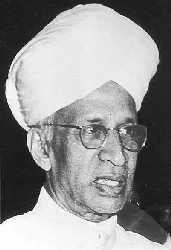
Dr.
S. Radhakrishnan (1888-1975)
was one of the most profound philosophers of this century, author and
educationalist. Radhakrishnan
was also a professor of Eastern Religions at Oxford and later became the
second President of free India. He has
observed:
“The intolerance of narrow monotheism is written in letters
of blood across the history of man from the time when first the tribes of Israel
burst into the land of Canaan. The worshippers of the one Jealous God are egged
on to aggressive wars against people of alien cults. They invoke Divine Sanction
for the cruelties inflicted on the conquered. The spirit of old Israel is
inherited by Christianity and Islam.
He went on to remark:
“Wars of Religion
which are the outcome of fanaticism that prompts and justifies the extermination
of aliens of different creeds are practically unknown in Hindu India.”
(source: The
Hindu View of Life - By S. Radhakrishnan
p. 40). For more on Dr. S. Radhakrishnan refer to chapter on
Quotes. Refer
to Negationism
in India: Concealing the record of Islam – By Koenraad Elst
.
Watch The
Crescent and the Cross
Faxian
(4th century) a Chinese pilgrim to India, marveled a the peace,
prosperity, and high culture of the Hindus. Having grown up in war-torn China,
he was deeply impressed by a land whose leaders were more concerned with
promoting commerce and religion than with slaughtering substantial portion of
the population.
(source: Hinduism
- By Linda Johnson p. 38). Watch And
the world remained silent – By Ashok Pandit
Colonel
James Tod (1782-1835) Late
British political agent to the Western Rajpoot State, author of
Annals
and Antiquities of Rajasthan: or the Central and Western Rajput States of India
ISBN 8120803809 Vol. II wrote:
"To spare a prostrate foe is the creed of the Hindu
cavalier, and he carried all such maxims to excess."
Islamic imperialism knew no
code of honor. The only rule of war they observed without fail was to fall down
the helpless civil population after a decisive victory had been won on the
battlefield. They sacked and burnt down villages and towns after the defenders
had died fighting or had fled. The cows, the Brahmins and Buddhist Bhikshus
invited their special attention in a mass murder of non-combatants. Their
temples and shrines were their special targets in an orgy of pillage and
destruction. Those that they did not kill, they captured and sold as
slaves. The scene was described by Kanhadde
Prabandha (1456 A.D) in the following words: "The conquering
army burnt villages, devastated the land, plundered people's wealth, took
Brahmins and children and women of all classes captive, flogged with thongs of
raw hide, carried a moving prison with it, and converted the prisoners into
obsequious Turks."
(source: Story
of Islamic Imperialism in India - By Sita Ram Goel ASIN
8185990239 p. 41-42). For more Colonel James Tod refer to chapter on Quotes.
Watch History
of Ayodhya - videogoogle.com and And
the world remained silent – By Ashok Pandit.
Refer
to Religion
of Peace
, Islam Watch
and
In the Name of Allah
Swami
Vivekananda (1863-1902) was the foremost disciple of
Ramakrishna and a world spokesperson for Vedanta. India's first spiritual and
cultural ambassador to the West, came to represent the religions of India at the
World Parliament of Religions, held at Chicago wrote that:
"the
Mohammedans used the greatest violence" and he asserted:
"You know that the Hindu religion never persecutes. It is the land where
all sects may live in peace and amity. The Mohammedans
brought murder and slaughter in their train, but until their arrival peace
prevailed."
(source:
Complete Works - Swami Vivekananda volume 5
p. 190 and volume 8 p. 217).
John
P Jones ( ? ) has observed in his book:
"It
is a curious fact that the hideous and bloody monster of religious intolerance was
hardly known in India until, first the followers of Mohammed and secondly, the
disciples of the meek and lowly Jesus, began to invade the land."
(source:
India
- Its Life and Thought - By John P Jones p. 166). Refer
to Negationism
in India: Concealing the record of Islam – By Koenraad Elst
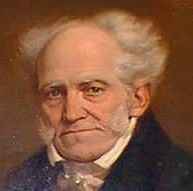
Arthur
Schopenhauer (1788-1860) German philosopher and writer. He was
one of the greatest philosophers of the 19th century. He was the first Western
philosopher to have access to translations of philosophical material from India,
both Vedic and Buddhist, by which he was profoundly affected. Counted among his
disciples are such thinkers as Nietzsche and Wittgenstein, as well as Sigmund
Freud. Author of his magnum opus, The
World as Will and Representation,
in 1819, he narrates the sordid tale as follows:
"...This of the
fanaticism, the endless persecutions, the religious wars, that sanguinary frenzy
of which the ancients had no conception! The destruction or disfigurement of the
ancient temples and idols, a lamentable, mischievous and barbarous act still
bears witness to the monotheistic fury...carried on from Mahmud, the Ghaznevid
of cursed memory, down to Aurangzeb, the fratricide, whom the Portuguese...have
zealously imitated by destruction of temples and the auto defe of the
inquisition at Goa...We hear nothing of this kind in the case of the Hindoo...."
(source: The
Essays of Arthur Schopenhauer - By T. Bailey Saunders - ISBN
0936128690 p. 42 - 43). For more on Arthur
Schopenhauer refer to chapter on Quotes.
Refer to Heroic
Hindu Resistance to Muslim Invaders (636 AD to 1206 AD) - By Sita Ram Goel.
Voice of India, New Delhi.
Refer
to Kashmiri
Pundits : Are they facing a Dodo future?
and Kashmiri
pandits alienated again - ibnlive.com.
Watch The
Crescent and the Cross
and
refer to chapter on Survarnabhumi
and Sacred
Angkor
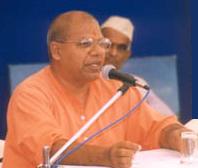
Swami
Aksharananda (
) an Indian of Caribbean origin and holds a Ph.D. degree in Hindu Studies
from the University of Madison, Wisconsin (USA) has observed:
"The
concept that “All religions are one” as propagated by Gandhi incessantly is
the most destructive concept that is affecting us all. It
is not only silly but dangerous fallacy to propagate the idea that all religions
are one.
Hindus, who are under severe attacks
every day by the same forces of Allah and Christ. Hinduism and other religions
can’t be equated and called same because “religions” of the world have
been born in the environment of hostility.
(source:
All
religions are not same
- By Swami
Aksharanand
- theuniversalwisdom.org).
Karl
Marx (1818-1883), the grandfather
ideologue of Communists worldwide. In his article titled “Declaration
of War— On the History of the Eastern Question” published in the
New York Tribune of April 15, 1854, he observed that:
"The Koran and the Mussulman legislation emanating from it reduce the
geography and ethnography of the various people to the simple and convenient
distinction of two nations and of two countries; those of the Faithful
and of the Infidels. The Infidel is ‘harby’, i.e. the enemy.
Islamism proscribes the nation of the Infidels, constituting a state of
permanent hostility between the Mussulman and the unbeliever. In that sense the
corsair-ships of the Berber States were the holy fleet of Islam….”
(source:
The
Marxists' Islamic phobia - By
Priyadarsi Dutta). Refer
to Negationism
in India: Concealing the record of Islam – By Koenraad Elst
The entire northwestern India
and later the rest of India was gradually butchered and plundered with ruthless
savagery surpassing perhaps even the genocide in the Americas.
Afghanistan
was a full part of the Hindu cradle up till the year 1000, and in
political unity with India until Nadir Shah separated it in the 18th century.
The mountain range in Eastern Afghanistan where the native Hindus were
slaughtered, is still called the Hindu Kush
(Persian: "Hindu Slaughter"). It is
significant that one of the very few place-names on earth that reminds us not of
the victory of the winners but rather of the slaughter of the losers, concerns a
genocide of Hindus by the Muslims.
(source:
Ayodhya
and After - By Koenraad Elst - Voice of India SKU: INBK2650
p.278).
Sita
Ram Goel (1921- 2003) scholar, writer, publisher, the
founder of Voice of India, an ‘intellectual’ Kshatriya’ par excellence,
and a Hindu revivalist. Author of several books, including
The
Story of Islamic Imperialism, Defence
of Hindu Society and History
of Hindu-Christian Encounters.
He
has written: "The
cradle of Hindu culture on the eve of its Islamic invasion included what are at
present the Sinkiang province of China, the Transoxiana region of Russia, the
Seistan province of Iran and the sovereign states of Afghanistan, Pakistan,
India, Nepal and Bangladesh. The Islamic invasion commenced around
650 A.D., when a Muslim army secured a foothold in Seistan, and continued till
the end of the eighteenth century, when the last Islamic crusader, Tipu Sultan,
was overthrown by the British. Hordes of Arabs, Persians, Turks, and Afghans who
had been successively inspired by the Theology of Islam poured in, in wave after
wave, carrying fire and sword to every nook and corner of this vast area. In the
process, Sinkiang, Transoxiana region, Seistan and Afghanistan became
transformed into daru’l-IslÃm where all vestiges of the earlier
culture were wiped out. The same spell has engulfed the areas which were
parts of India till 1947 and have since become Pakistan and Bangladesh."
"Hindus
were great temple builders because their pantheon was prolific in Gods and
Goddesses and their society rich in schools and sects, each with its own way of
worship. But by the time we come to the end of the invasion, we find that
almost all these Hindu places of worship had either disappeared or were left in
different stages of ruination."
(source: Hindu
Temples: What Happened to Them - Volume
1 A Preliminary Survey - Sita Ram Goel
- chapter Ten - voi.org). Refer
to Negationism
in India: Concealing the record of Islam – By Koenraad Elst
Watch History
of Ayodhya - videogoogle.com. Refer to Heroic
Hindu Resistance to Muslim Invaders (636 AD to 1206 AD) - By Sita Ram Goel.
Voice of India, New Delhi.
Robert
Sewell (1845-1925) the British civil servant who discovered
the ruins of Vijayanagar, wrote of its tragic end, 'Never perhaps in the history
of the world has such havoc been wrought, and wrought suddenly, on so splendid a
city'. In A
Forgotten Empire says writes about the missing,
defaced or vandalized
temples
and about the destruction of the
mighty Vijayanagar kingdom. An empire where "it
used to rain gold and gems in the days of the mighty rulers here," He has
written:
"for
five months the Mohammeddans with fire and sword, with crowbars and axes carried
on day after day their work of destruction. Never perhaps in the history of the
world has such havoc been wrought so suddenly, and reduced to ruins amid scenes
of savage massacre and horrors beggaring description".
Ferishta,
the late 16th Century Persian traveler describes the 1565 rout thus — "the
river which ran near the field was dyed red with their blood. It is computed
that 1,00,000 infidels were slain during the pursuit."
(source: Wanderings
in Hampi - hindu.com).
For more on refer to the Ruins
of Hampi.
Refer
to Negationism
in India: Concealing the record of Islam – By Koenraad Elst and
An
Architect looks at the Taj Mahal Legend - By Marvin Mills, AIA and
Taj
Mahal an analysis of a great deception – By V S Godbole
Dr.
Anwar Shaikh
(1928-2006) who later converted to Hinduism and took the name Aniruddha
Gyan Shikha. He
was
a Pakistani-born author who lived in Cardiff for many years. He is best known
for his many books on Islam.
He has written:
“India
is yet another major victim of Islam."
The
day Muhammad bin Qasim, entered Sindh as a conqueror, must rank as the most
ominous, odious and outrageous moment in the history of India, whose proud,
pious and powerful traditions have been the torch-bearer of world civilisation.
The Indians, used to enjoying the warmth of ahimsa, were stunned by the violence
that the Arab raiders displayed in robbing the rich and seducing the indigenous
damsels. Yet the irony was that they
did all this in the name of the Most Compassionate and Just Allah, who counts
these felonies as acts of fairness when they are committed to torture the
unbelievers.”
"India
was a prosperous, peaceful and proud country, which has not only been reduced to
extreme poverty and ignorance by the Muslim predators and the Islamic rule, but
has also been fragmented into geographical and political units."
"Most
Muslims think
of Bharat not as their Motherland but Dar-ul-Harb
= battlefield, where people murder, plunder and deceive out of hatred
and greed. It
is totally false to say that Islam is the ambassador of international
brotherhood."
(source:
Islam:
The Arab Imperialism - By Dr.
Anwar Shaikh and Anwar
Shaikh’s Interview with Chandigarh Times - By Dr.
Ranjit Kanwar).
Refer
to online book, The
Arab Imperialism - By Anwar Shaikh. Refer
to Religion
of Peace, Islam Watch
and
In the Name of Allah
Watch And
the world remained silent – By Ashok Pandit

Koenraad
Elst (1959 -) born
into a Flemish (i.e. Dutch-speaking Belgian) Catholic family. He graduated in
Philosophy, Chinese Studies and Indo-Iranian Studies at the Catholic University
of Leuven. He has
pointed out:
"Hindus too experienced
this treatment at the hands of Islamic conquerors, e.g. when Mohammed bin Qasim
conquered the lower Indus basin in 712 CE. Thus, in Multan, according to the Chach-Nama,
"six thousand warriors were put to death, and all their relations and
dependents were taken as slaves". This is why
Rajput women committed mass suicide to save their honour in the face of the
imminent entry of victorious Muslim armies, e.g. 8,000 women immolated
themselves during Akbar's capture of Chittorgarh in 1568 (where this most
enlightened ruler also killed 30,000 non-combatants).
"Hindu Society has been
suffering a sustained attack from Islam since the 7th century, from
Christianity since the 15th century, and this century also from
Marxism. The avowed objective of each of these three world-conquering movements,
with their massive resources, is the replacement of Hinduism by their own
ideology, or in effect: the destruction of Hinduism. This concern is not at all paranoid (as the spokespersons of these
aggressors would say), even if the conversion squads are remarkably unsuccessful
in India. Consider the situation in Africa: in 1900, 50 % of all Africans
practiced Pagan religion; today Christian and Islamic missionaries have reduced
this number to less than 10 %. That is the kind
of threat Hinduism is up against. "
(source: Negationism
in India: Concealing the Records of Isalm - By Koenraad Elst p
78 - 79 and
Was
There an Islamic "Genocide" of Hindus? - By Koenraad Elst).
Refer to Heroic
Hindu Resistance to Muslim Invaders (636 AD to 1206 AD) - By Sita Ram Goel.
Voice of India, New Delhi.
Refer
to Genocide and Ethnic Cleansing
of Kashmiri Hindu Pandits - And the World Remained Silent - Movie http://www.jaia-bharati.org/films/and-the-world.mpg
Refer
to Ethnic
cleansing of Hindus in
Bangladesh - muktomona.com.
Refer
to video Statistics
on Islamic Terrorism
- By B Raman.
M
V Kamath ( ? ) the Indian columnists has
written eloquently:
"For
no other country in the world from east to west, faces the agony that the Hindus
in India have to face. They are the injured party; but they
are crucified by the secularists—most of them themselves
Hindus—at every stage. No country in the world has been so ravaged and raped
by outside forces as India has been down the centuries: Not Japan, not China,
not Russia, none of the European countries, neither the Arab nations and
certainly not the United States of America. Krishnadevaraya of the Vijayanagar
Empire did not send his forces to Portugal to tear down churches, use force to
convert Christians to Hinduism and indulge in religious terrorism. Prithviraj
Chauhan did not invade Afghanistan nor Central Asia and raise temples. '
"No Chola, Chera or
Pandya ruler sent a fleet to Saudi Arabia to tear down the Ka’aba and build a
temple to Meenakshi on its ruins or even next to it to demonstrate Hindu might.
India and Hinduism have been ravaged beyond belief. Hindu missionaries did not
accompany a conquering horde to Britain and under their benign rule set to
convert Scottish peasants to Hinduism—or even Buddhism."
(source:
Help
us bear the burden of secularism - By M. V. Kamnath - organiser.org). Watch The
Crescent and the Cross
Refer
to Misinterpretation
of the Gita by Dr. Zakir Naik - By Dr. Alok K. Bohara.
"Let
us face it: for almost a millennium, India has been ruled in different parts of
the country, but in one continuous stream, by Islamic
conquerors and their successors, which has caused a deep psychological scab in
the Hindu psyche that starts bleeding at the slightest provocation.
Our
liberal secularists have always failed to understand that. Primarily
they refuse to face up to the past, which only worsens matters. To seem to be
secular, the Hindu liberal needs to stand by Muslim kings and Nawabs, like Romilla
Thapar being apologetic about the destruction of Somnath Temple by
Ghazni Mohammad. It is a mind-set that is hard to understand."(source:
Why
this row over Tipu? Let Hindus & Muslims come to terms with past
- By M V Kamath - samachar.com).
Refer
to Romila
Thapar’s Kluge Prize – By Dr. Gautam Sen - vigilonline.com.
Watch History
of Ayodhya - videogoogle.com. Refer
to An
Architect looks at the Taj Mahal Legend - By Marvin Mills, AIA and
Taj
Mahal an analysis of a great deception – By V S Godbole
Andre
Wink ( ? ) Professor
of History at University of Madison, Wisconsin, describes that this aspiration
to conquer India had existed since the time of the Prophet, as is evidenced by
the sacred texts:
“… in the hadith collections the prophet
Muhammad himself is credited with the aspiration of conquering India.
Participants in the holy war against al-Hind [the Hindus] are promised to be
saved from hell-fire… Thus also an eschatological work which is called the
Kitab al-Fitan ('Book of Trials') credits Muhammad with saying that God will
forgive the sins of the members of the Muslim army which will attack al-Hind,
and give them victory.”
(source:
The
Making of the Indo-Islamic World. Volume I – Early Medieval India and the
Expansion of Islam 7th-11th Centuries
- By Andre Wink. Oxford University Press, New Delhi 1999.
p.192-193).
For
more on Islamic Terrorism refer to chapter on Glimpses
XV and Glimpses
XVIII. Refer to
My
People, Uprooted: "A
Saga of the Hindus of Eastern Bengal" -
By Tathagata Roy
and
Al-Qaeda
letter says Taj next target
- ibnlive.com. Refer
to Kashmiri
Pundits : Are they facing a Dodo future?
and Kashmiri
pandits alienated again - ibnlive.com.

Dr
Charles Sabillon ( ?) author of several books, has observed in
his article Christianity and Islam: Which is the Worst?
"The origins of both
religions are based on the claims of two men, Jesus and Mohammed, and both men
proved equally incapable of demonstrating their divine mandate. From that
perspective, the two creeds are equally based on false propositions and can be
classified as nothing more than lies.
Mohammed
ordered his followers to do it by the sword, and that is what they
did once he died. They launched into one of the most enthusiastic conquering
ventures the world has ever seen and forged an empire that extended from Central
Asia to the southwest of Europe.
For most
of the sixty-three years of his life, Mohammed was a merchant, then a religious
leader, and finally a general. He was an active military leader for ten years.
While Jesus told his disciples to spread his teachings by persuasion, Mohammed
ordered his followers to do it by the sword, and that is what they did once he
died. They launched into one of the most enthusiastic conquering ventures the
world has ever seen and forged an empire that extended from Central Asia to the
southwest of Europe. Nations were
ruthlessly converted to Christianity by the sword just like Islam converted
Arabia, Central Asia, and Africa by the sword.
(source: Christianity
and Islam: Which is the Worst? - By Charles
Sabillon - americanchronicle.com).
Refer to Romila
Thapar’s Kluge Prize – By Dr. Gautam Sen - vigilonline.com. Refer
to Negationism
in India: Concealing the record of Islam – By Koenraad Elst
Barbarians
at the Gate
***
Two Chapters in India's history are most noted for its atrocities
against Hinduism:
Islamic Onslaught
European Imperialism
Islamic
Onslaught
Slaughter
of the Hindus
Islamic
Hoards and Their Terror
Indian Code of
Chivalry:
The Rajput and Maratha Warriors
Torture of the
Buddhists
Aurangzeb's Tryanny against the Sikhs and
Hindus
Negationism
by Marxists Historians
Effect of Muslim Atrocities on Hindu Society
Islamic
Scholarship on India
The
Religious consequences of Defeat
Conclusion
Articles
***
Slaughter
of the Hindus
An event of immense and lasting impact in Indian history was the advent of the Muslims in
the north-west. Lured by tales of the fertile plains of the Punjab and the fabulous wealth
of Hindu temples, Mahmud of Ghazni first attacked India in 1000 AD. Other raiders from
Central Asia followed him. Hindus never forgot the repeated destruction of the Somnath
Temple, the massacre of Buddhists at Nalanda, or the pogroms of the Mughals. Hindus
gallantly resisted, knowing full well that defeat would mean a choice of economic
discrimination via the jaziya tax on non- Muslims, forced conversion, or death. It is no
wonder that the residents of Chittor, and countless other people over the length and
breadth of Bharat, from present-day Afghanistan to present-day Bangladesh, thought it
better to die gloriously rather than face cold-blooded slaughter.
Will
Durant (1885-1981) the well-known American historian
would like the West to learn from India, tolerance and gentleness and love for
all living things.
He
says
in the book The Story of
Civilization: Our
Oriental Heritage page
459:
"...the Islamic conquest of India is probably the bloodiest story in history. It is a
discouraging tale, for its evident moral is that civilization is a precious good, whose
delicate complex order and freedom can at any moment be overthrown by barbarians invading
from without and multiplying from within." Almost all the Muslims of South Asia are
descendants of weaker elements of the population who had succumbed to forcible Islamic
conversion." )
"The Mohammedan conquest of India is probably the bloodiest story
in history".
The
Islamic historians and scholars have recorded with great glee
and pride of the slaughters of Hindus, forced conversions, abduction of Hindu
women and children to slave markets and
the destruction of temples carried out by the warriors of Islam during 800 AD to
1700 AD. Millions of Hindus
were converted to Islam by sword during this period. "
"The growth of Buddhism and
monasticism in the first year of our common era sapped the manhood of India, and
conspired with political division to leave India open to easy conquest. When
the Arabs came, pledged to spread a simple and stoic monotheism, they looked
with scorn upon the lazy, venal, miracle-mongering Buddhist monks, they smashed
the monasteries, killed thousands of monks, and made monasticism unpopular with
the cautious. The survivors were re-absorbed into the Hinduism that had begotten
them; and eased the return of the prodigal by proclaiming Buddha a god."
"At
Elephanta the Portuguese certified their piety by smashing statuary and
bas-reliefs in unrestrained barbarity; and almost everywhere in the
north the Moslems brought to the ground those triumphs of Indian architecture,
of the fifth and sixth centuries, which tradition ranks as far superior to the
later works that arouse our wonder and admiration today. The Moslems decapitated
statues, and tore them limb from limb; they appropriated for their mosques, and
in great measure imitated, the graceful pillars of the Jain temples; time and
fanaticism joined in the destruction, for the Hindus abandoned and neglected
temples that had been profaned by the touch of alien hands.”
"Even in its ruins the Temple of Shiva at Elephanta, with its massive
fluted columns, its “mushroom” capitals, its unsurpassed reliefs, and its
powerful statuary, suggests to us an age of national vigor and artistic skill of
which hardly the memory lives today."
"No
blood has been shed for religion in India except by its invaders. Intolerance
came with Islam and Christianity; the Moslems proposed to buy Paradise with the
blood of “infidels” and the Portuguese, when they captured Goa, introduced
the Inquisition into India.”
(source: Story
of Civilization: Our Oriental Heritage - By Will
Durant MJF Books. 1935. p. 459 and 505 and 524 – 600). For more on Will Durant
refer to chapter on Quotes. Watch
History
of Ayodhya - videogoogle.com. Refer
to
Why
did Aurangzeb Demolish the Kashi Vishvanath? - By Koenraad Elst. Refer
to Negationism
in India: Concealing the record of Islam – By Koenraad Elst
Refer
to Romila
Thapar’s Kluge Prize – By Dr. Gautam Sen - vigilonline.com. Refer
to Genocide and Ethnic Cleansing
of Kashmiri Hindu Pandits - And the World Remained Silent - Movie http://www.jaia-bharati.org/films/and-the-world.mpg
Refer
to Will
Islam convert itself? – By Francois Gautier - indowave.com.
Watch And
the world remained silent – By Ashok Pandit. Refer
to Religion
of Peace
, Islam Watch
and
In the Name of Allah
Alberuni ( ? ) Muslim scholar from Central Asia.
He wrote a very comprehensive book "Indica" in1030 AD. He diligently went into the specifics of the invasion:
"...they (the Hindus) frighten their children
with us, our dress and our ways and customs" and decree us as "devil's
breed". "They regard everything we do as opposite of all that is good
and proper". (Sachau:
20)
Some
of the reasons of Hindus' repugnance of Muslims are complete banishment of
Buddhists from countries from Khurasan, Persis, Irak, Mosul and Syria, first by
the Zoroastrians and then by Islam."
And then Muhammad ibn Elkasim entered India proper, conquered the cities of
Bahmanwa and Mulsthan and went as far as Kanauj –
"All
these events planted a deeply rooted hatred in their (Hindu) hearts."
(Sachau:
21)
And, regarding the effect of Mahmud's raids, he says:
"Mahmud
utterly ruined the prosperity of the country, and performed those wonderful
exploits, by which the Hindus became like atoms of dust scattered in all
directions, and like a tale of old in the mouth of the people."
"their
(the Hindus') scattered remains cherish, of course, the most inveterate aversion
towards all Muslims." (Sachau: 22).
(source: Alberuni's
India. - By C Edward Sachau
trans. New Delhi: Low Price Publications, 1993).
Watch And
the world remained silent – By Ashok Pandit
Mahatma
Gandhi (1869-1948) was among India's most fervent nationalists,
fighting for Indian independence from British rule.
Following the assassination of Swami
Shraddhanand at the hands of a Muslim fanatic in December, 1926, he
had said:
"Mussalmans have an ordeal to pass through. There
can be no doubt that they are too free with the knife and the pistol. The
sword is an emblem of Islam. But Islam was
born in an environment where the sword was, and still remains, the supreme law. The
message of Jesus has proved ineffective because the environment was unready to
receive it. So with the message of the Prophet. The
sword is yet too much in evidence among the Mussalmans. It must be sheathed if
Islam is to be what it means - peace." This was 80 years ago.
Long years before Mahatma Gandhi
spoke his mind on Islam, Swami
Vivekananda told a gathering in London in November, 1896:
"In the
Quran there is the doctrine that a man who does not believe these teachings
should be killed. It is a mercy to kill him! Think of the bloodshed there has
been in consequence of such beliefs!"
(source:
The
Pope is not alone - By A Surya Prakash - dailypioneer.com). Refer
to Heroic
Hindu Resistance to Muslim Invaders (636 AD to 1206 AD) - By Sita Ram Goel.
Voice of India, New Delhi. Refer
to Cruel
genocide by Muslims in India - slideshow.
Refer
to
Kashmiri
Pundits : Are they facing a Dodo future?
and Kashmiri
pandits alienated again - ibnlive.com.
Watch General
(R) Hameed Gul (ISI): History Will Repeat Itself.
Watch History
of Ayodhya - videogoogle.com. Watch
Obsession:
Radical Islam's War Against The West
Refer
to Genocide and Ethnic Cleansing
of Kashmiri Hindu Pandits - And the World Remained Silent - Movie http://www.jaia-bharati.org/films/and-the-world.mpg.
Refer to An
Architect looks at the Taj Mahal Legend - By Marvin Mills, AIA and
Taj
Mahal an analysis of a great deception – By V S Godbole
Refer
to video Statistics
on Islamic Terrorism
- By B Raman. Watch
General
(R) Hameed Gul (ISI): History Will Repeat Itself
Irfan
Husain ( ? ) a freelance columnist from
Pakistan has observed:
”While historical
events should be judged in the context of their times, it
cannot be denied that even in that bloody period of history, no mercy was shown
to the Hindus unfortunate enough to be in the path of either the Arab conquerors
of Sindh and south Punjab, or the Central Asians who swept in from Afghanistan.
The
Muslim heroes who figure larger than life in our history books committed some
dreadful crimes. Mahmud of Ghazni,
Qutb-ud-Din Aibak, Balban, Mohammed bin Qasim, and Sultan Mohammad Tughlak, all
have blood-stained hands that the passage of years has not cleansed. Indeed, the
presence of Muslim historians on their various campaigns has ensured that the
memory of their deeds will live long after they were buried.
Seen
through Hindu eyes, the Muslim invasion of their homeland was an unmitigated
disaster. Their temples were razed, their idols smashed, their women raped,
their men killed or taken slaves. When Mahmud of Ghazni entered Somnath on one
of his annual raids, he slaughtered all 50,000 inhabitants. Aibak killed and
enslaved hundreds of thousands. The list of horrors is long and painful.
These conquerors
justified their deeds by claiming it was their religious duty to smite
non-believers. Cloaking themselves in the banner of Islam, they claimed they
were fighting for their faith when, in reality, they were indulging in
straightforward slaughter and pillage. When these
warriors settled in India, they ruled as absolute despots over a cowed Hindu
populace. For generations, their descendants took their martial superiority over
their subjects for granted. "...
And a substantial number of Pakistani Muslims are secretly convinced
that they are inherently superior to the Hindus. One
irony, of course, is that contrary to their wishful thinking, the vast majority
of Muslims in the subcontinent have more Hindu blood in their veins than there
is Arab, Afghan, Turkish or Persian blood. Many of the invaders took
Hindu wives and concubines."
(source:
Demons
from the past - By Ifran Husain - dailytimes.com.pk).
Refer
to Kashmiri
Pundits : Are they facing a Dodo future?
and Kashmiri
pandits alienated again - ibnlive.com.
Refer
to chapter on Glimpses XV
Also
refer to India:
Putting the Fallouts of the Islamic Invasion and British Occupation in
Perspective - by
Alamgir Hussain - islam-watch.org.
Refer
to Cruel
genocide by Muslims in India - slideshow.
Refer
to Negationism
in India: Concealing the record of Islam – By Koenraad Elst
Refer
to Islam
Under Scrutiny by Ex-Muslims - By Alamgir Hussain -
islam-watch.org. Refer
to Misinterpretation
of the Gita by Dr. Zakir Naik - By Dr. Alok K. Bohara.
Colonel
James Tod (1782-1835)
Late British political
agent to the Western Rajpoot State, author of Annals
and Antiquities of Rajasthan: or the Central and Western Rajput States of India.
He
wrote in 1829:
"After
eight centuries of galling subjection to conquerors totally ignorant of the
classical language of the Hindus; after almost every capital city had been
repeatedly stormed and sacked by barbarians, bigotted, and exasperated foes, it
is too much to expect that the literature of the country should not have
sustained..." "
(source:
Annals
and Antiquities of Rajasthan: or the Central and Western Rajput States of India
- By Colonel
James
Tod
p. viii). For more on Colonel Tod refer to chapter on Quotes.
Watch History
of Ayodhya - videogoogle.com.
Aldous
Huxley
(1894-1963) the English novelist and
essayist, born into a family that included some of the most distinguished members of the
English ruling class, author
of Perennial
Philosophy (ISBN 0060901918) also notices:
"Islam's
black record of holy wars and persecution - a record comparable to that of later
Christianity."
He mention in his book,
Ends
and Means, "It is an extremely significant fact that, before
the coming of the Mohammedans, there was virtually no persecution in India. The
Chinese pilgrim Hiuen
Tsang, who visited India in the first half of the seventh
century and has left a circumstantial account of his 14 years in the country,
makes it clear that Hindus and Buddhist lived side by side without any show of
violence. Neither Hinduism or Buddhism is disgraced by anything corresponding to
the Inquisition; neither was ever guilty of such iniquities as the Albigensian
crusade or such criminal lunacies as the religious wars of the 16th and 17the
centuries."
(source: On
Hinduism Reviews and Reflections - By Ram Swarup
p.150-151). For more Aldous
Huxley on
refer to chapter on Quotes.
Refer
to Negationism
in India: Concealing the record of Islam – By Koenraad Elst.
Watch And
the world remained silent – By Ashok Pandit. Watch
Obsession:
Radical Islam's War Against The West
"The religions whose theology is least preoccupied
with events in time and most concerned with eternity, have been consistently
less violent and more humane in political practice. Unlike early Judaism,
Christianity and Mohammedanism (all obsessed with time) Hinduism and Buddhism
have never been persecuting faiths, have preached almost no holy wars and have
refrained from that proselytizing religious imperialism which has gone hand in
hand with political and economic oppression of colored people."
"Most
European and American authors of books about religion and metaphysics write as
though nobody had ever thought about these subjects except Jews, the Greeks
Christians of Mediterranean Basin and Western Europe.------Like any other form
of imperialism, theological imperialism is the threat to world peace".
(source: The
Perennial
philosophy - By Aldous Huxley p.
194 - 204). Refer to
Why
did Aurangzeb Demolish the Kashi Vishvanath? - By Koenraad Elst.
Refer
to Romila
Thapar’s Kluge Prize – By Dr. Gautam Sen - vigilonline.com.
Refer
to Religion
of Peace
, Islam Watch
and
In the Name of Allah
Sir
Jadunath Sarkar (1870-1958) the pre-eminent historian of Mughal
India, wrote the following in 1920 regarding the impact of centuries of jihad
and dhimmitude on the indigenous Hindus of the Indian subcontinent:
”Islamic theology, therefore tells the true believer
that his highest duty is to make 'exertion (jihad) in the path of God', by
waging war against infidel lands (dar-ul-harb) till they become part of the
realm of Islam (dar-ul-Islam) and their populations are converted into true
believers. After conquest the entire infidel population becomes
theoretically reduced to the status of slaves of the conquering army. The men
taken with arms are to be slain or sold into slavery and their wives and
children reduced to servitude. As for the non-combatants among the vanquished,
if they are not massacred outright, - as the canon lawyer Shaf'i declares to be
the Qur'anic injunction,- it is only to give them a respite till they are so
wisely guided as to accept the true faith.”
(source: How
the Muslims forcibly converted the Hindus of India, Pakistan and Bangladesh to
Islam). Refer
to Cruel
genocide by Muslims in India - slideshow.
Ahmad
Sirhindi (1564 - 624) the Indian Sufi theologian observed that - "Whenever
a Jew is killed, it is for the benefit of Islam." Of
course Jew-hatred was merely a sidelight to Sirhindi's hatemongering Islamic
"ethos." He was an intensely anti-Hindu
bigot, as revealed by these words:
"Cow-sacrifice
in
India
is the noblest of Islamic practices. The kafirs [Hindus] may probably agree to
pay jizya but they shall never concede to cow-sacrifice...The real purpose in
levying jizya on them [Hindus] is to humiliate then to such an extent that, on
account of fear of jizya , they may not be able to dress well and to live in
grandeur. They should constantly remain terrified and
trembling. It in intended to hold them under contempt and to uphold the honor
and might of Islam..."
(source: Hindus,
Jews, and Jihad Terror in Mumbai - By Andrew G
Bostom - americanthinker.com).
Refer
to Negationism
in India: Concealing the record of Islam – By Koenraad Elst
Ayatollah
Khomeini (1902 - 1989) was a Shi`i Muslim cleric, philosopher and marja
(religious authority), and the political leader of the 1979 Iranian Revolution
which saw the overthrow of Mohammad Reza Pahlavi, the last Shah of Iran
and he had
said on August 24, 1979:
“Islam
grew with blood. The great Prophet of Islam carried in one hand the Quran and in
the other the sword.”
The
learned Qazi Mughis-ud-din of Bayana says on
conversion:
“Every device short of massacre in cold
blood was resorted to in order to convert heathen subjects.”
As the
learned Qazi Mughis-ud-din declared, in accordance with the teachings of the
books on Canon Law:
"The
Hindus are designated in the Law as ‘payers of tribute’ (kharaj-guzar); and
when the revenue officer demands silver from them, they should, without question
and with all humility and respect, tender gold. If the officer throws dirt into
their mouths, they must without reluctance open their mouths wide to receive it.
By these acts of degradation are shown the extreme obedience of the zimmi [dhimmi],
the glorification of the true faith of Islam, and the abasement of false faiths.
God himself orders them to be humiliated , (as He says, ‘till they pay jaziya)
with the hand and are humbled…The Prophet has commanded us to slay them,
plunder them, and make them captive…No other religious authority except the
great Imam (Hanifa) whose faith we follow, has sanctioned the imposition of
jaziya on Hindus.
According
to all other theologians, the rule for Hindus is ‘Either
death or Islam".
(source:
Conversions
were never a civilised affair - By
M.S.N. Menon and The
Legacy of Jihad - By Jamie Glazon - frontpagemagaz.com).
Refer to An
Architect looks at the Taj Mahal Legend - By Marvin Mills, AIA and
Taj
Mahal an analysis of a great deception – By V S Godbole
Andrew
G Bostom is an Associate Professor of
Medicine, and the author of the forthcoming The
Legacy of Jihad on Prometheus Books (2005)
has observed that:
"So
far as the Hindus were concerned, there was no improvement either in their
material and moral conditions or in their relations with the Muslims... almost
all other Mughal Emperors were notorious for their religious
bigotry. The Muslim law which imposed many disabilities and
indignities upon the Hindus...and thereby definitely gave them an inferior
social and political status, as compared to the Muslims, was followed by these
Mughal Emperors (and other Muslim rulers) with as much zeal as was displayed by
their predecessors, the Sultans of Delhi. The climax
was reached during the reign of Aurangzeb, who deliberately pursued the policy
of destroying and desecrating Hindu temples and idols with a thoroughness
unknown before or since."
(source:
The
Legacy of Jihad in India - By Andrew G Bostom - Americanthinker.com).
Watch And
the world remained silent – By Ashok Pandit
Francois Gautier
(1950 - )
Paris-born, he has
lived in India for 30 years, is a political analyst for Le
Figaro, one of France's largest circulation newspaper. In his book
- Rewriting Indian
History he observes:
"Let it be said right away:
the massacres perpetrated by
Muslims in India are unparalleled in history, bigger than the holocaust of the Jews by the
Nazis; or the massacre of the Armenians by the Turks; more extensive even than the
slaughter of the South American native populations by the invading Spanish and
Portuguese."
***
No Nation can
move forward unless its children are taught to squarely look at history.
In art and
history books, people write of the Muslims "arriving" in India
as though they came on a tourist bus and went away again.
India
has been a wounded civilization because of Islamic violence: Pakistanis know
this; indeed they revel in it. It is only Indian Nehruvians like Romila Thapar
who pretend that Islamic rule was benevolent. We
should face facts.
The
Saga of terror continues today....
Refer to Islamic
Terror in India
Refer
to Romila
Thapar’s Kluge Prize – By Dr. Gautam Sen - vigilonline.com
and
Child
Abuse: NCERT Style
and chapter on Glimpses XXI.
Refer
to Negationism
in India: Concealing the record of Islam – By Koenraad Elst
***
Sir Vidiadhar S. Naipaul
(1932
- ) Nobel
laureate,
He
is the author of several books including Beyond
Belief: Islamic Excursions Among the Converted Peoples,
Among
the Believers: An Islamic Journey, and
India:
A Wounded Civilization.
He has
said: "India
was wrecked and looted, not once but repeatedly by invaders with strong
religious ideas, with a hatred of the religion of the people they were
conquering. People read these accounts but they do not imaginatively understand
the effects of conquest by an iconoclastic religion."
"India
became the great land for Muslim adventurers and the peasantry bore this on
their back, they were enslaved quite literally. It just went on like this from
the 11th century onwards."
(source:
Economic
Times
- http://www.economictimes.com/today/30poli04.htm). Watch History
of Ayodhya - videogoogle.com. Refer
to Cruel
genocide by Muslims in India - slideshow.
Vidiadhar Naipaul summed up the situation well. He said, "In art and
history books, people write of the Muslims "arriving" in India
as though they came on a
tourist bus
and went away again.
The Muslim view of
their conquest is a truer one. They speak of the triumph of faith, the
destruction of idols and temples, the loot, the casting away of locals as
slaves."
(source:
No comparison between Buddhas and Babri - Chao Mumbai.com).
For more on Sir Vidiadhar S. Naipaul refer to chapter on
Quotes. For
more refer to Hindu
Holocaust Museum. Refer
to Religion
of Peace
, Islam Watch
and
In the Name of Allah.
Refer to An
Architect looks at the Taj Mahal Legend - By Marvin Mills, AIA and
Taj
Mahal an analysis of a great deception – By V S Godbole.
Refer to Genocide
and Ethnic Cleansing of Kashmiri Hindu Pandits - And the World Remained Silent -
Movie http://www.jaia-bharati.org/films/and-the-world.mpg.
Refer to
video Statistics
on Islamic Terrorism
- By B Raman. Refer
to Kashmiri
Pundits : Are they facing a Dodo future?
and Kashmiri
pandits alienated again - ibnlive.com.
Naipaul laments:
"I think when you see so many Hindu temples of the 10th
century or earlier disfigured, defaced, you realise that something terrible
happened. I feel that the civilisation of that closed world was mortally wounded
by those invasions ... The Old World is destroyed. That has to be understood.
Ancient Hindu India was destroyed."
(source:
S. Naipaul, Anwar Shaikh and Rafiq Zakaria - By V.P.
Bhatia - indiafirstfoundation.org).
Refer to
My
People, Uprooted: "A
Saga of the Hindus of Eastern Bengal" -
By Tathagata Roy
Refer to Ignore
this genocide, we're secular - By Rajeev Srinivasan - rediff.com).
Also refer to Blasts
in Varanasi. For
more on Islamic Terrorism refer to chapter on Glimpses
XV and Glimpses
XVIII
Dr.
Alok K. Bohara, professor
of economics at University of New Mexico has remarked about
the preposterous claims of Islamic televanglist, Dr. Zakir Naik thus:
"Dr.
Zakir Naik and President
of Islamic Research Foundation of Mumbai (
India
), has
drawn the attention of many Hindus from around the world. This globe trotting
internet sensation has been accused of using selective quotes out of context
from various Puranas to cast dispersion on the Vedanta philosophy, the Bhagavad
Gita and their teachings. Using a rapid
fire Sanskrit chanting technique and misquotes, this Muslim scholar entertains
the vast audience, but in the process manages to offend many Hindus."
"Such
misinformation based on the innuendos and misinterpretation of the Purans and
the Vedas may not help patch the religious harmony between the Hindus and the
Muslims in a country like
India
.
Dr. Naik’s false teaching of the
Gita needs to be debunked by the Vedanta scholars. It has been widely
acknowledged that the Gita’s teaching is profoundly way ahead of its time with
a vast appeal to people of many faiths and creeds." His
loathing towards the Gita does not stop here. His criticism of vegetarianism in
defense of cow slaughter is quite outrageous too. He declares that the Hindu
belief in non-violence deprives us human of protein. According to him, our
breathing kills millions of bacteria, and thus the Hindu belief on vegetarian
diet and non-violence is unnatural and ridiculous. This should be offensive to
the great religions of Buddhism and Jainism. This clearly should also be
unacceptable to those who follow Gandhi's path. In fact, he ridicules Jainism
for influencing the early meat eating Vedic followers, and for converting them
into vegetarians.
"
(source:
Misinterpretation
of the Gita by Dr. Zakir Naik - By Dr. Alok K. Bohara).
Refer to Islamic
Terror in India and Child
Abuse: NCERT Style
Writing
politically correct history - Getting awards from America
Romila
Thapar gets 2008 Kluge Prize
Refer to Romila
Thapar’s Kluge Prize – By Dr. Gautam Sen - vigilonline.com and
Watch And
the world remained silent – By Ashok Pandit
***
The
wise may arraign or applaud
Wealth may flow in or vanish
as it will,
Death may occur today
or when the epoch ends
The steadfast never stray
from the path of righeousness
- written in Sanskrit by Bhartrihari
in
Nitishatak
“India
has been a wounded civilization because of Islamic violence: Pakistanis know
this; indeed they revel in it. It is only Indian Nehruvians like Romila Thapar
who pretend that Islamic rule was benevolent.
We
should face facts: Islamic rule in India was at least as catastrophic as the
later Christian rule. The
Christians created massive poverty in what was a most prosperous country;
the Muslims created a terrorized civilization out of what was the most creative
culture that ever existed.”
(source:
OutlookIndia.com,
15 November 1999
and Akbar
- Hindupedia.com and
http://www.indpride.com/vsnaipaul.html). Refer
to Religion
of Peace
, Islam Watch
and
In the Name of Allah.
Refer to Awards
diplomacy of the Whites - indianrealist.com. Refer
to Negationism
in India: Concealing the record of Islam – By Koenraad Elst. Refer
to Fraudulent
history of India - By Dr. Subramanian Swamy - indianrealist.com
and Falsification
of Chronology in India’s History - By Dr. Subramaniam Swamy -
indiarealist.com
Romila Thapar says, “The
problem began with the British periodising Indian history into Hindu, Muslim and
British and maintaining that Hindus and Muslims were always antagonistic towards
each other. “This cannot be sustained historically”
However, in Timur’s
memoir, Tuzk-e-Taimuri�.
“In a short space of
time all the people in the
Delhi
fort were put to the sword, and in the course of one hour the heads
of 10,000 infidels were cut off. The sword of Islam was washed in the blood of
the infidels, and all the goods and effects, the treasure and the grain which
for many a long year had been stored in the fort became the spoil of my
soldiers. They set fire to the houses and reduced them to ashes, and they razed
the buildings and the fort to the ground….All these infidel Hindus were slain,
their women and children, and their property and goods became the spoil of the
victors. I proclaimed throughout the camp that every man who had infidel
prisoners should put them to death, and whoever neglected to do so should
himself be executed and his property given to the informer. When this order
became known to the ghazis of Islam, they drew their swords and put their
prisoners to death.”
(source: Romila
Thapar's BS - By Seriously Sandeep and Interview
with Romila Thapar - varnam.org).
Refer
to Islamic Jihad in the chapter on Glimpses XXI
Fraudulent
and Imperialist history of India
In this
Imperial history, India is portrayed as the land “conquered” first by the
‘Dravidians’, then by the ‘Aryans’, later by Muslims, and finally by the
British. Otherwise, everything else is mythical. Our history books today exhibit
this obsession with foreign rule.
***
Akbar,
The Great? His title -
Ghazi, slayer
of the infidels (Hindus)
Even
though the Mughal rule from Akbar to Aurangzeb is about 150 years, which is much
shorter than the 350 year rule of the Vijayanagaram
empire, the history books of today hardly take notice of the latter.
In fact the territory under Krishna Devaraya’s
rule was much larger than Akbar’s, and yet it is the latter who is called
“the Great”.
Sixty
years of feel-good Negationism?
Our
Indian History books lyrically hail dead men like Akbar as Akbar the
Great. But
history is proof that on February 24, 1568, Akbar (the great) called for a
pogrom and brutal massacre of 30,000 defenseless Hindus of Chittorgarh,
Rajasthan who had refused to convert to Islam.
In
fact according to the biography by Vincent Smith,
Akbar enjoyed 'a harem consisting of 5000 women,
mostly Hindus'.
(source:
Fraudulent
history of India - By Dr. Subramanian Swamy - indianrealist.com
and Falsification
of Chronology in India’s History - By Dr. Subramaniam Swamy -
indiarealist.com and Putting
Jodha Akbar on trial - IBOSNetwork.com
January
25, 2008).
Refer to Akbar
- Hindupedia.com
Surely, Aurangzeb, we are
told, was not the best emperor. The finest emperor was clean-shaven Akbar the
Great (1556-1605). However, it is a little inconvenient
fact that the title Akbar himself wore was 'ghazi' (killer of Hindu
infidels). At the second battle of Panipat (1556) he
had presumably beheaded (or was it Bairam Khan on his behalf?) Hemu, or Hemchandra
Vikramaditya Bhargava, the great Brahmin military
general from Rajasthan.
Akbar
won greater claims to ghazi-hood after the capture of Chittor
in February 1568, when he ordered a general
massacre of Hindus in which an estimated 30,000 perished. A pyramid of severed
heads was raised. And Chittor did not prove for 'secular' Akbar any
Kalinga for Asoka. But this February, we are celebrating the 'immortal' love of
Jodhaa-Akbar as a Valentine's Day-era makeover!
While
in pre-independent
India
we had Rana Pratap as our hero, in independent
India
his tormentor, Akbar, is our reel-model. Sixty years of feel-good negationism! The
Rajput Karni Sena's agitation is thus momentous. It's the shock therapy Hindus
need to come out of 'secular' self-hypnosis. Now, can Rajput resurgence of 2008
replicate a 1708?
(source:
Jodhpur
then, Jodhaa now - By Priyadarsi Dutta
daily pioneer.com Edit 2/20/08).
Arun
Shourie
has written in his book how India's
Eminent historians
have portrayed Islam:
"Islam
is always presented as the one, progressive, emancipatory religion."
(source:
Eminent
Historians: Their Technology, Their Line, Their Fraud - By Arun Shourie
Harper
Collins India ISBN 8172233558
p.
71). Refer
to Ethnic
cleansing of Hindus in
Bangladesh - muktomona.com.
Blissful
Ignorance of Muslim colonization of India
"Completely
uninformed about (and stubbornly resistant to any informed discussion of) the
motivating Islamic ideology for the Mumbai attacks, the media
"meta-narrative," repeated ad nauseum,
is also oblivious to the living historical legacy of jihad on the Indian
subcontinent."
"Despite the brutal
Islamization of India -- dating back to the initial 8th century
Arab Muslim jihad ravages, and the subsequent more extensive campaigns under the
Ghaznavids (Islamized Turkic nomads who annihilated the indigenous Hindus of
Afghanistan by the mid-9th century), through the Delhi Sultanate
period (1000-1525 C.E.) during
which an estimated 70-80 million Hindus were slaughtered -- due
largely to bowdlerized
educational and public discourse on Islam, even many
modern Hindus remain ignorant of both this history, and the Koranic
injunctions which inspired the brutal waves of jihad conquest, and Muslim
colonization of India."
(source: Hindus,
Jews, and Jihad Terror in Mumbai - By Andrew G
Bostom - americanthinker.com).
A
Millennium of Jihad and Dhimmitude on the Indian Subcontinent
Hindus of Western Deccan.
Jihad's evil fury - From
Jammu to Jaipur, from Delhi to Bangalore, from Gujarat to Varanasi, today's
serial Islamic terrorist bombing has the same cultural pattern of centuries
ago.
Yet our historically
challenged Marxist historians like Romila Thapar and others fail to link this
lethal cultural phenomenon. Tragically today India
'self-proclaimed and noisy' secularists are quite oblivious to this destructive
pattern.
(image
source: History of
India - By A V Williams Jackson).
***
Alain Danielou
(1907-1994) son of French aristocracy, author of
numerous books on philosophy, religion, history and arts of India,
in his book, Histoire
de l' Inde
writes:
"From the time Muslims started arriving, around 632 AD, the history of India becomes a
long, monotonous series of murders, massacres, spoliations, and
destructions. It is,
as usual, in the name of 'a holy war' of their faith, of their sole God, that the
barbarians have destroyed civilizations, wiped out entire races." Mahmoud
Ghazni, continues Danielou, "was an early example of Muslim ruthlessness,
burning in 1018 of the temples of Mathura, razing Kanauj to the ground and
destroying the famous temple of Somnath, sacred to all Hindus.
His successors
were as ruthless as Ghazni:
103 temples in the holy city of Benaras were razed
to the ground, its marvelous temples destroyed, its magnificent palaces
wrecked." Indeed, the Muslim policy vis a vis India, concludes Danielou,
seems to have been a conscious systematic destruction of everything that was
beautiful, holy, refined."
(source: Histoire
de l' Inde - By Alain Danielou
p. 222 or
A
Brief History of India). For
more on Alain Danielou refer to chapter on Quotes.
For more on destruction of Hindu temples, refer to
Hindu
Temples: What Happened to Them : (A Preliminary Survey) - By Arun Shourie
and For more refer to Hindu
Holocaust Museum. Refer to
Ignore
this genocide, we're secular - By Rajeev Srinivasan -
rediff.com).
Also refer to Blasts
in Varanasi
Islamic
imperialism came with a different code--the Sunnah of the Prophet. It required
its warriors to fall upon the helpless civil population after a decisive victory
had been won on the battlefield. It required them to sack and burn down villages
and towns after the defenders had died fighting or had fled. The cows, the
Brahmins, and the Bhikshus invited their special attention in mass murders of
non-combatants. The temples and monasteries were their special targets in an
orgy of pillage and arson. Those whom they did not kill, they captured and sold
as slaves. The magnitude of the booty looted even from the bodies of the dead,
was a measure of the success of a military mission. And
they did all this as mujahids (holy warriors) and ghazls (kafir-killers) in the
service of Allah and his Last Prophet.
Hindus
found it very hard to understand the psychology of this new invader.
For the first time in their history, Hindus were witnessing a scene, which was
described by Kanhadade Prabandha (1456 AD)
in the following words
"The
conquering army burnt villages, devastated the land, plundered people's wealth,
took Brahmins and children and women of all classes captive, flogged with thongs
of raw hide, carried a moving prison with it, and converted the prisoners into
obsequious Turks."
That was
written in remembrance of Alauddin Khalji's invasion of Gujarat in the year l298
AD. But the gruesome game had started three centuries earlier when Mahmud
Ghaznavi had vowed to invade India every year in order to destroy idolatry, kill
the kafirs, capture prisoners of war, and plunder vast wealth for which India
was well-known.
(source:
The
Magnitude of Islamic Invasion).
Also
refer to India:
Putting the Fallouts of the Islamic Invasion and British Occupation in
Perspective - by
Alamgir Hussain - islam-watch.org.
Refer
to Islam
Under Scrutiny by Ex-Muslims - By Alamgir Hussain -
islam-watch.org. Refer
to
Islam
– Christianity’s angry sibling? - faithfreedom.org.

Reused doubled
Hindu temple pillars, Quwwat al-Islam (Might of Islam) Mosque, Delhi A.D. 1192-6.
According to British
Historian John Keay
in the book, History
of India, 27 previous Hindu and Jain temples were destroyed and
their materials reused to construct the Kutub
Minar.
(image source: Indian
Art - By Vidya Dehejia p. 249).
Watch the carved Hindu
columns of Kutb
Minar video and Watch History
of Ayodhya - videogoogle.com.
Watch
Obsession:
Radical Islam's War Against The West and
a documentary on Hindu temples,
refer to The
Lost Temples of India. Refer
to Islamic Jihad in the chapter on Glimpses XXI
and India,
Jihad’s Permanent Battleground - By Srdja
Trifkovic
and The
Legacy of Jihad in India - By Andrew G Bostom - Americanthinker.com. Refer
to Negationism
in India: Concealing the record of Islam – By Koenraad Elst
. Refer
to Romila
Thapar’s Kluge Prize – By Dr. Gautam Sen - vigilonline.com.
Refer to An
Architect looks at the Taj Mahal Legend - By Marvin Mills, AIA and
Taj
Mahal an analysis of a great deception – By V S Godbole. Refer to
Why
did Aurangzeb Demolish the Kashi Vishvanath? - By Koenraad Elst. Refer
to Exodus
of Kashmiri Pandits -
By Aditya Raj
Kaul.
Watch
video - About Islam – Dr.
Wafa Sultan,
a Syrian-American psychiatrist
***
Hindu Kush
Mountains - " Slaughter of the Hindus "
Rabindranath
Tagore (1861-1941)
poet, author, philosopher, Nobel prize laureate. Tagore
was deeply critical of the British Raj in India.
Tagore's
aim was criticize an unjust practice (colonialism) and an international system
(the League of Nations) which was thoroughly unsympathetic to the plight of
colonized people in Asia, Africa, and the Americas.
He
wrote:
“We want
to draw a veil over our past to appease the Muslims.” We have done it for a
long time. It is time to lift the veil."
(source: Patriotism
is not enough - By M.S.N. Menon).
Refer
to Exodus
of Kashmiri Pandits -
By Aditya
Raj Kaul.
Refer
to Religion
of Peace
, Islam Watch
and
In the Name of Allah
Refer
to Romila
Thapar’s Kluge Prize – By Dr. Gautam Sen - vigilonline.com.
Refer
to Islamic Jihad in the chapter on Glimpses XXI
and India,
Jihad’s Permanent Battleground - By Srdja
Trifkovic
and The
Legacy of Jihad in India - By Andrew G Bostom - Americanthinker.com.
***
Hindus,
Sikhs and Buddhists have also suffered a terrible holocaust,
probably without parallel in human history. Take the Hindu Kush
for instance, probably one of the biggest genocides of Hindus.
There is practically no serious research ever done about it and no
mention in history books. Yet the name Hindu Kush appears many
times in the writings of Muslim chroniclers in 1333 AD.
Ibn
Battutah, the medieval Berber traveller, said the name meant
'Hindu Killer,' a meaning still given by Afghan mountain dwellers.
Unlike the Jewish holocaust, the exact toll of the Hindu genocide
suggested by the name Hindu Kush is not available. 'However,'
writes Hindu Kush specialist Srinandan Vyas, 'the number is easily
likely to be in millions.'
Afghanistan
was a full part of the Hindu cradle up till the year 1000,
and in political unity with India until Nadir Shah separated it in
the 18th century. The mountain range in Eastern Afghanistan where
the native Hindus were slaughtered, is still called the Hindu
Kush (Persian: "Hindu Slaughter").
(Note:
To
the Hindus, this mountain range was known as Paariyaatra
Parvat. But when
the last Hindu king
of Kabul was killed Muslims ruled this land and then called these
mountains the Hindu Kush -- "Slaughter of the
Hindus" ).
It
is significant that one of the very few place-names on earth that
reminds us not of the victory of the winners but rather of the
slaughter of the losers, concerns a genocide of Hindus by the
Muslims.
A
few known historical figures can be used to justify this estimate.
The Encyclopaedia Britannica recalls
that in December 1398 AD, Taimurlane ordered the execution of at
least 50,000 captives before the battle for Delhi; likewise, the
number of captives butchered by Taimurlane's army was about
100,000.
The Britannica
again mentions that Mughal emperor Akbar
ordered the massacre of about 30,000 captured Rajput Hindus on
February 24, 1568 AD, after the battle for Chitod, a number
confirmed by Abul Fazl, Akbar's court historian. Afghan
historian Khondamir notes that during one of the many repeated
invasions on the city of Herat in western Afghanistan, which used
to be part of the Hindu Shahiya kingdoms '1,500,000 residents
perished.' 'Thus, 'it is evident that the mountain
range was named as Hindu Kush as a reminder to the future Hindu
generations of the slaughter and slavery of Hindus during the
Moslem conquests.'
(source: Where's
India's holocaust museum? - By Francois Gautier
- rediff.com). Refer
to Misinterpretation
of the Gita by Dr. Zakir Naik - By Dr. Alok K. Bohara.
***
Adhai-din-ka-jhonpra
Ultimate
example of destruction of Hindu Temple
No matter what people
believe about the secular nature of Muslim rulers in
India
, the Adai-din ka Jhonpra is the ultimate
example of the destruction of a Hindu temple to construct a mosque.
This edifice of 1192 came up even one year before construction of Qutub Minar
began in Delhi.It is called Adhai din ka Jhonpra, following an interesting
anecdote. After the second battle of Tarain (1192) in which Shahabuddin
Muhammad Ghori defeated and killed Prithviraj
Chauhan, the victor passed through
Ajmer
.
Mohammad
Ghori was so awed by the temples of the city, that he wanted them destroyed and
replaced instantly.

Refer
to Exodus
of Kashmiri Pandits -
By Aditya
Raj Kaul
Refer
to An
Architect looks at the Taj Mahal Legend - By Marvin Mills, AIA
and
Taj
Mahal an analysis of a great deception – By V S Godbole

Ultimate example of
destruction of a Hindu
Temple and Sanskrit college by Muslim Invaders -
Hindu pillars still evident in the mosque.
Mohammad Ghori was so awed by
the temples of the city of Ajmer, that he wanted them destroyed and replaced
instantly. He asked Qutub-ud-din Aibak, his slave general, to have the needful
done in 60 hours’ time (adhai din) so that he could offer prayers in the new
mosque on his way back. The mosque
is believed to have been built in two and a half days, thus named Adhai-din (two
and a half days). The edifice was originally a Sanskrit college, but Muhammad
Ghori converted it into a mosque in 1198 and built a seven-arched wall inscribed
with verses from the Koran.
Refer
to Romila
Thapar’s Kluge Prize – By Dr. Gautam Sen - vigilonline.com.
Refer
to
Islam
– Christianity’s angry sibling? - faithfreedom.org. Refer
to Islamic Jihad in the chapter on Glimpses XXI
and India,
Jihad’s Permanent Battleground - By Srdja
Trifkovic
and The
Legacy of Jihad in India - By Andrew G Bostom -
Americanthinker.com. Refer
to Negationism
in India: Concealing the record of Islam – By Koenraad Elst
. Refer
to Religion
of Peace
, Islam
Watch and
In the
Name of Allah. Watch
video - About Islam – Dr.
Wafa Sultan,
a Syrian-American psychiatrist
***
He asked Qutub-ud-din
Aibak, his slave general, to have the needful done in 60 hours’
time (adhai din) so that he could offer prayers in the new mosque on his
way back. The mosque is believed to
have been built in two and a half days, thus named Adhai-din (two and a half
days). The edifice was originally a Sanskrit college,
but Muhammad Ghori converted it into a mosque in 1198 and built a seven-arched
wall inscribed with verses from the Koran.
Colonel
James Todd (1782-1835) describes the Adhai-din ka Jhonpra as a
temple in his book Annals and Antiquities of Rajasthan,
Volume I. This Englishman is credited with being the first to map
Rajasthan and write about it in immense detail. He writes that "the entire
façade of this noble entrance … is covered with Arabic inscriptions … but a
small frieze over the apex of the arch contains an inscription in
Sanskrit." The Arabic script he attributes to Ghori who used local masons
and artisans to break down this centre of learning where one was taught in
Sanskrit and built a mosque in its place. Perhaps that is the reason why the
mosque was completed in two and a half days, for the original infrastructure
must already have existed. The interior of the Jhonpra is designed along the
lines of a Hindu temple rather than a mosque where the main hall is supported by
a number of massive columns. Three pillars are placed over each other to gain
more height while the roof is supported on square bays. The columns are of an
uncommon design, heavily decorated and quite similar to Hindu and Jain rock
temples, each of one being dissimilar to each other. Their bases are large and
bulbous, tapering as they gain height, with nichés to house images of gods and
goddesses. Even the ceiling is an extensively carved adventure, below which is a
pulpit especially constructed to deliver sermons from the Koran. It was
almost completely built by Hindu masons, and supervised by Afghan overseers.
There’s a tiny Sanskrit inscription on top of the main gate that reminds you
of the actual origin of this historic monument. The interior of the mosque is
more like a Hindu temple, with a main hall supported by numerous columns. Three
pillars are placed over each other while the roof is supported on square bays.
The columns are of an uncommon design, heavily decorated and quite similar to
Hindu and Jain rock temples. Their bases are large and bulbous, tapering as they
gain height. Although the original pillars and the roof of the pre-Muslim
structure were allowed to remain, many of the original carvings were defaced by
the conquerors. Most of these artefacts are now in the local Rajasthan museum,
including the panels containing fine inscriptions from two popular Sanskrit
dramas, Harakeli Natak and
Lalilta Vigraharaja Natak.
The credit for the
restoration of Adhai din ka Jhonpra goes to archaeologists Alexander
Cunningham and D. R. Bhandarkar
in the first half of the 20th century. In their report they say: "The whole
of the exterior of the mosque is covered up with a network of tracery so finely
and delicately wrought that it can only be compared to a fine lace."
Cunningham described the
exterior of the Jhonpra even more eloquently: "For gorgeous prodigality of
ornament, beautiful richness of tracery, delicate sharpness of finish, laborious
accuracy of workmanship, endless variety of detail, all of which are due to the Hindu
masons, this building may justly vie with the noblest buildings which
the world has yet produced."
***
Negationism and
the Muslim Conquests -
by Francois Gautier
Allah's
Apostle said "I have been made victorious with terror (cast
in the hearts of the enemy).
- Bukhari
4:52:220
(source:
Fighting
for the Cause of Allah (Jihad) - usc.edu). For
information on Jihad refer
to chapter on Glimpses
XVIII
***
"Those
who cannot remember the past are condemned to repeat it"
- George
Santayana (1863
- 1952) American philosopher. The Life of Reason, Volume 1, 1905. Refer to the Holocaust.
***
Francois
Gautier (1950 - )
Paris-born, he has lived
in India for 30 years, is a political analyst for Le
Figaro, one of France's largest circulation newspaper. He defends
Indian nationalism. He caused a storm of controversy in India by advocating
reunification with Pakistan. Author of several books, including
A
Western journalist on India : The Ferengi's Columns
and Rewriting
Indian History
"Muslims invaders did
record with glee their genocide on Hindus, because they felt all
along that they were doing their duty; that killing, plundering, enslaving and
razing temples was the work of God, Mohammed. Indeed, whether it was Mahmud of
Ghazni (997-1030), who was no barbarian, although a Turk, and patronised art and
literature, would recite a verse of the Koran every night after
having razed temples and killed his quota of unbelievers; or
Firuz Shah Tughlak (1351-1388) who personally confirms that the destruction
of Pagan temples was done out of piety and writes:
"on the day of a Hindu festival, I went there myself, ordered the
executions of all the leaders AND PRACTITIONERS of his abomination; I destroyed
their idols temples and built mosques in their places".
(source: Negationism
and the Muslim Conquests -
by Francois Gautier). Refer
to Will
Islam convert itself? – By Francois Gautier - indowave.com. Refer to Ignore
this genocide, we're secular - By Rajeev Srinivasan - rediff.com).
Refer to
Why
did Aurangzeb Demolish the Kashi Vishvanath? - By Koenraad Elst. Also refer to Blasts
in Varanasi.
Refer
to Islamic Jihad in the chapter on Glimpses XXI
and India,
Jihad’s Permanent Battleground - By Srdja
Trifkovic
and The
Legacy of Jihad in India - By Andrew G Bostom - Americanthinker.com.
Refer
to Genocide and Ethnic Cleansing
of Kashmiri Hindu Pandits - And the World Remained Silent - Movie http://www.jaia-bharati.org/films/and-the-world.mpg.
Refer
to Ethnic
cleansing of Hindus in
Bangladesh - muktomona.com.
Refer
to video Statistics
on Islamic Terrorism
- By B Raman.
In
India, a whole literature has developed which denies, minimizes or whitewashes
this history.
Serge
Trifkovic ( ? ) author of The
Sword of the Prophet: History, Theology, Impact on the World
has observed in his article:
"India
prior to the Moslem invasions was one of the world’s great
civilizations. Tenth century Hindustan matched its contemporaries
in the East and the West in the realms of philosophy, mathematics,
and natural science. Indian mathematicians discovered the number
zero (not to mention other things, like algebra, that were later
transmitted to a Moslem world which mistaken has received credit
for them.) Medieval India, before the Moslem invasion, was a
richly imaginative culture, one of the half-dozen most advanced
civilizations of all time. Its sculptures were vigorous and
sensual, its architecture ornate and spellbinding. And these were
indigenous achievements and not, as in the case of many of the
more celebrated high-points of Moslem culture, relics of
pre-Moslem civilizations that Moslems had overrun.
Moslem
invaders began entering India in the early 8th century,
on the orders of Hajjaj, the governor of what is now Iraq. (Sound
familiar?) Starting in 712 the raiders, commanded by Muhammad
Qasim, demolished temples, shattered sculptures, plundered
palaces, killed vast numbers of men — it took three whole days
to slaughter the inhabitants of the city of Debal — and carried
off their women and children to slavery, some of it sexual."
"
The
mountainous northwestern approaches to India are to
this day called the Hindu Kush, "the
Slaughter of the Hindu," a reminder of the days
when Hindu slaves from Indian subcontinent died in harsh Afghan
mountains while being transported to Moslem courts of Central
Asia."
(source:
Refer to
Why
did Aurangzeb Demolish the Kashi Vishvanath? - By Koenraad
Elst.
Watch History
of Ayodhya - videogoogle.com.
For more refer to chapter on
Hindu
Art. For
more on Islamic Terrorism refer to chapter on Glimpses
XV and Glimpses
XVIII. Refer to
My
People, Uprooted: "A
Saga of the Hindus of Eastern Bengal" -
By Tathagata Roy.
Also
refer to India:
Putting the Fallouts of the Islamic Invasion and British Occupation in
Perspective - by
Alamgir Hussain - islam-watch.org. Refer
to Heroic
Hindu Resistance to Muslim Invaders (636 AD to 1206 AD) - By Sita Ram Goel.
Voice of India, New Delhi. Refer
to Islam
Under Scrutiny by Ex-Muslims - By Alamgir Hussain -
islam-watch.org.
Amir Timur
or Tamerlane (1336 - 1405)
Turkmen Mongol conqueror wrote:
"My
principal object in coming to Hindustan… has been to accomplish
two things. The first was to
war with the infidels, the enemies of the Mohammadan religion; and
by this religious warfare to acquire some claim to reward in the
life to come. The other was… that the army of Islam might gain
something by plundering the wealth and valuables of the infidels:
plunder in war is as lawful as their mothers’ milk to Musalmans
who war for their faith.”
While studying the legacy of Muslim
rule in India, it has to be constantly borne in mind that the
objectives of all Muslim invaders and rulers were the same as
those mentioned above. Timur or Tamerlane himself defines them
candidly and bluntly while others do so through their chroniclers.
(source: The
Legacy of Muslim Rule in India - By K S Lal). Refer
to Romila
Thapar’s Kluge Prize – By Dr. Gautam Sen - vigilonline.com.
For
more refer to Rajputs
and Invasion of India.
To start with he stormed the fort
of Kator on the border of Kashmir. He ordered his soldiers "to kill all the
men, to make prisoners of women and children, and to plunder and lay waste all
their property".
Next, he "directed towers to
be built on the mountain of the skulls of those obstinate unbelievers".
Soon after, he laid siege to Bhatnir defended by Rajputs. They surrendered after
some fight, and were pardoned. But Islam did not bind Timur to keep his word
given to the "unbelievers". His Tuzk-i-Timuri
records: "In a short space of time all the people in the fort
were put to the sword, and in the course of one hour the heads of 10,000
infidels were cut off. The sword of Islam was washed in the blood of the
infidels, and all the goods and effects, the treasure and the grain which for
many a long year had been stored in the fort became the spoil of my soldiers.
They set fire to the houses and reduced them to ashes, and they razed the
buildings and the fort to the ground."
By now Timur had
captured 100,000 Hindus. As he prepared for battle against the
Tughlaq army after crossing the Yamuna, his Amirs advised him
"that on the great day of battle these 100,000 prisoners
could not be left with the baggage, and that it would be entirely
opposed to the rules of war to set these idolators and enemies of
Islam at liberty". Therefore, "no other course remained
but that of making them all food for the sword".
Tuzk-i-Timuri continues: "I proclaimed throughout the camp
that every man who had infidel prisoners should put them to death,
and whoever neglected to do so should himself be executed and his
property given to the informer. When this order became known to
the ghazis of Islam, they drew their swords and put their
prisoners to death."
(source: Kashmir
Islamic Atrocities in India). Refer to Ignore
this genocide, we're secular - By Rajeev Srinivasan - rediff.com).
Also refer to Blasts
in Varanasi. Refer
to video Statistics
on Islamic Terrorism
- By B Raman. Refer to Will
Islam convert itself? – By Francois Gautier - indowave.com.
Ghazw
(plural ghazawāt) is an Arabic word meaning an armed incursion for the
purposes of conquest, plunder, or the capture of slaves and is cognate with the
terms ghāziya and maghāzī. For
the ghāzīs in the marches, it was a religious duty to ravage the
countries of the infidels who resisted Islam, and to force them into subjection.
(source: Cambridge
History of Islam p. 283).
American Historian Abraham
Valentine Williams Jackson (1862-1937) wrote:
"At
Muhamud's blockade the defenders "fell to the earth like
sparrows before the hawk." Immense stores of treasure and
jewels, money and silver ingots, were laden upon camels, and a
pavilion of silver and a canopy of Byzantine linen reared upon
pillars of silver and gold were among the prizes of the Holy War.
The booty was displayed in the court of the palace at Ghazni,
"jewels and unbored pearls and rubies, shinning like sparks
or iced wine, emeralds as it were sprigs of young myrtle, diamonds
as big as pomegrantes." The Eastern chronicles tell of
seventy million silver dirhams, and hundreds of thousands of
pounds weight of silver cups and vessels; and, with every
allowance for exaggeration, the spoils must been colossal. All
the world flocked to Ghazni to gaze upon the incredible wealth of
India. Such
rewards were incentives enough to carry on the pious work. Year
after year Mahmud swept over the plains of Hindustan, capturing
cities and castles, throwing down temples and idols, and earning
his titles of "Victor"
and "Idol-breaker,"
Ghazi and But-shikan.
Zeal
for Islam was the dominant role of the tenth-century Turks, as of
most new converts. The
great missionary creed of Mohammed, which to the Arabs and
Persians had become a familiar matter of routine, was a source of
fiery inspiration to the untutored men of the steppes. To spread
the faith by conquest doubled their natural zest for battle and
endowed them with the devoted valor of martyrs.
Mahamud
was a staunch Moslem, and he vowed that every year he would wage a
Holy War against the infidels of Hindustan. The sack of Somnath
had made Mahmud of Ghazni a champion of the faith in the eyes of
every Moslem for nearly nine centuries, and the feat, signal
enough in itself, has been embellished with fantastic
legends."
Mahmud died in 1030 A.
D. and his tomb and two lofty minarets, stand to show Ghazni's
life. On one of the minarets one may still read the resonant
titles of the Idol-breaker, and on the marble tombstone an
inscription entreats "God's mercy for the great Amir Mahmud."
Soon India was to witness something very like a repetition of his
swift irresistible raids. For more than a century there was peace,
at least little war. Probably the Hindu troops and Hindu officials
had to some extent Indianized them, and the last descendants of
Mahmud made their home at Lahore without difficulty... Mu'izz-ad-din,
commonly known as Mohammad Ghori,
led a series of campaigns in India which recalled the days of the
Idol breaker nearly two centuries before.
For thirty years Mahmud
had ravaged Hindustan from
Indus to the Ganges; and for thirty years Mohammed Ghori harried
the same country in the same way...full of religious zeal, and
eager to send the "groveling crow-faced Hindus to the fire of
hell."
(source:
History of
India - By A V Williams Jackson volume
3 p. 17 - 28 and 52 - 54).
A
few known historical figures can be used to justify this
estimate. The Encyclopaedia Britannica recalls
that in December 1398 AD, Taimurlane ordered the execution of at
least 50,000 captives before the battle for Delhi; likewise, the
number of captives butchered by Taimurlane's army was about
100,000.
The Britannica
again mentions that Mughal emperor
Akbar ordered the massacre of about 30,000 captured Rajput
Hindus on February 24, 1568 AD, after the battle for Chitod, a
number confirmed by Abul Fazl, Akbar's court historian.
Afghan historian Khondamir notes that
during one of the many repeated invasions on the city of Herat
in western Afghanistan, which used to be part of the Hindu
Shahiya kingdoms '1,500,000 residents perished.' '
Thus, 'it is evident that the mountain range was named as Hindu
Kush as a reminder to the future Hindu generations of the
slaughter and slavery of Hindus during the Moslem conquests.'
(source: Where's
India's holocaust museum? - By Francois Gautier -
rediff.com). Refer
to Ethnic
cleansing of Hindus in
Bangladesh - muktomona.com.
Jawaharlal
Nehru (1889-1964) first
prime minister of free India, was more than a deeply moral human
being. He wrote in his Discovery
of India:
"In
Kashmir a long-continued process of conversion to Islam had
resulted in 95 per cent of the population becoming Moslems, though
they retained many of their old Hindu customs. In the middle
nineteenth century the Hindu ruler of the state found that very
large numbers of these people were anxious to return en bloc to
Hinduism.
The
Moslems who came to India from outside brought no new technique or
political or economic structure. In spite of a religious belief in
the brotherhood of Islam, they were class bound and feudal in
outlook. In technique and in the methods of production and
industrial organization, they were inferior to what prevailed in
India. Thus their influence on the economic life of India and the
social structure was very little."
(source:
The
Discovery of India - By Jawaharlal Nehru
Oxford University Press. 1995. p 267). Refer to Islam:
The Arab Imperialism - By Anwar Shaikh. Refer
to Genocide and
Ethnic Cleansing of Kashmiri Hindu Pandits - And the World
Remained Silent - Movie http://www.jaia-bharati.org/films/and-the-world.mpg.
Refer
to Kashmiri
Pundits : Are they facing a Dodo future?
and Kashmiri
pandits alienated again - ibnlive.com.
Refer
to video Statistics
on Islamic Terrorism
- By B Raman. Refer to Will
Islam convert itself? – By Francois Gautier - indowave.com.
A section of the Indian
intelligentsia is still trying to erase from the Hindus' memory the history
of their persecution by the swordsmen of Islam.
The Islamic
reports on the massacres of Hindus, destruction of Hindu temples, the abduction
of Hindu women and forced conversions, invariably express great glee and pride.
They leave no doubt that the destruction of Paganism by every means, was
considered the God-ordained duty of the Moslem community. Yet, today many Indian
historians, journalists and politicians, deny that there ever was a Hindu-Moslem
conflict. They shamelessly rewrite history and conjure up centuries of
Hindu-Moslem amity; now a growing section of the public in India and the West
only knows their negationist version of history. It is not a pleasant task to
rudely shake people out of their delusions, especially if these have been
wilfully created; but this essay does just that.
(source: Negationism
in India: Concealilng the Record of Islam - By Koenraad Elst).
Refer
to Will
Islam convert itself? – By Francois Gautier - indowave.com.
Refer
to Genocide and Ethnic Cleansing
of Kashmiri Hindu Pandits - And the World Remained Silent - Movie
http://www.jaia-bharati.org/films/and-the-world.mpg
In
fact according to the biography by Vincent Smith, Akbar enjoyed 'a
harem consisting of 5000 women, mostly Hindus'.
A section of the
Indian intelligentsia is still trying to erase from the Hindus'
memory the history of their persecution by the swordsmen of Islam.
(image
source: History of
India - By A V Williams Jackson).
***
Arnold
Toynbee (1889-1975) the great British
historian. His massive research was published in 12 volumes
between 1934 and 1961 as A Study of
History. He was a
major interpreter of human civilization in the 20th century and
he has
said:
"Aurangzeb's
purpose in building those three mosques (Ayodhya, Kashi and
Mathura) was the same intentionally offensive political purpose
that moved the Russians to build their Orthodox cathedral in the
city centre at Warsaw. Those mosques were intended to signify that
an Islamic government was reigning supreme, even over Hinduism's
holiest of holy places. I must say that Aurangzeb had a veritable
genius for picking out provocative sites. Aurangzeb and Philip II
of Spain are a pair. They are incarnations of the gloomily
fanatical vein in the Christian-Muslim-Jewish family of religions.
Aurangzeb -- poor wretched misguided bad man -- spent a lifetime
of hard labour in raising massive monuments to his own discredit.
Perhaps the Poles were really kinder in destroying the Russians'
self-discrediting monument in Warsaw than you have been in sparing
Aurangzeb's mosques."
(source:
One World and India - Arnold Toynbee
Indian Council for Cultural Relations New Delhi. 1960 p 59 -
60).
For more on Arthur Toynbee
refer to chapter on Quotes.
Prince
Muhammad Dara
Shikoh
(1627-1658 AD) the
favorite Sufi son of Moghul emperor, Shah
Jehan. Known the world over for his unorthodox and
liberal views. He was a mystic and a free
thinker. Dara Shikoh's most important legacy is
the translation of fifty Upanishads,
known under the title of Sirr-i-Akbar ("The Great
Secret").
He
was executed on the orders of his brother - Aurangazeb. For
more on Dara Shikoh refer to chapter on Quotes.
If Christians are facing their past. Even in
religion class in Catholic schools in Belgium, we gave attention to the gruesome
part in Church history. In Latin America, the 500th anniversary of Columbus'
arrival has sparked some serious reconsideration both within and outside the
Church, about the role of Christianity in the wholesale destruction of all the
cultures without exception in the entire New World. But in India, we
find the unbelievable situation, that not only Muslim historians and public
figures refuse to face the truth about Muslim history
: neutral secular historians are also covering up and
denying the crimes which Islam has systematically committed, and even many
Hindus are denying the crimes committed against their own society.
(source: Ayodhya
and After - By Koenraad Elst). Watch History
of Ayodhya - videogoogle.com. Refer
to Romila
Thapar’s Kluge Prize – By Dr. Gautam Sen - vigilonline.com
Treatment of
Hindu Women
Sati - the only way out?
Padmini
was the queen of Rana Ratan Singh of Mewar in Rajasthan. She was famous for her
exquisite beauty. However, she also has an exalted place in the Rajput chivalry.
No woman in the history can match what Padmini did to uphold the honor of Indian
womanhood. It is said that one reason for Ala'uddin Khilji's invasion was his
infatuation for Padmini. The history records the chivalrous role of Padmini and
a number of other women of Mewar at the time when the famous citadel of Chitter
was besieged by Ala'uddin.
The
historical records show, "The funeral pyre was lighted within the great
subterranean retreat, in chambers impervious to the light of the day, and
defenders of Chitter beheld in procession the queens, their own wives and
daughters, to the number of several thousands. The queen Padmini closed the
throng. Then they were conveyed to the cavern, and the opening was closed upon
them, leaving them to the final security from dishonor in the devouring
fire."
Thus Padmini and other women of Chitter preferred
heroic death to disgrace and rape. Rajput women are famed for their beauty and their
bravery.
The mention of Rajput women brings to mind images of the
valorous and pure Queen Padmini, who fought to maintain her dignity as a woman.
Rape,
genocide and gross human rights violations against ethno-cultural groups induce
victims to adopt defensive mechanisms.
Hindu women in
India adopted the Sati traditions to protect themselves from Muslim invaders, who
perpetrated the largest holocaust in history against Hindus.

Place
of Valor - Chittorgrah, Rajasthan.
Immolation of
the Brave and beautiful Queen Padmini and the entire ladies
of the palace who preferred to meet their end through self immolation in a ceremony
called 'johar' rather than be part of a Allauddin Khilji's harem and thus
avoiding the gross human violations that would have occurred against them. Today
she is one of the epitomes of Indian woman-hood and a saga of sacrifice and
valor.
Islamic
conqueror Allauddin
Khilji slaughtered 30,000 Hindus. Even today minstrels sing of this tragic event
in the life of Chittorgarh. In
fact according to the biography by Vincent Smith, Akbar enjoyed 'a
harem consisting of 5000 women, mostly Hindus'. Hindu women in
India adopted the Sati traditions to protect themselves from Muslim invaders, who
perpetrated the largest holocaust in history against Hindus.
Sixty
years of feel-good negationism - Our
Indian History books lyrically hail dead men like Akbar as Akbar the Great. But
history is proof that on February 24, 1568, Akbar (the great) called for a
pogrom and brutal massacre of 30,000 defenseless Hindus of Chittorgarh,
Rajasthan who had refused to convert to Islam.
(Image source: Editor's
collection of photos taken during a recent visit).
***
According
to Dr.Younis Shaikh (Pakistani author of the
study ‘Islam and Women’), eighty million were slaughtered and millions of
women were raped. Sexual violence occurred on a gory
and unimaginable scale: it was standard practice for Islamic warlords like Ghori
and Ghazni to
unleash the mass rape and enslavement of hundreds of thousands of women after
the slaughter of all males. A large percentage of Muslims in South
Asia today are the progeny of forcible conversions and systematic rape campaigns
by marauding Muslim invaders.

Hindu woman doing Tulsi and
Shiv puja in ancient India.
For more on Tulsi puja refer to chapter on Nature
Worship.
Sexual
violence occurred on a gory and unimaginable scale: it was standard practice for
Islamic warlords like Ghori and Ghazni to unleash the mass rape and enslavement
of hundreds of thousands of women after the slaughter of all males. The
tradition of sati, where Hindu women voluntarily cast themselves onto burning
cremation grounds after their husbands’ death, gained widespread acceptance
during the Islamic invasions.
(image source: The
Splendour That Was 'Ind' - By K T Shah p 192).
***
As a
result, Hindu women often veiled themselves in public to avoid the eyes of
rapacious Islamic conquerors. This was especially prevalent in regions with high
Muslim populations, such as Hyderabad under the Nizams. The
tradition of sati, where Hindu women voluntarily cast themselves onto burning
cremation grounds after their husbands’ death, gained widespread acceptance
during the Islamic invasions. The most famous instance took place
when Muslim invaders overran Chattisgarh in 1568: rather than submit to the rape
and slavery that would follow, eight thousand heroic Hindu women committed sati
en masse.
(source: Veiled
Threats to Democracy - By Ron Banerjee - canadafreepress.com).
The famous iron
pillar in Delhi belonging
to the fourth-fifth century A.D. is a metallurgical wonder. This huge wrought
iron pillar, 24 feet in height 16.4 inches in diameter at the bottom, and 6 1/2
tons in weight has stood exposed to tropical sun and rain for fifteen hundred
years, but does not show the least sign of rusting or corrosion. Evidence
shows that the pillar was once a Garuda
Stambha from a
Vishnu temple. This
pillar was plundered by Islamic hoards from a temple dedicated to Vishnu and
added as a trophy in the Quwwat al-Islam mosque in Delhi.
Made of pure iron, which even today can be produced only in small quantities by
electrolysis. Such a pillar would be most difficult to make even today. Thus,
the pillar defies explanation.
"One does not need
to be communally-minded to infer that desecration of Hindu holy sites was held
to be meritorious activity in the entire Muslim world, which is why the writers
in question felt the need to glorify such acts, whether they actually took place
or not."
(source: Sanitizing
Temple Destruction by Islam - By Meenakshi Jain). Refer to An
Architect looks at the Taj Mahal Legend - By Marvin Mills, AIA and
Taj
Mahal an analysis of a great deception – By V S Godbole
Muhammadan
Architecture in India
The Arabs were,
indeed, themselves aware of the immense superiority of Indian
cultural and artistic achievements over their own. Al Beruni, the
famous philosopher and contemporary of Mahmud of Ghazni, familiar
with the splendor of Bagdad at its best, was amazed at the
excellence of Indian architectural monuments. “Our
people”, he says “when they see them wonder at them, and are
unable to describe them, much less construct anything like
them.”
Even the iconoclastic
fanatic, Mahmud of Ghazni himself, could not restrain his wonder
at the triumphs of Indian art he discovered at Mathura.
Farishta records a letter of
the raider to his lieutenant at Ghazni, in which he says:
“There are here
a thousand edifices as firm as the faith of the
faithful; nor is
it likely that this city has attained its present condition but at
the expense of many millions of dinars, nor could such another be
constructed under period of two centuries.”
The first
Mussalman conquerors, in India just as much as in Persia and the
provinces of the Eastern Roman Empire, adapted
to their own use the structure of the conquered. The
continuation of the tradition thus involved led easily to the
perpetuation of all the builder’s conventions, - himself a fresh
convert, if not a persisting alien in faith, - in the architecture
that came into vogue after the Muslims had been established in the
countries of their conquest. Iconographic ornamentation, or
sculptured splendors of the converted Hindu temples, were thus
excluded from the mosques, architecturally designed on the same
principles as the temple it had replaced. But in the spirit and
the essence, in conception and design, the building remained the
same, even if it came to be called by another name.
There is, indeed
nothing surprising in this consummation. The
Muslims who came with the conquerors were soldiers, not artists.
When, therefore, they had to plan work of art, like a Jami Masjid
or Cathedral Mosque, they had of
necessity to employ the local artists; and the latter
unavoidably took at their model the achievements they were
themselves most familiar with. Besides, in the countries across
the north-western frontiers of India, from which the first Muslim
invaders came, Buddhist or Hindu influence had penetrated long
ages before, thanks to the missionary zeal of the Buddhist. Now
these people, accustomed for centuries to those conventions of
building which had satisfied their urge for a thousand years,
could not discard their cultural skin merely because they adopted
a new creed. Hence we
find the conquerors themselves imperceptibly adopting the Indian
rules and conventions of building, in their most solemn and
stately structures of public worship or royal habitation. Even
those features of the Muhammadan monuments of architecture of
India, which have been considered to be peculiarly Saracenic, seem
to be, when closely studied, Indian – Hindu – in origin,
conception, and execution. The ornamentation by arabesques was no
doubt a Muslim contribution in public buildings, as also the
intricate geometric patterns, or the ogee curves. But
the pointed or trefoiled arch, and the ribbed or spherical dome, -
commonly considered to be distinctive features in Muslim
architecture, - were in reality of Indian – Hindu origin.
The pointed arch,
was originally the temple niche of the Buddhist and Hindus. The
sculptured figures of religious significance were removed by the
Mulsim iconoclastic; and the niche, bare and simple, came to serve
as the Mihrb in the converted or the new mosque.
Dr.
Ernest
Binfield Havell (1861-1934)
was a principal to the Madras College of Art in the
1890s and left as principal of the Calcutta College of Art some 20
years later. He wrote several books, including his book, Indian
Architecture - Its Psychology, Structure and History from the
First Mohammedan Invasion to the Present Day
“The trefoil
arch was a compound aureole, or nimbus, make up of a combination
of the lotus and papal or banyan tree…..The papal leaf stood for
the glory round the head of the Buddha, while the lotus leaf
remained as before to indicate the shape of the aura which
surrounded the body. The intersection of the two formed the
trefoil arch. A very common variety of this was made by the
charka, or Wheel of the Law, which was also the emblem of the
sun-gods, - Vishnu, Surya and Mitra – taking place of the papal
leaf, making the crown of the arch round instead of pointed.”
"The dome that
other supposed peculiarity of the Muhammadan architecture, was
also known and used in Indian building long before Islam was
brought to India, and with a wealth of ornamentation abhorrent to
the followers of the Prophet of Arabia. The Stupa was the origin
of all such rounded construction; and this, and the different
forms of the temple, Shikhara, exemplify to the highest the
excellence achieved by Indian builders in this department.
"The oldest Mosque
in India, Qutbuddin's Mosque, was originally a Jain temple, which
the first Turkish conquerors of Delhi converted to their own use.
While, thus, the sides and the entrances were Musalman, the
pillars were ancient Jain, as also the roof, domes and other inner
ornamentation, where they did not offend the zeal of the true
believer."
(source: The
Splendour That Was India - By K T Shah D.B.
Taraporevala Sons & Co., Bombay 1930 p. 160 - 162). For more on
Ernest Binfield Havell, refer to chapter on Quotes.
The Muslims loved
rigid simplicity and were idol-breakers. The Muslims borrowed many
features of the Hindu art. According to Sir
John Marshall two of the most vital elements borrowed
from Hindus were the qualities of strength and grace. In no other
country except India are strength and grace so superbly united and
harmonized.
(source: Indian
Culture Through the Ages - Mohan Lal Vidyarthi
p 295).

Colonnade
of Hindu Pillars near Q'utb Minar, Delhi.
According to British
Historian John Keay
in the book, History
of India, 27 previous Hindu and Jain temples were
destroyed and their materials reused to construct the Kutub Minar.
(image source:
The
Splendour That Was India - By K T Shah
p. 160).
***
Slavery under
Islamic Rule
The
poet Amir
Khusrau testified
that "the
Turks, whenever they please, can seize, buy or sell any
Hindu."
(source:
History of
India - By Elliot & Dawson,
vol 3 p. 561. Quoted from Amir Khusrau's Nuh Sipehr).
Shahabuddin
al-Umri
wrote about the days of Sultan Mohammed
bin Tughlaq
(1325-51):
"The Sultan never ceases to show the greatest zeal
in making wars upon the infidel....Every day thousands of slaves
are sold at a very low price, so great is the number of
prisoners."
(source:
Muslim
Slave System in Medieval India
- By K. S. Lal
p. 128).
Amir
Khusrau (1253 - 1325) Indo-Persian poet. A prolific
classical poet associated with royal courts of more than seven
rulers of Delhi Sultanate. He described:
"in
poetical metaphors the destruction of Hindu temples for the sake
of transformation into mosques."
(source: India
and Europe: An Essay in Understanding - By Wilhelm Halbfass
p.
31).
Present
day India - Apologies
for Islamic Evangelism
Ashraf,
Arjal and Ajlaf
Many
clichés
about conversion are kept alive by vested interests that prevent
an evaluation of the evangelical agenda. The foremost
being that conversion controversy is not a religious issue but a
vote-catching device. It is projected as a Hindu Conservative
Right versus Progressive Left confrontation. But time has shown
that proselytization is not a battle for votes, but a battle for
souls with a long history of cultural beliefs and behavior
patterns that goes far beyond the smaller fortunes of the Nehru or
the Sangh Parivar.
Another cliché
is that conversions have always been a result of the
low caste Hindus turning to other faiths to escape the oppression
by higher varnas. Christian and
Muslim evangelists are never
tired of projecting their faiths as truly egalitarian and
democratic based upon the ability to provide equal opportunities
to all their adherents irrespective of their birth or social class
or caste.
As a matter of
fact, caste has little to do with conversion. No
Muslim or Christian convert of low caste forgoes his caste and
gains a status of even workable equality with upper caste
Christians or Muslims. If it was so, Churches of all denominations
would not be demanding reservation for Christians on caste basis.
The motive to become Muslim or Christian was seldom freedom from
caste hierarchy. For vast populations it was always either force
or allurement.
When
Christianity arrived in
India
in the first century, the caste-system had become quite rigid. If
Christianity was such a relief for the underdogs why did it not
grow in leaps and bounds from its very arrival?
In early
centuries, let alone in
India
, in the
Mediterranean
as well, Christians were not focusing upon the destitute entirely
to multiply their fold. They influenced the highly placed sections
of the Roman and Greek bureaucracy and their great expansion came
only after the baptism of Constantine, the Roman Emperor.
In
India
, Christianity remained in isolation till the Protestant British
gave it an impetus, keeping at bay even the older Orthodox
Christians.
Similarly,
Islamic rulers did not target the lower-caste Hindus who were
incapable of effectively supporting the Turkish, Afghan and later
Mughal elite. They left these poor neoconverts to the Sufis whom
they seldom patronized and often persecuted as potential spokesmen
of the poor. An unabashed instigator of proselytization, the
historian Ziauddin
Barni (1285 - 1357) advised the Sultanate to target
the Brahmin intelligentsia and the big Hindu landowners and
merchants to be cowed into submission and conversion.
The
ruling Muslims in
India
never objected to the varna-jaati hierarchy as they themselves
believed in social status by birth, distinction between lord and
slave, ashraf, arjal and ajlaf.
The elite class belonged to the royalty and military eminence were
ashraf that included Qureshi, Jafri, Hussaini, Alvi, Osmani,
Farooqi, Siddiqui, Moghuls, Naqvi, Zaidi, Kazmi, Rizvi, Hashmi,
Abbasi, Arabs, Pathans, Sherwani, Shairazi, Isphani, Timizi,
Bukhari, Qazi, Mullick, and Mirzas etc. They were originally
foreigners and some of them even boasted of ‘blue blood’ as
they were able to import
Central Asia
women. During the days of the Islamic rule in
India
, they were the high and mighty and even when they married the
Hindu princely women whom they converted to their religion and
manners, they were known as torch bearers of the clans they
originally belonged to before settling in
India
. The converts to Islam from the Indian artisan, trading and
agricultural classes were called ajlaf and were the new middle
class of Islamic population in India, who were semi respectable
like the Ansari, Mansoori, Mirasi, etc. The lowest category that
converted from the Hindu shudra classes were called arjal and did
not take any Arabic caste names and continued to be known by their
professional such as
dhobi, halal khor, dhuniya, dom etc. To this day the matrimonial
columns of the Muslim community reflect this divide.
Conversion
for Colonization
It
is not totally true that the primary motive of Christian
missionaries of any denomination is to improve the standards of
life for the poor, the marginalized and the aborigines. If this
was so, vast populations of the South American and the African
continents would not be living even after conversion in poverty
and exploitation by the rich Christian West.
(source: India:
A Cultural Decline or Revival? - By Bharat Gupta p.
32 - 37). Refer
to Debunking
Dr. Zakir Naik - Contributed to this website by Dr. Alok Bohara - Professor
of Economics - University of New Mexico.
***
In
South Asia, where claims of "egalitarianism" are trump
cards in the competition with "caste-ridden" Hinduism,
the claim that Islam was the emancipator of the slaves in very
popular.
Hindu
women of India
(image
source: History of
India - By A V Williams Jackson).
***
As
Marxist historian,
Ifran Habib notes: "Slaves were, in
effect, deprived of caste and converted to Islam, could be put to
almost any task or learn any trade." "The number of
slaves in the Sultans' establishments were very high (50,000 under
Alaudddin Khilji, and 180,000 under Firuz Tughlaq), Barani
judges the level of prices by referring to slave prices, and the
presence of slaves were almost all-pervasive."
Foreign
travelers in different centuries, including the great
globe-trotter, Ibn
Batuta,
author of Travels
in Asia and Africa 1325-1354, testify that Indian slaves were very cheap because they were
very numerous in supply." William
Finch, who lived at the Moghul court in c. 1610, testifies that
hunting expeditions in the forest brought human as well as animal
prey.
B.
R. Ambedkar,
wrote: "The Hindus have their social evils. But there is one
relieving feature about them - namely that some of them are
conscious of their existence and a few of them are actively
agitating for their removal. The Muslims, on the other hand, do
not realize that they are evils and consequently do not agitate
for their removal."
(source:
Decolonizing
the Hindu Mind
- By
Koenraad Elst
p. 414-424). For more refer to chapter on
Caste System.
(image
source: History of
India - By A V Williams Jackson).
***
As Nobel
laureate V S Naipaul
said recently in an interview:
'India has been a wounded civilization
because of Islamic violence: Pakistanis know this; indeed they revel in it. It
is only Indian Nehruvians like Romila Thapar who pretend that Islamic rule was
benevolent. We should face facts: Islamic rule in India
was at least as catastrophic as the later Christian rule. The Christians created
massive poverty in what was a most prosperous country; the Muslims created a
terrorized civilization out of what was the most creative culture that ever
existed.'
(source: You
want a plebiscite? Okay, let's do a real one, then! - Rajeev Srinivasan).
Refer to Some
observations on Medieval India - History textbook for Class VII by Romila
Thapar). For
more information please refer to Hindu
Holocaust Museum).
Refer
to Islamic Jihad in the chapter on Glimpses XXI
and India,
Jihad’s Permanent Battleground - By Srdja
Trifkovic
and The
Legacy of Jihad in India - By Andrew G Bostom - Americanthinker.com.
Ferdinand
Braudel (1902-1985) French historian, author of A
History of Civilizations, wrote:
"The conquest,
successful after countless setbacks, ended in wholesale military
occupation. The Muslims, who were few in number and based solely
in the larger towns, could not rule the country except by
systematic terror. Cruelty was the norm -
burnings, summary executions, crucifixions or impalements,
inventive tortures. Hindu temples were destroyed to make way for
mosques. On occasions there were forced conversions. If
ever there was an uprising, it was instantly and savagely
repressed: houses were burned, the countryside laid waste, men
were slaughtered and women were taken as slaves."
Usually, the plains were left to be run by native princes or
village communities. These intermediate authorities were
responsible for paying heavy taxes which were sometimes the
counterpart of a certain autonomy, as in the case of the rajahs of
Rajputana.
India survived only by virtue of its patience, its superhuman
power and its immense size. The levies it had to pay were so
crushing that one catastrophic harvest was enough to unleash
famines and epidemics capable of killing a million people at a
time. Appalling poverty was the constant counterpart of the
conquerors' opulence, including the splendor of the palaces and
feasts in Delhi, which the sultans had made their capital, and
which was a source of wonder to Muslim travelers such as the
famous Ibn Batuta.'
(source: A
History of Civilizations - by Ferdinand Braudel
- translated by Richard Mayne p. 232).
Louis-Frederic,
French Indologist, author of L'lnde de l'Islam,
frequently mentions forced conversions, massacres and temple demolitions.
On pages 42-49 he writes:
“Mohammed Ghori had the Hindu temples of Ajmer demolished
and ordered the construction of mosques and Quran schools on their runins…He
plundered Kanauj and Kashi and destroyed their temples.” While his generals
“destroyed in passing the remaining Buddhist communities of Bihar and
destroyed the universities of Nalanda.”
Bakhtiar Khilji “established a Muslim capital in Lakhanauti
(Gaur) on the Ganga and destroyed, in 1197, its basalt temples. In Odantpuri, in
1202, he massacred two thousand Buddhist monks. “
Meanwhile, back in Delhi: “This Quwwat-ul-Islam (Might of
Islam) was built in a hurry using the debris, chiefly sculpted pillars, of
twenty-seven dismantled Hindu temples.” Thirty years later, “Iltutmish did
not forget that he was a Muslim conqueror. He showed himself to be very pious,
never forgetting to do his five devotional daily….He likewise showed himself
totally intolerant vis-à-vis the Hindus who refused to convert, destroying
their temples and annihilating Brahmin communities.”
However, in India a literature has
developed which denies, minimizes or white-washes this history.
(source: Decolonizing
the Hindu Mind
- By
Koenraad Elst
p. 328).
Alain Danielou (1907-1994),
son of French aristocracy, author of numerous books on philosophy, religion,
history and arts of India, including Virtue,
Success, Pleasure, & Liberation : The Four Aims of Life in the Tradition of
Ancient India.
He points out that the sack
of the magnificent city of Vijayanagar,
which was like an island of civilization, chivalry, and beauty, in the midst of
a shattered and bleeding India, by Husain
Nizam Shah, was an
horror:
"During nearly FIVE months," reminisces
Danielou, "the
Muslims set themselves to the task of destroying everything, the temples, the
palaces, the magnificent residences. The scenes of terror and massacre were
unparalleled and mightier than the imagination can ever fathom. The victors
grabbed so much richness in gold, silver, jewels, precious furniture, camels,
tents, girls, boys, slaves, weapons, armours, that there were not a single plain
soldier who did not depart a rich man. And nothing remained after their
departure of the most beautiful and prosperous city of that time, but smoking
ruins."

Nadir Shah,
of Iran attacked Delhi in 1739 and for a week his soldiers massacred everybody,
ransacked everything and razed the entire countryside, so that the survivors
would have nothing to eat. He took the fabulous Peacock throne to Iran.
(image
source: History of
India - By A V Williams Jackson).
***
The
Priceless Peacock Throne
What is the costliest single treasure made in the last
1,000 years? Wrought out of 1150 kg of gold and 230 kg of precious
stones, conservatively in 1999 the throne would be valued at $804
million or nearly Rs 4.5 billion. In fact when made, it cost twice
as much as the Tajmahal. On the top of each
pillar there were to be two peacocks, thick-set with gems and
between each two peacocks a tree set with rubies and diamonds,
emeralds and pearls. The ascent was to consist of three steps set
with jewels of fine water". Of the 11 jewelled recesses
formed around it for cushions, the middle one was intended for the
seat it for Emperor. Among the historical diamonds decorating it
were the famous Kohinoor
(186 carats). It was one of the most splendiferous thrones
ever made. it was encrusted with 26,733 precious stones! Ascended
by silver steps, it was sheeted with gold encrusted with emeralds
and rubies. Its back was a peacock's tail of sapphires, pearls and
turquoises. The
throne was completed after seven years of unceasing labour by the
best craftsmen of the empire and was valued at 10 million rupees
or Rs 500 crore today.
(source:
As
priceless as the Peacock Throne
- By K. R. N. Swamy - tribuneindia.com). For
more on the Kohinoor diamond refer to chapter on Glimpses
VIII.
"Nadir Shah,
of Iran attacked Delhi in 1739 and for a week his soldiers massacred everybody,
ransacked everything and razed the entire countryside, so that the survivors
would have nothing to eat. He went back to Iran taking with him precious
furniture, works of art, horses, the Kohinoor diamond,
the famous Peacock throne and 150 million rupees in gold."
(source: Histoire
de l' Inde - By Alain Danielou
p. 251- 290 or
A
Brief History of India).
***
India
has been a land of freedom of thought and tolerance from the very dawn of her
history. Conformism of any kind, religious or political, is alien to her genius
and culture. As a result different
schools of philosophy, forms of government and ways of worship have co-existed
in it all through the history. Theistic and atheists, spiritualists, and
materialists, Shaivas and Vaishanavas, Buddhists, and Jains have flourished here
side by side with full freedom to preach their viewpoints and convert others to
their line of thinking and way of worship. Even Charwak, the Indian precursor of
Karl Marx, has been accepted as a Rishi in the Indian tradition.
(image
source: History of
India - By A V Williams Jackson).
This situation was changed by
the advent of Islam in this country. Apart from the fact that it came to India
on the wings of foreign invaders one of whose main motivation was spread of
Islam in this country, its very character was anti-thesis of Indian thinking and
attitude in regard to religion. Unlike the numerous forms of worship and systems
of thought that co-existed in India at the time, it stood for a monolithic
uniformity and conformism. It had no tolerance for any other form of worship. It
not only aimed at converting all the Indian to Islam, on the point of the sword
if necessary, but also expected such converts to reject their pre-Islamic past
and ancestors. The Muslim invaders
looked upon the people of this country as kafirs
or heretics. They behaved towards the Hindus in a barbaric manner. They destroyed
temples and libraries and indulged in most heinous type of vandalism. Their
cruelty and harshness towards Indian kafirs knew no bounds. When
Mahmud of Ghazni saw the temple of Mathura he was so much wonder struck by their
splendor, magnificence and art that he exclaimed that they must have been built
not by men but by angels who must have taken centuries to complete them.
But his Islamic zeal impelled him to raze them to the ground.
Indians who had been accustomed
to wars in which the women, the old, children, the peasants were left untouched
and who had never seen temples and other places of worship being desecrated or
destroyed like this felt aghast at the conduct of the new invaders. This
further explains the notorious declaration of Maulana Mohammed Ali, the
President of All-India Congress Committee in 1923 that for him a goonda and an
adulterer Muslim was thousand times superior to Mahatma Gandhi.
(source: Indianisation?
- By Balraj Madhok).
Sir Vidiadhar S. Naipaul
Nobel
laureate,
has said on the Ayodhya issue that: "Indian
intellectuals have a responsibility to the state and should start a debate on
the Muslim psyche" and that : "The idea (of the temple) should be
welcomed."
In
1739, Nadir Shah carried away from India money, plate, and jewels valued at from
thirty to sixty millions sterling.
(source:
Economic
Conditions of India - By P. P. Pillai
p. 12).
V
S Naipaul said in 1967: "Indians
are proud of their ancient, surviving civilization. They are, in fact, victims
of Islam."
For
more on destruction of Hindu temples, refer to
Hindu
Temples: What Happened to Them : (A Preliminary Survey) - By Arun Shourie.
Top of Page
Islamic Hoards and
Their Terror - By B. R. Ambedkar
The first Muslim invasion of India came from the north-west
by the Arabs who were led by Mahommad Bin Qasim.
It took place in 711 A.D. and resulted in the conquest of Sind. This first
Muslim invasion did not result in a permanent occupation of the country because
the Caliphate of Baghdad, by whose order and command the invasion had taken
place, was obliged by the middle of 9th century A.D. to withdraw its
direct control from this distant province of Sind. Soon after this withdrawal,
there began a series of terrible invasions by Muhammad
of Ghazni (the idol breaker)
in 1001 A.D. Muhammad died in 1030 A.D., but within the
short span of 30 years, he invaded India 17 times. He was followed by Mahommed
Ghori, who began his career as an invader in 1173. He was killed in
1206. For thirty years Muhammad of Ghazni ravaged India and for thirty years
Mahommad Ghori harried the same country in the same way.
Then followed the incursions of the Moghul
hordes of Chenghiz Khan. They first came in 1221. They then stayed on
the border of India but did not enter it. Twenty years later, they marched on
Lahore and sacked it. Of their inroads, the most terrible was under Timur in
1398. Then comes on the scene a new invader in the person of Babar
who invaded India in 1526. The invasion of India did not stop with that of Babar.
There occurred two more invasions. In 1738 Nadir
Shah’s invading host swept over the Punjab like a flooded river
“furious as the ocean”. He was followed by Ahmad
Shah Abdali who invaded India in 1761, smashed the forces of the Marathas
at Panipat and crushed for ever the attempt of the Hindus to gain the ground
which they had lost to their Muslim invaders.
These Muslim invasions were not
undertaken merely out of lust for loot or conquest, but also to strike a blow at
the idolatry and polytheism of Hindus and establishing Islam in India.
Muhammad of Ghazni also looked upon his numerous invasions of
India as the waging of a holy war. Al’Utbi, the historian of Muhammad,
describing his raids writes:
“He demolished idol temples and established Islam. He
captured ……cities, destroyed the idolaters, and gratifying Muslims. He then
returned home and promulgated accounts of the victories obtained for
Islam……..and vowed that every year he would undertake a holy war against
Hind.”
(source: Dr. Babasaheb Ambedkar
Writings and Speeches. Reprint
of Pakistan or The Partition of India. Education Department. Government of
Maharashtra 1990 Vol. 8. p. 53-66).for more
....
The temple of Somnath, which is not very far from Dwaraka, is dedicated to Lord
Siva as Nagnath or Nageshwar Mahadev, and enshrines one of the twelve
‘Jyotirlingas’ which according to the Puranas manifested themselves as
columns of light in different parts of the country. The magnificent temple that
stands there now is a replica of the original temple. The 13th century Arab
source refers to the glories of the temple thus: "Somnath - a
celebrated city of India situated on the shore of the sea is washed by its
waves. Among the wonders of that place was the temple
in which was placed the idol called Somnat. This idol was in the middle of the
temple, without anything to support it from below or to suspend it from above.
It was held in the highest honour among the Hindus, and whoever beheld it
floating in the air was struck with amazement..."
Sultan Alau’d-Din Khalji (1296-1316), in Tarikh-I-Firuz
Shahi, op. cit:
Somnath (Gujarat): “At the beginning of the third year of
the reign, Ulugh Khan and Nusrat Khan, with their amirs and generals, and a
large army marched against Gujarat…All Gujarat became prey to the invaders,
and the idol, which after the victory of Sultan Mahmud and his destruction of
)the idol) of Manat, the Brahmans had set up under the name of Somanat,
for the worship of the Hindus, was carried to Delhi where it was laid for the
people to tread upon….” (Report to the same effect in Tabqat-I-Tawarikh; the
latter also mentions that at the site of the temple a mosque was constructed.)
(source:
Eminent
Historians: Their Technology, Their Line, Their Fraud - By Arun Shourie Harper
Collins India ISBN 8172233558 p.
107-136).
Refer to Romila
Thapar’s Kluge Prize – By Dr. Gautam Sen - vigilonline.com
"In
1193, when the Muslim conquerors reached
Bihar and massacred the 'idolatrous unbelievers', the Buddhists
were still in the majority on the lower Ganges.
According to an 11th century inscription, the great temple of Bodh
Gaya had been restored by the Burmese - an indication that the
native population had lost all interest.
(source: India
- By Martin Hurlimann p. 224). Refer
to Heroic
Hindu Resistance to Muslim Invaders (636 AD to 1206 AD) - By
Sita Ram Goel. Voice of India, New Delhi.
Sultan Mahmood Ghaznavi, who rampaged across most
of northern India converting Hindus to Islam and smashing Hindu statues. He
is said to have taken Hindu statues and put them at the entrance to a mosque in
Ghazni so the Muslim faithful could use them as stepping stones.
(source: Associated
Press).
Dr
Rajendra Prasad (1884-1963) first President of
India, during the
renovation of the historic Somnath temple
in 1950 which was vandalised by a 11th century Muslim invader,
Mohammad Ghazni.
'By
rising from its ashes again, this temple of Somnath will proclaim
to the world that no man and no power in the world can destroy
that for which people have boundless faith and love in their
hearts... Today, our attempt is not to rectify history. Our only
aim is to proclaim anew our attachment to the faith, convictions
and to the values on which our religion has rested since
immemorial ages.'
(source: Symbol
of an awakened civilization - Ram Madhav - rediff.com).
For more on Somnath refer Somnath
and Ayodhya: What Is the Difference - By David Frawley).
Refer
to Islam
Under Scrutiny by Ex-Muslims - By Alamgir Hussain -
islam-watch.org.
When Marxist Historian, Romila
Thapar tries to make gullible readers believe that Mahmud Ghaznavi
only desecrated temples for their wealth she must know (assuming, as all her
quoters do, that she is competent historian) that Mahmud
is revered by the Muslims as a devout Muslim, that he calligraphed
Quran text "for the benefit of his soul", and that he
actually refused a huge ransom which Hindus were ready to pay if he agreed to
give back an idol, instead of breaking it. Mahmud
preferred breaking idols to selling them, even if that meant
foregoing wealth. So her theory of Mahmud's economical rather than religious
motives is at best an unscientific imposition of Marxist dogma upon the facts of
Indian history, otherwise a deliberate lie.
The myth of Brahmin oppression, the myth of Buddhism as a social reform
movement, the myth of the Buddhist-Brahmin power struggle, the myth of the
economical motives for the Muslim conquests and destruction, the myth of the
non-existence of an indigenous and nation-wide Hindu culture, the myth of the
social reforms brought by Islam, the myth of Hindu-Muslim amity, the myth of
Nehru and of India as a a nation in the making, the myth of the
Composite Culture, the myth that communalism is a British creation,
all these myths are bound to give way once a substantial number of Hindu
intellectuals apply their minds to them in a serious and scientific way, and
then use the available channels to speak out.
(source: Ayodhya
and After - By Koenraad Elst). Refer
to Heroic
Hindu Resistance to Muslim Invaders (636 AD to 1206 AD) - By Sita Ram Goel.
Voice of India, New Delhi.
Refer
to video Statistics
on Islamic Terrorism
- By B Raman.
Refer to Ignore
this genocide, we're secular - By Rajeev Srinivasan - rediff.com).
Also refer to Blasts
in Varanasi
"Why are there absolutely no Buddhist
temples left in Afghanistan, in Turkestan? Nor Hindu or Zorastrian or Manichaen
temples, for that matter? Secularist scholars do not seem to know that the
Buddhist monasteries and universities were destroyed and exterminated to the
last, in India just as well as in Central Asia, by none other than the Muslim
armies. So, the answer is that, while, Buddhism had been partly reabsorbed into
Hinduism, and had partly continued as a separate tradition under Hindu
dynasties, the Muslim conquerors finished it off totally."
(source: Ayodhya
and After - By Koenraad Elst Voice of India SKU: INBK2650 p. 103).
The Quwwat ul-Islam or 'Might of Islam' Mosque,
erected on the site of Delhi's largest Hindu temple,
and it contains on three sides, by rows of stone columns pillaged from some 27
local Hindu and Jain shrines. To the southeast was erected the great Qutb (pole
or axis) Minar. It was haughtily erected as a tower of
victory, and its inscriptions proclaim its purpose - to cast a long shadow of
God over the conquered city of the Hindus. Qutub-ud-din employed the
local Hindu craftsmen of Delhi, and their beautifully detailed stonework is
everywhere in evidence. The pointed arches of the mosque's western screen were
constructed using only traditional Hindu corbelling
techniques; and around these arches and on the decorative band encircling the
minar the craftsmen carved inscriptions, in elegant Naskhi script, interspersed
with floral designs of Indian origin.
(source: Indian
Art - By Roy C. Craven p. 195-196). Also
refer to India:
Putting the Fallouts of the Islamic Invasion and British Occupation in
Perspective - by
Alamgir Hussain - islam-watch.org.
Refer to Heroic
Hindu Resistance to Muslim Invaders (636 AD to 1206 AD) - By Sita Ram Goel.
Voice of India, New Delhi.
Top of Page
Fierce and
persistent Hindu resistance to the Islamic Jihad prevented the complete
Islamization of India
Unlike
the complete Islamization of Persia,
Egypt
,
Mesopotamia
,
Turkey
,
North Africa
, the Islamization of India was never complete. After more than one millennium
of Muslim Tyranny from 715 up to 1761, more than 70 percent of the population of
India
remained Hindu.
Unlike the
Zoroastrian Persians, the Hindus never surrendered to the Muslim tyrants. They
waged a relentless and violent struggle against the Muslims. It
was the valiant Hindu resistance that put paid all the savagery of the Muslims
to convert all the Hindus to Islam at the pain of death.
***
Indian Code of
Chivalry:The Rajput and Maratha Warriors
Hindus,
like the Jews, have been subject to Muslim persecution for centuries. Following
the example set by the Prophet, Muslim invaders destroyed Hindu places of
worship and sold Hindu women and children in the slave markets of Damascus and
Baghdad. For centuries, Rajputs, Marathas, Jats and Sikhs fought Muslim
invaders.
Rajput
Kingdoms contended with the rising and expansionist empires of Central Asia, be
they Arabs, Moghuls,Mongols Afghans, or other Turks. They earned their
reputation by fighting these battles with a code of chivalrous conduct rooted in
their strong adherence to tradition and (Hindu
Dharma). The Rajput Kingdoms held
out against the Arab Caliphates and other Central Asian Empires for several
centuries. The heroism and sacrifice displayed by the Rajputs is legendary
in the chronicles of Indian history.
A point to note here is that
lot of Muslims,
Western and some Hindu
historians think that Islam/Muslims
did not do conversion of Hindus
by sword. The argument they give is that there are so many Hindus
still today in India.
This is completely wrong because most Muslim
rulers in India
tried to convert as many as they could but it was the strength of Rajput sword
and later Maratha,
Sikh swords that kept Hinduism
alive in India.
If there were no Rajputs, Marathas
, Sikhs
in India,
then India
would be just like Iraq,
Iran,
Turkey,
or Pakistan
in terms of religion of the population.
The perseverance of Hinduism
in India by the Rajput sword against the entire might of Islamic
rulers is the most glorious achievement by a race in the annals of world
history and every one should know this fact, more so Indians
and most definitely each and every Rajput. Presence of Rajput generals in Mughal
army was a blessing in disguise for the Hindu population as the mughal army when
headed by a rajput general could not engage in wanton destruction of Hindu
temples as well as mass conversion of Hindus to Islam.
Colonel
James Todd
in his Annals and Antiquities of Rajasthan
wrote:
"What
nation on earth could have maintained the semblance of civilization, the spirit
or the customs of their forefathers, during so many centuries of overwhelming
depression, but one of such singular character as the Rajpoot? . . .
Rajasthan exhibits the sole example in the history of mankind, of a people
withstanding every outrage barbarity could inflict, or human nature sustain,
from a foe whose religion commands annihilation; and bent to the earth, yet
rising buoyant from the pressure, and making calamity a whetstone to courage. .
. . Not an iota of their religion or customs have they
lost. . . ".
Contrast this to how Muslims
converted entire Iranian kingdom, where a very ancient religion of Zoroaster
flourished, on the edge of the sword in a very short amount of time.
(source:
The
Great Rajputs - hindurajputblogspot.com). Refer
to Heroic
Hindu Resistance to Muslim Invaders (636 AD to 1206 AD) - By Sita Ram Goel.
Voice of India, New Delhi.
For
more refer to Rajputs
and Invasion of India. Also refer to Hindu
Resistance to Islamic Jihad
Heroism of
Prithiviraj Chauhan
Prithviraj Chauhan III was the last
of the great Chauhan rulers of Ajmer who left a deep imprint in the sands of
time and redefined the concept of valour in its noblest form. The legendary
Prithviraj lived here and became a force to reckon with. His exploits are
related with great wonder and sometimes disbelief. Few rulers of that time could
match the charisma and heroism of this dynamic ruler.
Prithviraj
was the son of Someshwara who died in 1179
A.D. The second Turkish attack was led by Mu'izzu'd-Din Muhammad (also known as
Muhammad Ghuri), who conquered Sindh and Lahore in 1182. Soon after, he
commenced his attack on the Rajput kingdoms. Prithviraj Chauhan successfully led
the Rajputs against Ghuri at the first battle of Tarain in 1191 AD. However, at
the second battle in 1192 AD, Prithviraj who became the last Hindu
ruler was defeated and the kingdom of Delhi fell to Muhammad Ghuri.
Prithviraj Chauhan, king of Delhi, magnanimously let
Ghuri off. Legend has it - and it is widely believed in India - that when Ghori
eventually succeeded in defeating Prithviraj Chauhan at the Second Battle of
Tarain in 1192, he blinded him and took him in chains to Afghanistan along with
his friend, the poet Chandravardai.
Adhai – din- ka- Jhonpra -
Its construction took two and a half days (Adhai-Din) to complete. It was
originally a Sanskrit college, built within a temple. In 1193 A.D., Mohammad
Ghauri conquered Ajmer and converted the building into a mosque by adding a
seven arched wall in front of the pillared hall in just two-and-a-half days (adhai-din)
and hence the name.
To this day, Prithviraj Chauhan is
remembered by the Rajputs as a model of chivalry and courage, and is the hero of
many folk ballads.

The Legendary Prithviraj
Chauhan III was the last
of the great Chauhan rulers of Ajmer, Rajasthan.
To this day, Prithviraj Chauhan is
remembered by the Rajputs as a model of chivalry and courage, and is the hero of
many folk ballads.
The
Rajput warriors earned their reputation by fighting these battles with a code of chivalrous
conduct rooted in their strong adherence to tradition and (Hindu dharma).
***
Shivaji - The
Great Maratha Warrior
For about three hundred and
fifty years before Shivaji, Maharashtra was not a free state. A large portion of
it was under the rule of the Nizamshah of Ahmednagar and the Adilshah of Bijapur.
These two had divided Maharashtra among themselves. Their officers rules
Maharashtra on their behalf. Adilshah and Nizamshah, were very narrow in their
outlook and oppressed the people over whom they ruled. They were also sworn
enemies of each other. They constantly fought each other and as a result the
people of Maharashtra suffered untold hardships.
There was hunger everywhere and the people were starving. People were not free
to celebrate festivals and worship their Gods openly. Life was not safe at all
and injustice prevailed everywhere.

Shivaji - The
Great Maratha Warrior
***
On
this background, 18 year old Shivaji and his faithfuls took the oath at
Rohedeshwar Temple to establish a nation of the natives which Shivaji maintained
was the will of the providence. In his next 35 years he lived an epic which
thrilled the imagination of his friends and foes alike.
It
is true that Shivaji contributed a lot towards the rise
and growth of Maratha power in India, but it is equally true that at
the time he appeared on the scene, the ground had already been prepared for him.
Shivaji
Maharaj was coronated at
fort
Raigad
about 350 years ago. The throne was made up of gold and studded with diamonds.
Rabindranath
Tagore wrote about Shivaji’s great ideals:
“Into
one virtuous rule,
This divided, broken, distracted
India
I shall bind.”
In his
essay on Shivaji and the Maharastrains written in Bengali from the Visva Bharati
quarterly, he wrote:
In the
history of Maharastrians we find Shivaji in the dominating role. But Shivaji
could never have achieved greatness, had not the whole of the Maharastrian
nation made him great. The religious movement in
Maharashtra
was uniting the people through a process of churning. Shivaji’s genius was
derived from that churning."
Sir
Jadunath Sarkar was right in observing that, “Shivaji’s ideals
were such that we might accept them even today without any change.”
“He
was a person of middling height, with an erect bearing and excellent
proportions, very active and whenever he used to speak, it appeared as if he was
smiling. He had quick and piercing eyes and was fairer than any of his own
people.” -
English
Records on Shivaji – vol. 1 p. 73. January 1664.
“With
a success as happy as Ceasar’s in Spain; he came, saw, and overcame and is
reported to have taken so vast a treasure in gold, diamonds, emeralds, rubies
and wrought corall that have strengthened his arms with very able sinews to
prosecute his further designs.
“He being no less dexterous, thereat (conquests) than Alexander the
Great was for, by the agility of his winged men (himself terming them birds) he
took in less than eight months what he had delivered to Jaysing.”
-
English
Records on Shivaji – vol. II p. 150. dated January 1677- 78.
“But
it is too well known that Shivaji is as second Sertorious, and comes not short
of
Hannibal
for Stratagems.”
-
English
Records on Shivaji. Vol II p. 153. dated February 14 1677 – 78.

“Into
one virtuous rule,
This divided, broken, distracted
India
I shall bind.”
***
Sir
Jadunath Sarkar, House of Shivaji
p. 115 remarked:
“The
Historian of Shivaji at the end of a careful study of all the records about him
in eight different languages, is bound to admit that Shivaji was not only the
maker of the Maratha nation, but also the greatest constructive genius of
medieval
India
. States fall, empires break up, dynasties become extinct, but the memory of a
true “hero as King” like Shivaji remains an imperishable historical legacy
for the entire human race. – The pillar of people’s hope. The center of a
world’s desire, to animate the heart, to kindle the imagination, and to
inspire the brain of succeeding ages to the highest endeavors.”
According
to Dr. Ishwari Prasad, "But
Shivaji's rise to power cannot be treated as an isolated phenomenon in Maratha
history. It was as much the result of his personal daring and heroism as of the
peculiar geographical situation of the Deccan country and unifying religious
influences that were animating the people with new hopes and aspirations in the
15th and 16th centuries."

The
Maratha the most formidable enemy; for he will not fail in boldness and
enterprise when they are indispensible, and will always support them or supply
their place, by stratagem, activity and perseverance.
***
Pandit
Jawaharlal Nehru
said:
"Shivaji did not belong to Maharashtra alone; he belonged to the whole
Indian nation."
"Shivaji
was not an ambitious ruler anxious to establish a kingdom for himself but a
patriot inspired by a vision and political ideas derived from the teachings of
the ancient philosophers. He studied the merits and faults of the systems of
administration in kingdoms existing at the time and determined his own policies
and administration in the light of that knowledge.
A devout Hindu, he was tolerant of other religions and
established a number of endowments for maintainig sacred places belonging to
them. As a general he was undoubtedly one of the greatest in Indian
history; he saw the need for and raised a navy to guard his coastline and to
fight against the British and the Dutch. Pratapgad Fort build in 1656 stands
today as a monument to his military genius. Shivaji
is a symbol of many virtues, more especially of love of country."
A.B. de Braganca Pereira Arquivo
Portugues Oriental, Vol III
wrote:
"Wonderous mystic, adventurous and intrepid, fortunate, roving prince, with
lovely and magnetic eyes, pleasing countenance, winsome and polite, magnanimous
to fallen foe like Alexander, keen and a sharp intellect, quick in decision,
ambitious conqueror like Julius Caesar, given to action, resolute and strict
disciplinarian, expert strategist, far-sighted and constructive statesman,
brilliant organizer, who sagaciously countered his political rivals and
antagonists like the Mughals, Turks of Bijapur, the Portuguese, the English, the
Dutch, and the French. Undaunted by the mighty Moghuls, then the greatest power
in Asia. He fought with Bijapuri to carve out a great empire."
D.
Kincaid - The
Grand Rebel
"In
spite of the character of a crusade which Ramdas's blessings gave to Shivaji's
long struggle, it is remarkable how little religious animosity or intolerance
Shivaji displayed. His kindness to Catholic priests is an agreeable contrast to
the proscriptions of the Hindu priesthood in the Indian and Maratha territories
of the Portuguese. Even his enemies remarked on his extreme respect for
Mussulman priests, for mosques and for the koran. The Muslim historian Khafi
Khan, who cannot mention Shivaji in his cronicle without adding epithets of
vulgar abuse, nevertheless acknowledges that Shivaji never entered a conquered
town without taking measures to safeguard the mosques from damage. Whenever a
koran came to his possession, he treated it with the same respect as if it had
been one of the sacred works of his own faith. Whenever his men captured
Mussulman ladies, they were brought to Shivaji, who looked after them as if they
were his wards till he could return them to their relations."

Shivaji: The
founder of the Maratha power.
(image source: India Armour - By Lord Egerton, Lord of
Tatton).
***
Cosme
da Guarda -
Life
of the Celebrated Sevaji:
"Such was the good treatment Shivaji accorded to people and such was the
honesty with which he observed the capitulations that none looked upon him
without a feeling of love and confidence. By his people he was exceedingly
loved. Both in matters of reward and punishment he was so impartial that while
he lived he made no exception for any person; no merit was left unrewarded, no
offence went unpunished; and this he did with so much care and attention that he
specially charged his governors to inform him in writing of the conduct of his
soldiers, mentioning in particular those who had distinguished themselves, and
he would at once order their promotion, either in rank or in pay, according to
their merit. He was naturally loved by all men of valor and good conduct."
Prime
Minister Indira Gandhi
observed:
"I
think Shivaji ranks among the greatest men of the world. Since we were a slave
country, our great men have been somewhat played down in world history. Had the
same person been born in a European country, he would have been praised to the
skies and known everywhere. It would have been said that he had illumined the
world."
Sir
E. Sullivan says in Warriors and Statesmen
of India
"Shivaji
possessed every quality requisite for success in the disturbed age in which he
lived. Cautious and wily in
council, he was fierce and daring in action; he possessed an endurance that made
him remarkable even amongst his hardy subjects, and an energy and decision that
would in any age have raised him to distinctions.
By his own people he was painted on a white horse going at full gallop,
tossing grains of rice into his mouth, to signify that his speed did not allow
him to stop to eat. He
was the Hindu prince who forced the heavy Mughal cavalry to fly before the
charge of the native horse of India. His
strength and activity in action were glory and admiration of his race."

Shivaji on
the March.
(image
source: History of
India - By A V Williams Jackson).
***
Nobel
laureate Rabindranath Tagore
(1861-1941) poet, author, philosopher, Nobel prize
laureate. Tagore
was deeply critical of the British Raj in India. He wrote a poem:
In
what far-off country, upon what obscure day
know not now,Seated in the gloom of some Mahratta mountain-wood
O King Shivaji,
Lighting thy brow, like a lightning flash,
This thought descended,
"Into one virtuous rule, this divided broken distracted India,
I shall bind."
As Sir
Jadunath Sarkar (1870-1958) eminent historian, has well expressed:
"Shivaji proved, by
his example, that the Hindu race could build a
nation, found a State, defeat its enemies; they could conduct their
own defence; they could protect and promote literature and art, commerce and
industry; they could maintain navies and ocean going fleets of their own, and
conduct naval battles on equal terms with foreigners. He taught the modern
Hindus to rise to the full stature of their growth. He demonstrated that the tree
of Hinduism was not dead, and that it could put forth new leaves and
branches and once again rise up its head to the skies.
"
(source:
Shivaji
and His Times - By Sir Jadunath Sarkar p. 406).

Goddess Bhavani at Pratapgad
Fort.
***
D.
F. Karaka author of Shivaji:
Portrait of an Early Indian has written the following passage:
"
...by birth a Hindu, by caste a Maratha but by his own inclination Shivaji was
an early Indian who fought to preserve the native heritage of the people of the
land from the foreign invaders, at that time Moghul and Muslim, but to Shivaji's
way of thinking, it could
have been anyone else"
(source: Shivaji:
Portrait of an Early Indian - By Dosabhai
Framji Karaka p. 167).
Leaders such
as Lala Lajpat Rai, Tilak, Annie Besant, Aurobindo Ghosh and poet Tagore have
paid eloquent tributes to Shivaji as a great national leader and the builder of
the country.
(source:
Shivshahi.on
the Web).
Shivaji
and Aurangzeb - An All India Struggle
Shivaji
had broadend the struggle against the Mughals into an all India one. He had
brought the Deccan States together against the Mughals. He had enouraged the
Bundelas in their struggle. Ever tolerant of other faiths, Shivaji was hurt
beyond measure by Aurangzeb's intolerant policies, such as the imposition of
Jizia and senseless destruction of places of worship. In a spirited letter to
Aurangazeb, Shivaji reminded the latter that intolerance would lead to the
ultimate destruction of the Mughal Empire and that toleration alone should be
the basis of any rule in a country like India. This letter is one of the great
documents of Indian history.
Aurangzeb
and Shivaji - The two represented two different forces in history, one
intolerant and narrow minded, the other liberal, humanitarian and tolerant. The
one aggressive and expansionist, the other spirited and defensive. In this
struggle, Shivaji and the spirit of Shivaji, which stood out for freedom,
justice, tolerance and humanity were the ultimate victors.
Shivaji's
Maritime Power
Having
realized fairly early in his meteoric career the importance of navy to his
realm, Shivaji set about achieving his aim in a methodical, deliberate manner,
as was his wont. Shivaji’s navy made a small beginning with his conquest of
what is today the district of Thane. Around 1659 a handful of his vessels plied
in inland waterways and creeks around Bhiwandi, Panvel and Kalyan and created
quite a stir among the Portuguese. With his ever growing power along the west
coast hinterland, he quickly enlarged the size of his navy. Besides the defence
of his territories, he pressed it into profitable ventures along the
Malabar Coast
.

Shivaji on
horseback - It is a tribute to his foresight and military genius that side by
side with the development of his fleet, he carried out a systematic campaign of
capturing the forts along the coast and built fortifications at strategic
points.
***
It is a
tribute to his foresight and military genius that side by side with the
development of his fleet, he carried out a systematic campaign of capturing the
forts along the coast and built fortifications at strategic points. He spared no
efforts in collecting the very best among shipwrights and gunsmiths. Sindhudurg,
the Fort of the Ocean, built on an
island
of
Malvan
, on whose many bastions fluttered the Zari Patka, bore testimony to his immense
concern for safeguarding his maritime interests.
Shivaji’s
Fleet
His
fleet consisted of the big Gurabs, the slow moving gun boats, Galbats, sleek and
swift assault vessels, Shibars and Machwas, the trading vessels. At the peak of
its strength, Shivaji’s fleet had 700 vessels of various sizes, though most of
these belonged to the Mercantile Marine and were cargo carrying in nature. At
the time of his coronation in 1674, he had 57 major war ships and a total
strength of 5,000 able bodied men.


Mahartha Grab and Gallivat
ships attacking an English ship.
(image source: History of Indian Shipping - By Radha Kumud
Mukerjee).
For
more refer to chapters on Suvarnabhumi,
Pacific and Sacred
Angkor
***
Five
years later in 1679, the strength of big ships rose to 66. In 1665, barely five
years after the raising of his fleet from scratch, he mounted an expedition to
Karwar and Ankola with 85 assorted ships. This was essentially a ‘Show the
flag’ affair but also to build up the efficiency of his fleet. Again in 1670,
his fleet, much stronger now, set sail for another such ‘Show the flag’
expedition towards
Surat
. Such forays along the west coast created panic and concern among the alien
powers, notably the English and Portuguese. They presumably thought – “What
if he repeats his exploits at sea with similar tenacity and purpose as he has
carried out his lightning campaigns on land!
(source:
Shivaji: The Great Nation Builder - By S K Sagane
published by Government of Maharashtra, Mumbai, India).
The
Great Maratha Power
J.
Grant Duff says in History of the Marathas
"Bred
a soldier as well as a statesman, Bajeerao united the enterprise, vogour, and
hardihood of a Maratha chief with the polished manners, the sagacity, and
address which frequently distinguish the Brahmins of the Concan.
Fully acquainted with the financial schemes of his father, he selected
that part of the plan calculated to direct the predatory hordes of Maharashtra
in a common effort. In this
respect, the genious of Bajeerao enlarged the schemes which his father devised;
and unlike most Brahmins of him, it may be truly said- he had both- the head to
plan and the hand to execute."
Sir
R. Temple says in Oriental Experiences
"Bajirao
was hardly to be surpassed as a rider and was ever forward in action, eager to
expose himself under fire if the affair was arduous.
He was inured to fatigue and prided himself on enduring the same
hardships as his soldiers and sharing their scanty fare.
He was moved by an ardour for success in national undertakings by a
patriotic confidence in the Hindu cause as against its old enemies, the
Muhammadans and its new rivals, the Europeans then rising above the political
horizon. He lived to see the
Maratha spread over the Indian continent from the Arabian sea to the Bay of
Bengal. He died as he lived in camp
under canvas among his men and he is remembered among the Marathas as the
fighting Peshwa, as the incarnation of Hindu energy."
Jadunath
Sarkar says in his forward to Peshwa Bajirao
I and Maratha Expansion
"Bajirao was a heaven born cavalry leader.
In the long and distinguished galaxy of Peshwas, Bajirao Ballal was
unequalled for the daring and originality of his genius and the volume and value
of his achievements. He was truely
a carlylean Hero as king or rather as a Man of action.'
If Sir Robert Walpole created the unchallengeable position of the Prime
Minister in the unwritten constitution of England, Bajirao created the same
institution in the Maratha Raj at exactly the same time."
Surendra
Nath Sen says in The Military System of the
Marathas
"The
lover of Mastani knew well how to appeal to the religious sentiments of his
co-religionists, although he could scarcely be considered an orthodox Brahman...
Shivaji had given the Marathas a common cry, and none appreciated the potency of
that cry clearly than Peshwa Bajirao. Shivaji's
military reforms he would not or could not revive, but he stood forth, as Shivaji
had done, as champion of Hinduism.
People of Central and Northern India saw in him a new deliverer."
According
to J. N. Sarkar, nature developed in the
Marathas "Self-reliance,
courage, perseverance, a stern simplicity, a rough straight-forwardness, a sense
of social equality and consequently pride in the dignity of man as man. "
There were no social distinctions among the people and Maratha
women added to the strength and patriotism of men.
According
to Elphinstone
"They
(the Marathas) are all active, laborious, hardy and persevering. If they have
none of the pride and dignity of the Rajputs, they have none of their indolence
or want of worldly wisdom. A Rajput warrior as long as he does not dishonour his
race, seems almost indifferent to the result of any contest he is engaged in. A
Maratha thinks of nothing but the result, and cares little for the means, if he
can attain his object. For this purpose, he will strain his wits, renounce his
pleasures and hazard his person; but has not a conception of sacrificing his
life, or even his interest for a point of honour. This difference of sentiment
affects the outward appearance of the two nations; there is something noble in
the carriage of the ordinary Rajput, and something vulgar in that of the most
distinguished Maratha. The Rajput is the most worthy antagonist - the
Maratha the most formidable enemy; for he will not fail in boldness
and enterprise when they are indispensible, and will always support them or
supply their place, by stratagem, activity and perseverance. All this applies
chiefly to the soldiery to whom more bad qualities might fairly be ascribed. The
mere husbandmen are sober, frugal and industrious, and though they have a dash
of national cunning, are neither turbulent nor insincere."
Warren
Hastings had noted, "..The Marathas
possess alone of all the people of Hindostan and the Deccan a principle of
national attachment, which is strongly impressed on all the individuals of the
nation.."

The great
Maratha power - Bajirao Peshwa and Rani Lakshmi Bai.
***
Sir Hugh
Rose the commander of the British force, wrote later, "The Ranee
was remarkable for her bravery, cleverness and perseverance; her generosity to
her Subordinates was unbounded. These qualities, combined with her rank,
rendered her the most dangerous of all the rebel leaders." A popular Indian
ballad said:
How valiantly like a man
fought she,
The Rani of Jhansi
On every parapet a gun she set
Raining fire of hell,
How well like a man fought the Rani of Jhansi
How valiantly and well!
"Bundeli har boli mein suni yehi kahani
thi...
Khoob laDi mardaani woh toh Jhansi Wali Rani thi...."
(source:
Hindunet.org).
For more on Rani Lakshmi Bai refer to chapter on Women
in Hinduism and European
Imperialism). For
more refer to chapter on Greater
India: Suvarnabhumi and Sacred
Angkor
and Glimpses
VIII.
What
the Invaders really did
***
Rizwan
Salim
reviewer,
New York Tribune, Capitol Hill reporter, Engineering
Times, assistant editor, American Sentinel, published in Hindustan
Times has wisely observed:
"
Savages
at a very low level of civilization and no culture worth the name,
from Arabia and west Asia, began entering India from the early
century onwards. Islamic invaders demolished countless Hindu
temples, shattered uncountable sculpture and idols, plundered
innumerable palaces and forts of Hindu kings, killed vast numbers
of Hindu men and carried off Hindu women. This story, the
educated-and a lot of even the illiterate Indians-know very well.
History books tell it in remarkable detail. But
many Indians do not seem to recognize that the alien Muslim
marauders destroyed the historical evolution of the earth's most
mentally advanced civilization, the most richly imaginative
culture, and the most vigorously creative society. "
Mewar Hindu warriors
Islamic invaders demolished countless Hindu
temples, shattered uncountable sculpture and idols, plundered
innumerable palaces and forts of Hindu kings, killed vast numbers
of Hindu men and carried off Hindu women.
(image source: Annals
and Antiquities of Rajasthan: or the Central and Western Rajput
States of India - By
Colonel James Tod).
***
"It
is clear that India at the time when Muslim invaders turned
towards it (8 to 11th century) was the earth's richest region for
its wealth in precious and semi-precious stones, gold and silver,
religion and culture, and its fine arts and letters. Tenth
century Hindustan was also too far advanced than its
contemporaries in the East and the West for its achievements in
the realms of speculative philosophy and scientific theorizing,
mathematics and knowledge of nature's workings. Hindus of the
early medieval period were unquestionably superior in more things
than the Chinese, the Persians (including the Sassanians), the
Romans and the Byzantines of the immediate proceeding centuries.
The followers of Siva and Vishnu on this
subcontinent had created for themselves a society more mentally
evolved-joyous and prosperous too-than had been realized by the
Jews, Christians, and Muslim monotheists of the time. Medieval
India, until the Islamic invaders destroyed it, was history's most
richly imaginative culture and one of the five most advanced
civilizations of all times.
Look
at the Hindu art that Muslim iconoclasts severely damaged or
destroyed. Ancient Hindu sculpture is
vigorous and sensual in the highest degree-more fascinating than
human figural art created anywhere else on earth. (Only
statues created by classical Greek artists are in the same class
as Hindu temple sculpture). Ancient Hindu temple architecture is
the most awe-inspiring, ornate and spell-binding architectural
style found anywhere in the world. (The Gothic art of cathedrals
in France is the only other religious architecture that is
comparable with the intricate architecture of Hindu temples). No
artist of any historical civilization have ever revealed the same
genius as ancient Hindustan's artists and artisans.
Their
minds filled with venom against the idol-worshippers of Hindustan,
the Muslims destroyed a large number of ancient Hindu temples.
This is a historical fact, mentioned by Muslim chroniclers and
others of the time. A number of temples were merely damaged and
remained standing. But a large number - not hundreds but many
thousands - of the ancient temples were broken into shreds of
cracked stone. In the ancient cities of
Varanasi and Mathura, Ujjain and Maheshwar, Jwalamukhi and Dwarka,
not one temple survives whole and intact from the ancient times.
It
is easy to conclude that virtually every Hindu temple built in the
ancient times is a perfect work of art. The evidence of the
ferocity with which the Muslim invaders must have struck at the
sculptures of gods and goddesses, demons and apsaras, kings and
queens, dancers and musicians is frightful. At so many ancient
temples of Rajasthan and Madhya Pradesh, for example, shattered
portions of stone images still lie scattered in the temple
courtyards. Considering the fury used on the idols and sculptures,
the stone-breaking axe must have been applied to thousands upon
thousands of images of hypnotic beauty.
Giving
proof of the resentment that men belonging to an inferior
civilization feel upon encountering a superior civilization of
individuals with a more refined culture, Islamic invaders from
Arabia and western Asia broke and burned everything beautiful they
came across in Hindustan. So morally degenerate were the Muslim
Sultans that, rather than attract Hindu "infidels" to
Islam through force of personal example and exhortation, they just
built a number of mosques at the sites of torn down temples-and
foolishly pretended they had triumphed over the minds and culture
of the Hindus. "
Hindu columns from devastated
temples, incorporated in the halls of the Kwat-ul-Islam (Might of Islam) mosque at Delhi, began
in 1193
(image source: India: A Concise History - By Francis Watson
p. 96).
Refer to Islamic
Terror in India
***
"
I
have seen stones and columns of Hindu temples incorporated into
the architecture of several mosques, including the Jama Masjid and
Ahmed Shah Masjid in Ahmedabad; the mosque in the Uparkot fort of
Junagadh (Gujarat) and in Vidisha (near Bhopal); the Adhai Din Ka
Jhonpra right next to the famous dargah in Ajmer-and the currently
controversial Bhojshala "mosque" in Dhar (near Indore).
Hindu
culture was at its imaginative best and vigorously creative when
the severely-allergic-to-images Muslims entered Hindustan. Islamic
invaders did not just destroy countless temples and constructions
but also suppressed cultural and religious practices; damaged the
pristine vigor of Hindu religion, prevented the intensification of
Hindu culture, debilitating it permanently, stopped the
development of Hindu arts ended the creative impulse in all realms
of thought and action, damaged the people's cultural pride,
disrupted the transmission of values and wisdom, cultural
practices and tradition from one generation to the next; destroyed
the proper historical evolution of Hindu kingdoms and society,
affected severely the acquisition of knowledge, research and
reflection and violated the moral basis of Hindu society. The
Hindus suffered immense psychic damage. The Muslims also plundered
the wealth of the Hindu kingdoms, impoverished the Hindu populace,
and destroyed the prosperity of Hindustan."
"
Gaze
in wonder at the Kailas Mandir in the Ellora caves and remember
that it is carved out of a solid stone hill, an effort that
(inscriptions say) took nearly 200 years. This is art as devotion.
The temple built by the Rashtrakuta kings (who also built the
colossal sculpture in the Elenhanta caves off Mumbai harbour)
gives proof of the ancient Hindus' religious fervor.
The
descendants of those who built the magnificent temples of Bhojpur
and Thanjavur, Konark and Kailas, invented mathematics and brain
surgery, created mindbody disciplines (yoga) of astonishing power,
and built mighty empires would almost certainly have attained
technological superiority over Europe.
It
is not just for "political reasons" that Hindus want to
build grand temples at the sites of the (wrecked) Babri Masjid in Ayodhya,
the Gyanvapi mosque in Varanasi, and the Mathura idgah. The
efforts of religion-intoxicated and politically active Hindus to
rebuild the Ram Mandir, the Kashi Vishwanath Mandir, and the
Krishna Mandir are just three episodes m a one-thousand year long
Hindu struggle to reclaim their culture and religion from alien
invaders.
The
demolition of the Babri Masjid in Ayodhya on 6 December 1992 was
just one episode in the millennial struggle of the Hindus to
repossess their religion-centered culture and nation. Meanwhile,
hundreds of ancient Hindu temples forsaken all over Hindustan
await the reawakening of Hindu cultural pride to be repaired or
rebuilt and restored to their original, ancient glory.
"
(source: What
the invaders really did - By Rizwan
Salim
-
hindustantimes.com - December
28, 1997). For more on Rizwan Salim, refer to chapter on Quotes
and Hindu
Art.


Meera Mandir, Chittorgarh,
Rajasthan. The temple is associated with the visionary poetess Meera bai -
a fervent devotee of
Krishna
.
Meera
bai (1503 - 15546) was the wife of Prince Bhojraj. She sang her devotional songs to Lord Krishna. Her
deeply poignant songs are still sung in Hindi around the world today.
(image source: Editor's
collection of photos taken during a recent visit).
***
V S Naipaul has remarked:
“How
do you ignore history? But the nationalist movement, Independence movement
ignored it. You read the Glimpses of World History
by Jawaharlal Nehru, it talks about the mythical
past and then it jumps the difficult period of the invasions and conquests. So
you have Chinese pilgrims coming to Bihar, Nalanda and places like that. Then
somehow they don’t tell you what happens, why these places are in ruin. They
never tell you why Elephanta Island is in ruins
or why Bhubaneswar was desecrated.”
Disown
your past and you are half a people!
"The converted Muslims of India are denying their past.
They do not want to acknowledge a history beyond the time they assumed their new
identity. This is almost as bad as Indians not knowing their history," said
Sir V S Naipaul at the India Habitat Centre
on Friday evening.
He
told Indians, "There is this great denial of the
past, this shame to acknowledge of 500-600 years of great defeat. You must
understand that other countries have had them too."
(source: http://www.dailypioneer.com/secon3.asp?cat=\story8&d=FRONT_PAGE).
Watch History
of Ayodhya - videogoogle.com.
For
more refer to Rajputs
and Invasion of India.
***
India
- Still The object of Islamic conquest
India
,
as the object of Islamic conquest, endured, over the centuries of Muslim rule
and misrule, tens of millions of Hindu victims. India is a country
that, at its Independence, was forced to give up large chunks of its territory
on both sides to form West Pakistan (now Pakistan) and East Pakistan (now
Bangladesh), in order to accommodate Muslim demands. In
Pakistan
, at Partition, 15% of the population was Hindu; it is now 1.5%. In
Bangladesh
, at Partition, 34% of the population was non-Muslim (Hindu and Buddhist); it is
now 7%. Meanwhile, in
India
, the Muslim percentage of the population steadily rises.
In the Pakistan-held
parts of
Jammu and Kashmir
, 400,000 Hindu Pandits
have, by Muslim pressure, been driven out. In Indian-held
Kashmir
, terrorist attacks by Muslims, supported by Pakistani groups unchecked by, and
at times supported by, the Pakistani army, have attempted to murder and
terrorize the Hindus and drive them out.
But
every counter-attack by Hindus pushed to the limits of their endurance is given
front-page coverage. We all know about the Hindu attacks on the
mosque deliberately erected on the Hindu temple at Ayodha. We all know about the
Hindu attacks on Muslims in Gujarat -- why, the State
Department banned Narendra Modi, who ran the Gujarat government, from
entering the
United States
.
But the provocations
that prompted those attacks, the burning to death of Hindu pilgrims, is quickly
glossed over in a sentence. And all the other Muslim attacks,
steadily, all over India -- those repeated bombs in Mumbai, killing bankers and
tea-wallahs alike, set off by the Muslims who run the Bombay underworld (the
head gangster sought, and found safe haven, in Pakistan), and even the attack by
Muslims on the Parliament building in New Delhi --somehow none of them ever
quite make any impression on the non-Indian world. That
world remains so deeply uninterested in what is endured by Indians, and
unsympathetic (but why?) to Hindus.
(source:
Required:
a different attitude by the Indian government, and by all the Infidel
governments - By Hugh Fitzgerald
Jihad Watch).
Top of Page
Torture of the
Buddhists
Islam Killed Buddhism
"Why
are there absolutely no Buddhist temples in Afghanistan, in Turkestan? Nor Hindu
or Zorastrain or Manichaen temples, for that matter?"
(source:
Ayodhya and After - By Koenraad Elst p.
103).
***
According to
B. R. Ambedkar:
"The Musalman invaders sacked
the Buddhist Universities of Nalanda, Vikramshila, Jagaddala, Odantapuri to name
only a few. They raised to the ground Buddhist monasteries with which the
country was studded. The monks fled away in thousands to Nepal, Tibet and other
places outside India. A very large number were killed outright by the Muslim
commanders. How the Buddhist priesthood perished by the sword of the Muslim
invaders has been recorded by the Muslim historians themselves. Summarizing the
evidence relating to the slaughter of the Buddhist Monks perpetrated by the
Musalman General in the course of his invasion of Bihar in 1197 AD, Mr. Vincent
Smith says, "....Great quantities of plunder were obtained, and the
slaughter of the 'shaven headed Brahmans', that is to say the Buddhist monks,
was so thoroughly completed, that when the victor sought for someone capable of
explaining the contents of the books in the libraries of the monasteries, not a
living man could be found who was able to read them. 'It was discovered,' we are
told, 'that the whole of that fortress and city was a college, and in the Hindi
tongue they call a college Bihar.' "Such was the slaughter of the Buddhist
priesthood perpetrated by the Islamic invaders. The axe was struck at the very
root. For by killing the Buddhist priesthood, Islam
killed Buddhism. This was the greatest disaster that befell the
religion of the Buddha in India...."
(image source: History of
India - By A V Williams Jackson).
But today the
fashion is to ascribe the extinction of Buddhism to the persecution of Buddhists
by Hindus, to the destruction of their temples by the Hindus. One point is that
the Marxist historians who have been perpetrating this falsehood have not been
able to produce even an iota of evidence to substantiate the concoction.
(source: To
undo the Scandal, Undo the Control - By Arun Shourie -
indiaconnect.com).
Refer
to Muslim
Militants
blow up Buddha statue in Swat
(Pakistan)
"There can be no doubt that the fall of
Buddhism in India was due to the invasions of the Musalmans." Islam came
out as the enemy of the 'But'. The word 'But' as everybody knows, is the Arabic
word and means an idol. Thus the origin of the word indicates that in the Moslem
mind idol worship had come to be identified with the Religion of the Buddha. To
the Muslims, they were one and the same thing. The mission to break the idols
thus became the mission to destroy Buddhism. Islam destroyed Buddhism not only
in India but whatever it went. Before Islam came into being Buddhism was the
religion of Bactria, Parthia, Afghanistan, Gandhar, and Chinese Turkestan, as it
was of the whole of Asia..."

The Ruins of Nalanda
University
(image
source: History of
India - By A V Williams Jackson).
***
"The Mussalman invaders
sacked the Buddhist universities of Nalanda, Vikramshila, Jagaddala, Odantapuri
to name only a few. How the Buddhist priesthood perished by the sword of the
Muslim invaders has been recorded by the Muslim historians themselves.
(source: B. R. Ambedkar,
"The decline and fall of Buddhism," Dr. Babasaheb Ambedkar: Writings
and Speeches, Vol. III, Government of Maharashtra. 1987, p. 229-38). For
more refer to chapter on Education
in Ancient India.
Gertrude
Emerson Sen ( - 1982) historian and
journalist and Asia specialist, wrote on the plight of the
universities:
"Night
was to descend on all the great centers of traditional Indian
learning, however, when the untutored Muslims of Central Asia
poured into India with fire and sword at the beginning of the 11th
century."
(source
The
Pageant of India's History - By Gertrude Emerson Sen
p. 275 - 276). For more on Gertrude Emerson Sen refer to chapter
on Quotes.
Refer to Heroic
Hindu Resistance to Muslim Invaders (636 AD to 1206 AD) - By Sita Ram Goel.
Voice of India, New Delhi.
For
more refer to Rajputs
and Invasion of India.
***
The
Dalai Lama
(1935 - ) has said: “When I say that Buddhism is part
of Hinduism, certain people criticize me. But if I were to say that Hinduism and
Buddhism are totally different, it would not be in conformity with truth.”
(source:
Who is a Hindu? – By Koenraad Elst p.
233).
Refer
to Exodus
of Kashmiri Pandits -
By Aditya
Raj Kaul
***
Was
Buddhism driven out of India?
No.
It is a canard. A lie propagated by vested interests.
What
are the facts? Buddhism was a reaction to the growing permissiveness and
distortions of Aryan society.
It
was, therefore, puritanical. But by banning drinking, dancing, singing and
theatre, Buddhism sowed the seeds of opposition.
Brahmanism
never opposed Buddhism.
The first disciples of the enlightened one were all
Brahmins, like
Maha Muggalanna, Sariputta, Maha Kashyapa, Asita, Kaundinya. In
Fact, the kings gave equal protection to both Hinduism and Buddhism. For
example, the Gupta Empire, although Hindu, gave full protection to Buddhism. So
did Harsha’s empire. Lalitaditya, the greatest king of Kashmir, although not a
Buddhist, built the largest Vihara for the Buddhists.
According
to Caroline Augusta Foley Rhys Davids (1857
- 1942) among the 246 poet-authors mentioned in the Thera Gatha, 113
were Brahmins, 70 Kshatriyas.
Thus, it is
clear that Buddhism had no real opposition in India. In Fact, the kings gave
equal protection to both Hinduism and Buddhism. For
example, the Gupta Empire, although Hindu, gave full protection to Buddhism. So
did Harsha’s empire. Lalitaditya, the greatest king of Kashmir, although not a
Buddhist, built the largest Vihara for the Buddhists.
For
more refer to chapter on Gllimpses
XIX
Refer
to Muslim
Militants
blow up Buddha statue in Swat
(Pakistan)
Will
Durant (1885-1981) American
historian, would like the West to learn from India, tolerance and gentleness and
love for all living things. He has observed about Buddhism in India:
"Despite its elements of nobility, Buddhism, like
Stoicism, was a slave philosophy, even if voiced by a prince; it meant that all
desire or struggle, even for personal or national freedom, should be abandoned
and that the ideal was a desireless passivity.
(source: Story
of Civilization: Our Oriental Heritage - By Will
Durant MJF Books. 1935. p. 524 – 525). Watch
And
the world remained silent – By Ashok Pandit
***
Disappearance
of Buddhism from
India
Dr.
S. Radhakrishnan
writes:
"The
disappearance of Buddhism from India is due to the practical
coalescence of the two faiths, especially when both the
Brahmanical and Buddhist faiths got mixed up with gross
superstitions. The over emphasis on an
exclusive ethical pathway to salvation by some of the Buddhistic
schools made it incompatible with the flexible, many-sided,
synthetic genius of the Indian religious consciousness. The Indian
religion rejected the exclusiveness and assimilated the valuable
teachings of Buddhism and thus preserved the line of continuity."
(source: East
and West: Some Reflections - By S. Radhakrishnan
p.30).
British Historian
Mr. Vincent Smith says:
"Great quantities of plunder were obtained, and the slaughter of the
'shaven headed Brahmans", that is to say the Buddhist monks, was so
thoroughly completed, that when the victor sought for someone capable of
explaining the contents of the books in the libraries of the monasteries, not a
living man could be found who was able to read them." It was discovered, we
are told, that the whole of that fortress and city was a college, and in the
Hindi tongue they call a college Bihar."
(source:
Eminent
Historians: Their Technology, Their Line, Their Fraud - By Arun Shourie Harper
Collins India ISBN 8172233558 p.
98-99).
For
more refer to Rajputs
and Invasion of India.
Dr. B R Ambedkar in the
section, the decline and fall of Buddhism (Writings and Speeches volume III,
Government of Maharashtra 1987 pp 229-38) after
explaining the events like Muslim invaders destroying the universities of
Nalanda, Vikramasheela, Jagaddala, Odanthapura etc., brutal killings of the
Buddhist monks, escape of Buddhist monks to Nepal, Tibet to save their lives
says, "the roots of Buddhism were axed. Islam killed the Buddhism by
killing priestly class of Buddhism. This is the worst catastrophe suffered by
the Buddhism in India."
These
Marxists who quote Dr. Ambedkar whenever it is convenient for them to denigrate
Hinduism, ignore nicely these words 'the
decline of Buddhism in India is due to terrifying actions of Muslims'of Dr.
Ambedkar, who fought against the caste system in Hinduism throughout his life
and at the end embraced Buddhism; this may be it is one of the important
philosophies of Indian Marxists.(source:
An
Insider's view on 'Indian History' -Exposing Communist Historians
- haindavakeralam.org).
Why
did Buddhism vanish from
India
?
The
main cause was the neglect by the monks of this life and its values. While the
Buddhist monks realized that everyone was not fit or could not become a monk or
nun, they paid attention only to the life of a monk and not to the life of a
householder. Which meant that they focused on the life of a monk, which is a
life of inwardness as compared to that of a householder, which is one of
outwardness
Another
reason was the admission of women into monasteries and the more or less
indiscriminate conversion of men, women into monks and nuns. While true
renunciation and celibacy were appreciated, people wanted to see them well
practiced. When people supported these monasteries with their hard-earned money,
they did not want its residents to live in luxury and enjoyment, virtues, which
were condemned.
The
next reason was the deterioration in the political and economic life of the
country. Monasteries were supported by the people and the Kings e.g. Ashoka.
Now, when a dynasty fell or a king died, the next in line might not give the
same degree of support. The king’s
thinkers realized that their defeat was due to the loss of their best fighters,
leaders, who had become monks. This made the country an easy prey to the foreign
invader. Coincidence or otherwise, India’s first foreign invasion by the
Greeks took place in 327 B.C. a couple of centuries after Emperor Asoka’s
peace movement.
Buddhism
existed in the monasteries and unlike the dharmaasutras (ethical codes) lacked a
moral code. So when monasteries disappeared, Buddhism disappeared. The invasion
of the Muslims and the ruthless destruction of Buddhist monasteries extinguished
the lamp of Buddhism in
North India
. The wanton destruction of the great monastery of Uddandapura (
Bihar
) and the wholesale massacre of its monks might make us visualize how the great
monasteries of Nalanda, Vikramasila and others met with a tragic end.
The extreme asceticism
practiced and popularized by both Buddhism and Jainism disturbed the social life
of
India
.
Magadha
, the seat of many imperial dynasties, became
Bihar
, the land of monasteries (viharas). There was nothing in these religions to
emphasize the importance of life in this world and its values.
Kumarila
succeeded in reviving a strong positive attitude towards the world and its
values and all that could be called human and activistic. On the other hand, Sankara
said that everything that was good in Buddhism already existed in the
Upanishads. In fact, Gaudapada, the grand
teacher of Sankara, unified the current spanda (vibration) doctrine of Saivism,
the vijnana (mind) doctrine of the Buddhists and the Atman doctrine of the
Upanishads in his Mandukyakarikas and made the way easy for Sankara to
assimilate and absorb Buddhism. Thus, there remained no justification for its
separate existence in
India
; it had no social ethics and consequently, no hold over society. It could not
stand alone as a spiritual discipline as it was shown to be part of the
Upanishads.
Swami Vivekananda said:
“Thus, inspite of preaching mercy to animals, inspite of the sublime
ethical religion, inspite of the discussions about the existence or
non-existence of a permanent soul, the whole building of Buddhism tumbled down
piece-meal and the ruin was simply hideous. The most hideous ceremonies, the
most obscene books that human hands ever wrote or the human brain ever
conceived, have all been the creation of the degraded Buddhism. The Tartars and
the Baluchis and all the hideous races of mankind that came to
India
, became Buddhists and assimilated with us, brought their national customs and
the whole of our national life became a huge page of the most horrible, bestial
customs. Sankara came and showed that the real essence of Buddhism and that of
Vedanta are not very different but that the disciples did not understand the
master and have degraded themselves, denied the existence of soul and one God
and have become atheists. That was what Sankara showed and all the Buddhists
began to come back to their old religion”.
Dr
B R Ambedkar addressed
delegates of Young Men’s Buddhist Association in May 1950 at
Colombo
on ‘Rise & fall of Buddhism in
India
’. He said:
"Buddhism in its material force had disappeared. But as a spiritual force
it still exists’. As regards Hinduism he said it went through three phases,
Vedic religion, Brahmanism and Hinduism. It was during the Brahmanism period
that Buddhism was born. It
was not true that after the days of Shankaracharya Buddhism was dead in
India
. It was going on for years together. In fact Shankaracharya and his teacher
were both Buddhists he added. While
he was digging material on the subject for the decline/vanish of Buddhism from
India the reasons were - adoption of some rituals & practices from Buddhism
by the Vaishnava & Shaiva cults, which were vociferous in their propaganda
against Buddhism. During the invasion by Allauddin
Khilji thousands of priests in Bihar were massacred and consequently some of
them fled for their lives to
Tibet
,
China
&
Nepal
. In the meanwhile, the majority of
Buddhists went over to Hinduism. The third cause was that Buddhism was difficult
to practice while Hinduism was not. Reason four was that the political
atmosphere in
India
had been unfavorable to the advancement of Buddhism he concluded."
(source:
Why
did Buddhism vanish from
India
?
).
***
Refer
to Islam
Under Scrutiny by Ex-Muslims - By Alamgir Hussain -
islam-watch.org.
Sardar
Kavalam Madhava Panikkar
(1896-1963) Indian scholar, journalist,
historian from Kerala, administrator, diplomat, Minister in Patiala Bikaner and
Ambassador to China, Egypt and France. Author of several books, including Asia
and Western Dominance,
India Through
the ages and India
and the Indian Ocean.
He brings to notice the deliberate attempt and evil design
behind the European writers’ depicting Emperor Asoka as the Constantine of
Buddhism and the fallacy of looking at Indian history through European
spectacles.
"Asoka is spoken of as a Buddhist emperor and his
reign as a kind of Buddhist period in Indian history. The distinction between
Hinduism and Buddhism in India was purely sectarian and never more than the
difference between Saivism and Vaishnavism. The exclusiveness of religious
doctrines is a Semitic conception, which was unknown to India for a long time.
The Buddha himself was looked upon in his lifetime and afterwards as a Hindu
saint and avatar and his followers were but another sect in the great Aryan
tradition. Asoka was a Buddhist in the same way Harsha was a Buddhist, or
Kumarapala was a Jain. But in the view of the people of the day, he was a Hindu
monarch following one of the recognized sects. His own inscriptions bear ample
witness to this fact. While his doctrines follow the middle path, his gifts are
to the Brahmins, Sramanas (Buddhist priests) and others equally. [It is also to
be noticed that the Madhyamikamarga or the middle path the Buddha prescribed for
his followers was nothing new to Indian tradition. Vairagya that lies between
Kama and Krodha had already been with the Indian thought. Sri Krishna in the
Githa had already dealt with the reactionary chain of vishayasanga, Kama, Krodha,
sammoha, smruthivibhrama and the ultimate destruction at length.] His own name
of adoption is Devanam Priya, the beloved of the gods. Which gods? Surely the
gods of the Aryan religion. Buddhism had no gods of its own.'
'The idea that Asoka was a kind of Buddhist Constantine
declaring himself against paganism is a complete misreading of Indian conditions
through the eyes of the Christian Europe.
Asoka was essentially a Hindu, as indeed was the founder of
the sect to which he belonged."
(source: A Survey of Indian
History - By K M Panikkar Asia Publishing House, Mumbai, 1977,
p. 33-34).
***
The Negationists’ second front - Of the Marxist Historians of India
Not satisfied with denying the crimes of Islam the
negationists have recently made a big effort to spread the notion
that Hinduism itself is guilty of just the same things of which it
accuses Islam.
For example, in the Indian media
you regularly come across the contention that “the Hindus
destroyed Nalanda Buddhist university”. This is a plain lie:
under several Hindu dynasties, Nalanda flourished and was the
biggest university in the world for centuries; it was destroyed by
the Muslim invader Bakhtiar Khilji in 1200. But if you repeat a
lie often enough, it gains currency, and not many Indians have
come to believe that Buddhism had been replaced by Hinduism as
India’s chief religion in a most violent manner.
It is not “Brahmanical onslaught” but Islam
that chased Buddhism out of India. In Central Asia, it has wiped out
Buddhism together with Nestorianism, Zorastrianism, Manicheism, and whatever
other religions it encountered.
The Persian word for
“idol” is but, from Buddha, because the Buddhist with their Buddha-statues
were considered as the idol-worshippers par excellence. The Buddhist
drew the wrath of every Muslim but-shikan (idol-breaker), even where they
hadn’t offered resistance against the Muslim armies because of their doctrine
of non-violence. As a reminder of the Buddhist past of Central Asia, the city
name Bukhara is nothing but a corruption of vihara, i.e. a Buddhist
monastery.
(source:
Negationism
in India: Concealilng the Record of Islam - By Koenraad Elst Voice
of India p.
63-64).
Afghanistan
was a full part of the Hindu cradle up till the year 1000,
and in political unity with India until Nadir Shah separated it in
the 18th century. The mountain range in Eastern Afghanistan where
the native Hindus were slaughtered, is still called the Hindu
Kush (Persian: "Hindu Slaughter"). It
is significant that one of the very few place-names on earth that
reminds us not of the victory of the winners but rather of the
slaughter of the losers, concerns a genocide of Hindus by the
Muslims.
(source:
Ayodhya
and After - By Koenraad Elst Voice of India SKU: INBK2650 p.278).
Refer
to Ignore
this genocide, we're secular - By Rajeev Srinivasan -
rediff.com). Refer to
chapter on Survarnabhumi
and Sacred
Angkor
Ancient
Gandhara
Afghanistan's
epic history starts when it was an important region of ancient India called 'Gandhara'.
Gandharvas
are first described in the Vedas as cosmic beings. Later literature describes
them as a jati (community), and the later Natyasastra refers to their system of
music as gandharva. During the Mahabharata period, the
Gandhara region was very much culturally and politically a part of India. King
Shakuni, brother of Gandhârî, fought with Pandavas in the famous epic Mahabharata.
The battle was fought in Kurukshetra, in the heartland of India. Gandhârî was
married to King Dhrtrastra. Exchanges between Gandhara and Hastinapur (Delhi)
were well established and intense.
Gandhara
was the trade crossroad and cultural meeting place between India, Central Asia,
and the Middle East. Buddhist writings mention Gandhara (which included
Peshawar, Swat and Kabul Valleys) as one of the 16 major states of northern
India at the time. It was a province of the Persian king Darius I in the fifth
century B.C.E. After conquering it in the 4th century B.C.E., Alexander
encountered the vast army of the Nandas in the Punjab, and his soldiers mutinied
causing him to leave India. Thereafter,
Gandhara was ruled by the Maurya dynasty of India, and during the reign of the
Indian emperor Ashoka (3rd century B.C.E.), Buddhism spread and became the
world's first religion across Eurasia, influencing early Christianity and East
Asian civilizations. Padmasambhava, the spiritual and intellectual founder of
the Indo-Tibetan Buddhism, was from Gandhara. Greek historian Pliny wrote that
the Mauryans had a massive army; and yet, like all other Indian kingdoms, they
made no attempt at overseas conquest.
Gandhara
and Sind were considered parts of India since ancient times, as
historian Andre Wink explains:
“From
ancient times both Makran and Sind had been regarded as belonging to India… It
definitely did extend beyond the present province of Sind and Makran; the whole
of Baluchistan was included, a part of the Panjab, and the North-West Frontier
Province.”
“The
Arab geographers, in effect, commonly speak of 'that king of al-Hind...
“…Sind
was predominantly Indian rather than Persian, and in duration the periods that
it had been politically attached to, or incorporated in, an Indian polity far
outweigh Persian domination. The Maurya empire was extended to the Indus valley
by Candragupta, laying the foundation of a great Buddhist urban-based
civilization. Numerous Buddhist monasteries were founded in the area, and
Takshashila became an important centre of Buddhist learning, especially in
Ashoka's time. Under the Kushanas, in the late first century A.D…
international trade and urbanization reached unprecedented levels in the Indus
valley and Purushapara (Peshawar) became the capital of a far-flung empire and
Gandhara the second home of Buddhism, producing the well-known Gandhara-Buddhist
art. In Purushapara, Kanishka is supposed to have convened the fourth Buddhist
council and to have built the Kanishka Vihara, which remained a Buddhist
pilgrimage center for centuries to come as well as a center for the
dissemination of the religion to Central Asia and China… in conjunction with
Hinduism, Buddhism survived in Sind until well into the tenth century.”
“Hiuen
Tsang… was especially impressed by the thousand Buddhist monks who lived in
the caves of Bamiyan, and the colossal stone Buddha, with a height of 53.5 m,
then still decorated with gold. There is also evidence of devi cults in the same
areas.”
Shaivism
was also an important ancient religion in this region, with wide influence.
Andre Wink
Professor of
History at University of Madison, Wisconsin writes:
“…Qandahar
[modern Kandahar]…. was the religious center of the kingdom where the cult of
the Shaivite god Zun was performed on a hilltop…” “…the god Zun or Zhun
... shrine lay in Zamindawar before the arrival of Islam, set on a sacred
mountain, and still existing in the later ninth century …. [The region was]…
famous as a pilgrimage center devoted to Zun. In China the god's temple became
known as the temple of Su-na. …[T]he worship of Zun might be related to that
of the old shrine of the sun-god Aditya at Multan. In any case, the cult of Zun
was primarily Hindu, not Buddhist or
Zoroastrian. “[A] connection of
Gandhara with the polymorphic male god Shiva and the Durga Devi is now
well-established. The pre-eminent character of Zun or Sun was that of a mountain
god. And a connection with mountains also predominates in the composite
religious configuration of Shiva, the lord of the mountain, the cosmic pivot and
the ruler of time… Gandhara and the neighboring countries in fact represent a
prominent background to classical Shaivism.”
(source:
How
'Gandhara' became 'Kandahar'
- By Rajiv Malhotra and The
Making of the Indo-Islamic World. Volume I – Early Medieval India and the
Expansion of Islam 7th-11th Centuries
- By Andre Wink. Oxford University Press, New Delhi 1999. p.112
-193).

The
gigantic Bamian statues of Buddha in Afghanistan now in ruins. Afghanistan
was a full part of the Hindu cradle up till the year 1000.
(image source: http://www.unesco.org/bpi/eng/unescopress/2001/taliban-crisis.shtml).
Refer
to Romila
Thapar’s Kluge Prize – By Dr. Gautam Sen - vigilonline.com.
Refer
to Muslim
Militants
blow up Buddha statue in Swat
(Pakistan).
Refer
to Religion
of Peace
, Islam Watch
and
In the Name of Allah
Watch
And
the world remained silent – By Ashok Pandit
. Watch
video - About Islam – Dr.
Wafa Sultan,
a Syrian-American psychiatrist
UPA
Government of India like the Taliban is destroying India World Heritage site - Watch
Video on Save
Ramsetu

Holocaust of Indian heritage:
Fanatic iconoclasm.
(image
source:
http://easyweb.easynet.co.uk/~iany/photos/bamian_buddha_caves.jpg)
Refer
to Misinterpretation
of the Gita by Dr. Zakir Naik - By Dr. Alok K. Bohara.
"Why
are there absolutely no Buddhist temples in Afghanistan, in Turkestan? Nor Hindu
or Zorastrain or Manichaen temples, for that matter?"
(source:
Ayodhya and After - By Koenraad Elst p. 103).
***
Long
before the Arabs came here with their new religion of Islam,
Buddhist monks lived in Central Asia, the conduit through which
Buddhism traveled from India to the East.
The
giant Buddha statues at Bamian in Afghanistan lay on the same
road.
They
have been destroyed, but a wonderful sleeping Buddha, 16m long,
still lies peacefully in Tajikistan.
And near
Kampyr-Tepe, we were invited to the site of a Buddhist lamasery,
where the mendicant monks lived underground in a labyrinth, to
protect them from the terrible heat and cold of the plain.
(source:
Uzbekistan's
best kept secret - BBC news.com).
Refer
to Al-Qaeda
letter says Taj next target
- ibnlive.com.
Watch General
(R) Hameed Gul (ISI): History Will Repeat Itself
Buddhism,
Jainism and Sikhism originated as offshoots of Hinduism. Their founders were
neither crucified nor exiled. The ancient history of India attests to
the symbiotic existence of multiple religions in that subcontinent. Religious
tolerance has been the norm in India for thousands of years.
(source: Proselytization
In India: An Indian Christian's Perspective - By C Alex Alexander -
sulekha.com).
Many foreign groups of
people persecuted for their religion came to seek refuge in India.
The Parsis have thrived. The
heterodox Syrian Christians have lived in peace until the
Portuguese arrived to enlist them in their effort to christianize
India. The Jews have expressed their
gratitude when they left for Israel because India was the only
country where their memories were not of persecution but of
friendly co-existence.
(source: Negationism
in India: Concealilng the Record of Islam - By Koenraad Elst Voice
of India p.
72).
The
infidels in the new territories were mainly Buddhists and Hindus. The
Buddhists with their pacifist philosophy offered no resistance and were the
first to go. The destruction of the
monasteries, the killing of the monks and the rape of nuns is well-known even
though there is still no book documenting this episode in all its horror. In
particular the destruction of the Buddhist universities of Nalanda,
Vikramshila, Odantapura, and Jagddala as the universities destroyed by Mohammed
Bakhtiar Khilji around 1200 A.D. These
were particularly heinous crimes. The burning of the Library of Nalanda ranks
with the destruction of the Library of Alexandria as the two most notorious acts
of vandalism in the course of Islamic expansion.

The ruins of temple to Hanuman.
(image
source: History of
India - By A V Williams Jackson).
***
Ghosh's book gives
many examples how these Islamic principles were carried out in succeeding
centuries in India against the Hindus. Hinduism had a military tradition, cf.
Krishna's exhortation to Arjuna to fight given in the Bhagavat Gita. But Hindu
warfare lacked the fanaticism of the Muslim and theirs was not to convert
subject populations. Indeed Hinduism as an ethnic religion meant that people
could not come within its confines except by birth. The Hindus were able to
offer some resistance but not to the extent of preventing the establishment of
Muslim rule over large parts of India.
The fate of
Rajasthan
was typical. Ghosh writes: "The
Rajputs houses of worship were destroyed, their women raped and carried away,
their children taken away as bonded labour, and all non-combatants murdered. The
Rajputs soon came to know the ways of the Moslems. If it appeared that the
battle could not be won, then they themselves killed their women and children,
Masada style, and then went to fight the Moslems until death. In many cases the
Rajput women took their own lives by taking poison and then jumping into a deep
fiery pit (so that their bodies could not be desecrated)".
"The most cruel treatment was reserved to the
religious leaders of the Hindus who refused to convert. In 1645 the Sikh
guru Tegh Bahadur was tortured for his resistance
to the forcible conversion of the Hindus in Kashmir. His followers were killed
before him and when this did not make him yield he was finally beheaded.
"
(source:
A. Ghosh. The Koran and the Kaffir: Islam and the
Infidel Houston,
Texas: A.Ghosh, 1983; Robert E. Burns. The Wrath of Allah. Houston, Texas: A.
Ghosh, 1994; Mohammad Qutb. Islam the Misunderstood Religion. Kuwait: Ministry
of Islamic Affairs, n.d.; John L. Esposito. Islam: the Straight Path. N.Y:
Oxford University Press, 1991; Rudolph Peters. Jihad in Classical and Modern
Islam. Princeton: Markus Wiener, 1996).
The tradition of "but
shikani" (idol or statue-breaking)
practiced by Arab marauders in their quest to rule the Indian subcontinent, was
done on the plea that idol or religious object worshipping was un-Islamic.
One thousand years later, this
intolerance has resurfaced, justifying the destruction of all statues of the
Buddha (Bamiyan Buddhas) in Afghanistan by the Taliban.
Remnants
of temple found in a Mosque washed out in floods
In
a 'Mosque' situated at the foot of Nathsagar in Jaikwadi, a wall of the Mosque
collapsed with the onslaught of massive floods and some remnants of an ancient
temple along with 'Nandi'
head have been found. To
suppress this evidence of treasure of Hindu culture, Muslims overnight tried to
build the structure. As the waters of the massive Godavari floods receded, the remnants of
the razed Mosque came to light. The steps constructed of stones were also seen
going towards the river. In the morning some of the young fishermen had gone to
this area. At that time they found carved pillars of the temple and idol of
Nandi in shattered state in the ruins of the Mosque
(source: Remnants
of temple found in a Mosque washed out in floods - hindujagrurti.org).
Watch History
of Ayodhya - videogoogle.com.
For a documentary on Hindu temples, refer to The
Lost Temples of India.
|