Hinduism remains a vibrant, cultural and religious force in the world today. To understand Hinduism, it is necessary that we examine its history and marvel at its sheer stamina to survive in spite of repeated attacks across India's borders, time and again, by Greeks, Shaks, Huns, Arabs, Pathans, Mongols, Portuguese, British etc. India gave shelter, acceptance, and freedom to all. But, in holy frenzy, millions of Hindus were slaughtered or proselytized. Their cities were pillaged and burnt, temples were destroyed and accumulated treasures of centuries carried off. Even under grievous persecutions from the ruling foreigners, the basics of its civilization remained undefiled and, as soon as the crises were over Hindus returned to the same old ways of searching for the perfection or the unknown.  

For no other country in the world from east to west, faces the agony that the Hindus in India have to face. They are the injured party; but they are crucified by the 'so called' secularists—most of them themselves Hindus—at every stage. No country in the world has been so ravaged and raped by outside forces as India has been down the centuries: Not Japan, not China, not Russia, none of the European countries, neither the Arab nations and certainly not the United States of America. Krishnadevaraya of the Vijayanagar Empire did not send his forces to Portugal to tear down churches, use force to convert Christians to Hinduism and indulge in religious terrorism. Prithviraj Chauhan did not invade Afghanistan nor Central Asia and raise temples.

No Chola, Chera or Pandya (Indian) rulers sent a fleet to Saudi Arabia to tear down the Ka’aba and build a temple to Meenakshi on its ruins or even next to it to demonstrate Hindu might. India and Hinduism have been ravaged beyond belief. Hindu missionaries did not accompany a conquering horde to Britain and under their benign rule set to convert Scottish peasants to Hinduism—or even Buddhism.

No blood has been shed for religion in India except by its invaders. Intolerance came with Islam and Christianity; the Moslems proposed to buy Paradise with the blood of “infidels” and the Portuguese, when they captured Goa, introduced the Inquisition into India.


             swordgold.gif (6270 bytes)  


Introduction

The history of what is now India stretches back thousands of years, further than that of nearly any other region on earth. Yet, most historical work on India concentrates on the period after the arrival of Europeans, with predictable biases, distortions, and misapprehensions. Many overviews of Indian history offer a few cursory opening chapters that take the reader from Mohenjo-daro to the arrival of the Moghuls and the Europeans.  India's history is ancient and abundant. The profligacy of monuments so testifies it and so does a once-lost civilization, the Harappan in the Indus valley, not to mention the annals commissioned by various conquerors. There is no shortage of good documentation for these thousands of years, however, there has been a shortage of scholars who know how to use it. In addition, there is a tendency to locate the source of social conflict in India's many religions - Historically, it was Europe, not India, which consistently made religion grounds for war. The spreading of European power and civilization over the entire surface of the globe in recent centuries can be viewed as a continuing series of intrusions into the cultures of non-European world. Nowhere in Asia have the effects of this penetration been more profoundly felt than in India. 

"India did not till recently take to the cult of the nation. We did not make our country a national goddess, with an historic destiny, a sacred mission, and a right of expansion. We did not worship Mother India (Bharatmata) as others do, 'Britannia', 'La France', 'The Fatherland'. We did not tell the people that the enemy of India is the enemy of God and if the enemy had a god, he could only be a false god. Our leaders did not proclaim to be the finest people on earth, the chosen race of the universe"

(s
ource: Eastern Religions and Western Thought - By Dr. Sarvepalli Radhakrishnan p. 54 and Sources of Indian Tradition - editor Wm. Theodore De Bary  Volume II p. 1).

Faxian a Chinese pilgrims to India in the fourth century C.E. marveled a the peace, prosperity, and high culture of the Hindus. Having grown up in war-torn China, he was deeply impressed by a land whose leaders were more concerned with promoting commerce and religion than with slaughtering substantial portion of the population.

(source: Hinduism - By Linda Johnson p. 38).
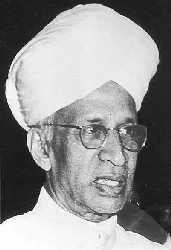
Dr. S. Radhakrishnan (1888-1975) was one of the most profound philosophers of this century, author and educationalist. Radhakrishnan was also a professor of Eastern Religions at Oxford and later became the second President of free India. He has observed:

“The intolerance of narrow monotheism is written in letters of blood across the history of man from the time when first the tribes of Israel burst into the land of Canaan. The worshippers of the one Jealous God are egged on to aggressive wars against people of alien cults. They invoke Divine Sanction for the cruelties inflicted on the conquered. The spirit of old Israel is inherited by Christianity and Islam. He went on to remark: “Wars of Religion which are the outcome of fanaticism that prompts and justifies the extermination of aliens of different creeds are practically unknown in Hindu India.”   

The Christian desire for world dominion transformed the simple faith of Jesus into a fiercely proselytizing creed. After the time of Constantine, authorities, clerical and secular, displayed systematic intolerance towards other forms of religious belief, taking shelter under the words 'He that is not with me is against me, and he that gathereth not with me, scattereth."

(source: The Hindu View of Life - By Dr. S. Radhakrishnan  p. 40 and Eastern Religions and Western Thought - By Dr. Sarvepalli Radhakrishnan p. 10 ). For more on Dr. S. Radhakrishnan refer to chapter on QuotesRefer to The War of Religions and The Saint Bartholomew's Day Massacre. Refer to Jesus Christ: Artifice for Aggression - By Sita Ram Goel

Refer to Christian persecution against the Hellenes - ethnicoi.org. Refer to Things They Don't Tell you about Christianity and First English Bible Fueled First Fundamentalists - livescience.com

Refer to Radical Christian Missionaries in Iraq and Islam – Christianity’s angry sibling? - faithfreedom.org and The Jesus Police. For Cruelty inflicted by Christianity - Watch Constantine's Sword movie - By Oren Jacoby. Watch Why we fight (2005) documentary - Imperial and technological arrogance of world's Super power: describes the rise and maintenance of the United States military-industrial complex and its involvement in the wars led by the United States during the last fifty years, and in particular in the 2003 Invasion of Iraq. The film alleges that in every decade since World War II, the American public has been told a lie to bring it into war to fuel the military-economic machine, which in turn maintains American dominance in the world.
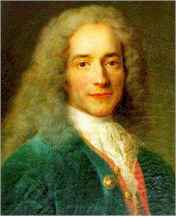
Francois Marie Arouet Voltaire (1694-1774) France's greatest writers and philosophers, was atheist, and a bitter critic of the Church, which he looked upon as the instigator of cruelty, injustice, and inequality, wrote, in a letter to Frederick the Great (1712–86): 

"Christianity is the most ridiculous, the most absurd, and bloody religion that has ever infected the world." Where is the prince sufficiently educated to know that for seventeen hundred years the Christian sect has done nothing but harm?' "Every sensible man, every honorable man, must hold the Christian sect in horror."

“You will notice that in all disputes between Christians since the birth of the Church, Rome has always favored the doctrine which most completely subjugated the human mind and annihilated reason.” “As you know, the Inquisition is an admirable and wholly Christian invention to make the pope and the monks more powerful and turn a whole kingdom into hypocrites.”  

In his 'Philosophical Dictionary', Voltaire gave a time-defying verdict:

"Pagan religion shed very little blood, while ours flooded the earth with it. Christianity has deluged the earth with blood for the sake of sophisms'."

About the atrocities committed by the Roman Catholic Church in Goa in the 16th, 17th and 18th centuries, Voltaire in his 'Fragments of India's History' observed: 'Goa is sadly famous for its Inquistion, which is contrary to humanity as much as to commerce. The Portuguese monks deluded us into believing that the Indian populace was worshipping the Devil, while it is THEY who served him'.

(source: Letter to Frederick the Great, quoted in the Encyclopedia of Unbelief  Prometheus Books, 1985, p. 715). 

Koenraad Elst (1959 -  ) a Belgian Indologist has pointed out: "Hindu Society has been suffering a sustained attack from Islam since the 7th century, from Christianity since the 15th century, and this century also from Marxism. The avowed objective of each of these three world-conquering movements, with their massive resources, is the replacement of Hinduism by their own ideology, or in effect: the destruction of Hinduism. 

"This concern is not at all paranoid (as the spokespersons of these aggressors would say), even if the conversion squads are remarkably unsuccessful in India. Consider the situation in Africa: in 1900, 50 % of all Africans practiced Pagan religion; today Christian and Islamic missionaries have reduced this number to less than 10 %. 

That is the kind of threat Hinduism is up against."

(source: Negationism in India - By Koenraad Elst   p 78 - 79). Watch The Crescent and the Cross  

Refer to Islam – Christianity’s angry sibling? - faithfreedom.org and The Jesus Police
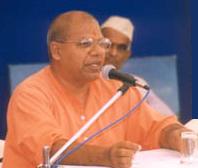
Swami Aksharananda (   )  an Indian of Caribbean origin and holds a Ph.D. degree in Hindu Studies from the University of Madison, Wisconsin (USA) has observed:

 "The concept that “All religions are one” as propagated by Gandhi incessantly is the most destructive concept that is affecting us all. It is not only silly but dangerous fallacy to propagate the idea that all religions are one. Hindus, who are under severe attacks every day by the same forces of Allah and Christ. Hinduism and other religions can’t be equated and called same because “religions” of the world have been born in the environment of hostility.

(source: All religions are not same - By Swami Aksharanand - theuniversalwisdom.org).
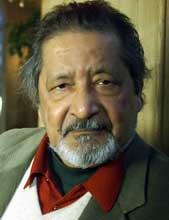
Sir V S Naipaul (1932 - ) Nobel laureate, He is the author of several books including Beyond Belief: Islamic Excursions Among the Converted Peoples Among the Believers: An Islamic Journey, and India: A Wounded Civilization says:

“India has been a wounded civilization because of Islamic violence: Pakistanis know this; indeed they revel in it. It is only Indian Nehruvians like Romila Thapar who pretend that Islamic rule was benevolent. We should face facts: Islamic rule in India was at least as catastrophic as the later Christian rule. The Christians created massive poverty in what was a most prosperous country; the Muslims created a terrorized civilization out of what was the most creative culture that ever existed.”

(source: OutlookIndia.com, 15 November 1999 and  http://www.indpride.com/vsnaipaul.html).

Naipaul has remarked:

“How do you ignore history? But the nationalist movement, Independence movement ignored it. You read the Glimpses of World History by Jawaharlal Nehru, it talks about the mythical past and then it jumps the difficult period of the invasions and conquests. So you have Chinese pilgrims coming to Bihar, Nalanda and places like that. Then somehow they don’t tell you what happens, why these places are in ruin. They never tell you why Elephanta island is in ruins or why Bhubaneswar was desecrated.”

There is nothing either in the time-honored doctrines or the hoary history of Hinduism, which resembles even remotely the ideology, or history of Nazism, or for that matter, Christianity or Islam or Communism. Hinduism has always been and remains a deep-rooted tradition of spiritual, cultural and social pluralism with ample provision for all sorts of skepticism and democratic debate. Far from creating any machinery for heresy hunting and persecution of dissent. Hindus have given shelter to the persecuted people from many lands and in all ages. But what is most important, they have always regarded their own homeland as the only playfield for their chakravartins, and never waged wars of conquest beyond the borders of Bharata-varsha. India has been invaded by many foreign faiths, only to be absorbed in the vast Indian humanity until the advent of Islam which spread more by its fire and sword and later Christianity by more subtle means of inducements and compulsions. It is important that Hindus remember the atrocities of the past, for "Those who forget history will be condemned to repeat it." 

Aldous Huxley
(1894-1963) the English novelist and essayist, born into a family that included some of the most distinguished members of the English ruling class, author of Perennial Philosophy  (ISBN 0060901918) also notices: 

"Islam's black record of holy wars and persecution - a record comparable to that of later Christianity."

"The religions whose theology is least preoccupied with events in time and most concerned with eternity, have been consistently less violent and more humane in political practice. Unlike early Judaism, Christianity and Mohammedanism (all obsessed with time) Hinduism and Buddhism have never been persecuting faiths, have preached almost no holy wars and have refrained from that proselytizing religious imperialism which has gone hand in hand with political and economic oppression of colored people."

"Most European and American authors of books about religion and metaphysics write as though nobody had ever thought about these subjects except Jews, the Greeks Christians of Mediterranean Basin and Western Europe. Like any other form of imperialism, theological imperialism is the threat to world peace".

(source:
The Perennial philosophy - By Aldous Huxley  p. 194 - 204). For more on Aldous Huxley on  refer to chapter on QuotesRefer to Christian persecution against the Hellenes - ethnicoi.org. Refer to Things They Don't Tell you about Christianity and First English Bible Fueled First Fundamentalists - livescience.com. Refer to Islam – Christianity’s angry sibling? - faithfreedom.org and The Jesus Police

Watch The Crescent and the Cross Refer to QuickTime trailer and Part One of the film The God Awful Truth. Refer to Columbus, The Indians, and Human Progress - By Howard Zinn and Radical Christian Missionaries in Iraq

For Cruelty inflicted by Christianity - Watch Constantine's Sword movie - By Oren Jacoby

M V Kamath (?) the Indian columnist has written eloquently:

"For no other country in the world from east to west, faces the agony that the Hindus in India have to face. They are the injured party; but they are crucified by the secularists—most of them themselves Hindus—at every stage. No country in the world has been so ravaged and raped by outside forces as India has been down the centuries: Not Japan, not China, not Russia, none of the European countries, neither the Arab nations and certainly not the United States of America. Krishnadevaraya of the Vijayanagar Empire did not send his forces to Portugal to tear down churches, use force to convert Christians to Hinduism and indulge in religious terrorism. Prithviraj Chauhan did not invade Afghanistan nor Central Asia and raise temples. '

"No Chola, Chera or Pandya ruler sent a fleet to Saudi Arabia to tear down the Ka’aba and build a temple to Meenakshi on its ruins or even next to it to demonstrate Hindu might. India and Hinduism have been ravaged beyond belief. Hindu missionaries did not accompany a conquering horde to Britain and under their benign rule set to convert Scottish peasants to Hinduism—or even Buddhism."

(source: Help us bear the burden of secularism - By M. V. Kamnath - organiser.org).

Archbishop Desmond Tutu (1931 - ) is a South African cleric and activist who rose to worldwide fame during the 1980s as an opponent of apartheid. Tutu was the first black South African Anglican Archbishop of Cape Town, South Africa.  He was awarded the Nobel Peace Prize in 1984.

"It was Christians, you know, not Pagans, (Heathens) who were responsible for the Holocaust

It was Christians, not Pagans, who lynched people here in the South, who burned people at the stake, frequently in the name of this Jesus Christ"  

(source: Famous Quotes - crusadewatch.org). Refer to Columbus, The Indians, and Human Progress - By Howard Zinn.  Refer to Christian persecution against the Hellenes - ethnicoi.org and Radical Christian Missionaries in Iraq .

Refer to QuickTime trailer and Part One of the film The God Awful Truth. Refer to World Conquering Creeds - By Dr. Koenraad Elst - chapter on Glimpses XVI

Gore Vidal (1925 -   )  well known American writer, the eminent historian, and a public figure for over fifty years, in his Lowell Lecture at Harvard University given April 20, 1996 observed:

“When the white race broke out of Europe 500 years ago,… inspired by a raging sky-god, the whites were able to pretend that their conquests were in order to bring the One God to everyone, particularly those with older and subtler religions. ………

“From a barbaric Bronze Age text known as the Old Testament, three antihuman religions have evolved --Judaism, Christianity, Islam. These are sky-god religions. They are, literally, patriarchal --God is the omnipotent father-- hence the loathing of women for 2,000 years. The sky-god is a jealous god, of course. Those who would reject him must be converted or killed for their own good. Ultimately, totalitarianism is the only sort of politics that can truly serve the sky-god's purpose. Any movement of a liberal nature endangers his authority and that of his delegates on earth. One God, one King, one Pope, one master in the factory, one father-leader in the family home."

“I regard monotheism as the greatest disaster ever to befall the human race. I see no good in Judaism, Christianity, or Islam -- good people, yes, but any religion based on a single, well, frenzied and virulent god, is not as useful to the human race …” “More people have been killed in the name of Jesus Christ than any other name in the history of the world.” "Christianity is such a silly religion."

(source: Lowell Lecture at Harvard University given - By Gore Vidal - April 20, 1996 and positiveatheism.com and Gore Vidal, in Time magazine, September 28, 1992, p. 66, from James A Haught, ed., 2000 Years of Disbelief). Refer to Jesus Christ: Artifice for Aggression - By Sita Ram Goel and Watch The Crescent and the Cross
"It is the same ship that brought the Bible which also carried guns and alcohol to Africa ."

                                              - Michael Baffoe author of Demonizing African Culture in the Name of Christianity

Refer to QuickTime trailer and Part One of the film The God Awful Truth. Refer to World Conquering Creeds - By Dr. Koenraad Elst - chapter on Glimpses XVIRefer to Christian persecution against the Hellenes - ethnicoi.org. Watch The Bible is Bullshit - Penn & Teller examine the Bible. Refer to Oppose Christian Missionaries and Radical Christian Missionaries in Iraq Watch How do we know that Christians are delusional?

Refer to Columbus, The Indians, and Human Progress - By Howard Zinn  

Karl Marx (1818-1883), German social philosopher, the chief theorist of modern Communism, and author of Das Kapital, was not a sympathizer of  imperialism or capitalism. 

In The British Rule in India he wrote:

“There cannot, however, remain any doubt but that the misery inflicted by the British on Hindustan is of an essentially different and infinitely more intensive kind than all Hindustan had to suffer before. They destroyed it ( India ) by breaking up the native communities, by uprooting the native industry, and by leveling all that was great and elevated in the native society. The historic pages of their rule in India report hardly anything beyond that destruction.”

“Did they not, in India , to borrow an expression of that great robber, Lord Clive himself, resort to atrocious extortion, when simple corruption could not keep pace with their rapacity? 

While they prated in Europe about the inviolable sanctity of the national debt, did they not confiscate in India the dividends of the rajahs, who had invested their private savings in the Company's own funds? The devastating effects of English industry, when contemplated with regard to India , a country as vast as Europe , and containing 150 millions of acres, are palpable and confounding.” 

(source: CPI(M) and Karl Marx - By Dipak Basu - indiacause.com).

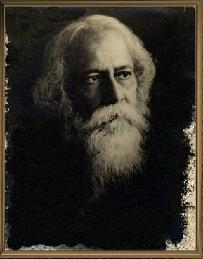
Rabindranath Tagore (1861-1941) poet, author, philosopher, Nobel prize laureate. Tagore was deeply critical of the British Raj in India. He also made some statements to the press about the ghastly book by Katherine Mayo called Mother India, which was then a huge bestseller in the U.S. He wrote:

“The chronic want of food and water, the lack of sanitation and medical help, the neglect of means of communication, the poverty of educational provision, the all pervading spirit of depression that I have myself seen to prevail after over a hundred years of British rule make me despair of its beneficence.”

“Rudely shaken out of my dream I began to realize that perhaps in no other modern state was there such hopeless dearth of the most elementary needs of existence. And all the time before our eyes Japan has been transforming herself into a mighty and prosperous nation. I have also been privileged to witness the unsparing energy with which Russia has succeeded in steadily liquidating ignorance and poverty wiping off the humiliation from the face of a vast continent. I cannot help contrasting two systems of governance: one based on cooperation and the other on exploitation. Thus, while these other countries were marching ahead, India smothered under the dead weight of British administration lay static in her utter helplessness”.

(source:
A Hundred Years of Rule, The Manchester Guardian, Friday 2 October 1936 and Crisis of Civilization’ - By Rabindranath Tagore). Refer to Loot: in search of the East India Company - By Nick Robins and How India became poor - indiarealist.com

Dharampal (1922 - 2006) a Gandhian and author of several books including The Beautiful Tree and Indian Science and Technology in the Eighteenth century. 

He wrote extensively of the damage the British Raj inflicted on India and Indians:

"The conquered in their view, had ultimately to disappear, if not wholly physically, at least as a culture and civilization. In Australia, and New Zealand practically all the local inhabitants were wiped out soon enough; in North America near complete elimination happened, over 300-400 years, and in Ireland only partially. The indigenous population of the Americas had been estimated at 112 to 140 millions in 1492. 

In India a large number perished by British brutality and deliberate creation of famines, violation of persons bodies and dignity; in Palnad in Andhra, half of the population was said to be have perished every ten years, during several decades after the subjugation of the areas by Britain. It seems as if the intellectuals and leaders of Britain hated India, and felt outraged that in spite of all their brutalities, smashing of Indian institutions, high extortions, and tortures, men made famines and expropriation of Indian resources to the British state, and thus the all round breakdown of Indian society, the Indians on the whole, could not be wiped out that easily. "

(source:
Despoliation and Defaming of India – By Dharampal published by Bharat Peetham, Wardha Other India Press, Goa  p. 1 - 17). Refer to Loot: in search of the East India Company - By Nick Robins and How India became poor - indiarealist.com

Noam Chomsky (1928 - ) is an American linguist, philosopher, political activist, author, and lecturer. He is an Institute Professor and professor emeritus of linguistics at the Massachusetts Institute of Technology. He is author of several books including Hegemony or Survival: America's Quest for Global Dominance (American Empire Project)

His book, Year 501: The Conquest Continues is a devastating and scathing critique and indictment of Western capitalism. It is the essential book for understanding the reasoning and motives behind the annihilation of the indigenous population of the world and the countries that were enriched by it.  

He has observed that:

'Places like India and Bengal ( Bangladesh ) which were highly advanced industrial societies by the mid-1700's but all of the industries which were superior to their counterparts in Britain were deliberately undermined or simply forced out of existence by the British colonisers. India and Bangladesh became extremely poor, feudal agricultural countries supplying Britain with raw materials and as a captive market for British goods."  

(source: Year 501: The Conquest Continues - By Naom Chomsky). Refer to It's Imperialism, Stupid - By Noam Chomsky. Refer to Iraq: The Hidden Cost and Iraq ’s erasure and Asian racial delusions - By Dr Gautam Sen - The Americans set out to destroy Iraq, which is why they began a calculated genocidal war against it. The mere removal of Saddam Hussein, whom they themselves had put into power decades earlier and nurtured cynically, was clearly inadequate for their goal of dismantling Iraq comprehensively. The moment the Americans destroyed Iraq ’s museums and libraries it was clear that the contemporary descendants of the Mongol scourge, Hulegu (destroyer of Baghdad in 1251AD) had arrived. The killing of Iraqis on a massive scale by Bush and his Leftist British minions has been accompanied by the targeted elimination of professionals. The destruction of Iraqi civilisation is being completed by erasing its historical records and cultural artefacts, the conduits of collective historic memory. The brutal Romans, though more civilised than modern Americans, would have recognised the imperial logic of scorched earth to secure rule). Prince Andrew rebukes US on IraqHe said the US should have learned lessons from British colonial history and he added that there had been "occasions when people in the UK would wish that those in responsible positions in the US might listen and learn from our experiences". Watch No end in sight documentary (2007) and refer to The Looting of Baghdad museum: US government implicated in planned theft of Iraqi artistic treasures - The pillaging of the Baghdad Museum is a tragedy that has no parallel in world history; it is as if the Uffizi, the Louvre, or all the museums of Washington D.C. had been wiped out in one fell swoop. Some compare the event to the burning of the Alexandria Library. Eight thousand years of human history has been erased in two days.

Refer to Islam – Christianity’s angry sibling? - faithfreedom.org and The Jesus Police and Radical Christian Missionaries in Iraq

Arthur Schopenhauer (1788-1860), German philosopher and writer. He was one of the greatest philosophers of the 19th century. He was the first Western philosopher to have access to translations of philosophical material from India, both Vedic and Buddhist, by which he was profoundly affected. Counted among his disciples are such thinkers as Nietzsche and Wittgenstein, as well as Sigmund Freud, who takes a large part of his psychological theory from the writings of Schopenhauer.

He comments on the atrocities inflicted on the Hindus:
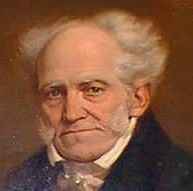
"...on the fanaticism and endless persecutions, the religious wars, that sanguinary frenzy of which the ancient had no conception! Think of the crusades, a butchery lasting two hundred years and inexcusable, its war cry 'It is lasting two hundred years and inexcusable, its war cry  'It is the will of God,'  Think of the orgies of blood, the inquisitions, the heretical tribunals, the bloody and terrible conquests...in three continents, or....in America, whose inhabitants were for the most part, not looked upon as human!  And above all, don't lets forget India, the cradle of the human race, or at least of that part of it to which we belong, where first.. were most cruelly infuriated against the adherents of the original faith of mankind. The destruction or disfigurement of the ancient temples and idols, a lamentable, mischievous and barbarous act still bear witness to the monotheistic fury...carried on from Mahmud, the Gahaznevid of cursed memory, down to Aurengzeb, the fratricide, whom the Portuguese...have zealously imitated by destruction of temples and the auto defe of the Inquisition of Goa..."For the sake of truth, I must add that the fanatical enormities perpertrated in the name of religion are only to be put down to the adherents of monotheistic creeds...We hear nothing of the kind in the case of the Hindoos and Buddhists." 

(source: The Essays of Arthur Schopenhauer - By T. Bailey Saunders  p. 42 - 43). Watch The Crescent and the Cross

Friedrich Max Muller (1823-1900) German philologist and Orientalist. He repeatedly drew attention to the uniqueness of the Vedas and awakened interest in Indology among educated people. 

He did more than any other scholar to popularize philology and mythology, e.g., his lectures Science of Language. Muller is best known for his series Sacred Books of the East

"Christianity is a missionary religion, converting, advancing, aggressive, encompassing the world; a non-missionary church is in the bands of death." 

(source: crusadewatch.org). Refer to Loot: in search of the East India Company - By Nick Robins and How India became poor - indiarealist.com

Cannibalizing Cultures - Pests from the West 
Religion, money and armed might, the unholy trinity of Neo-Imperialism.

Sesha Samarajiwa ( ? ) from Sri Lanka is interested examining foreign religious agents’ role as Fifth Columnists of neocolonialism/neoimperialism. He has written:

"Evangelists belong to a long line of pests from the West who have come and keep coming like locusts to colonize our souls and cannibalize our cultures.

The latest incursions are merely a continuation of the 500-year-old sorry saga of Asia, Africa and South America , which began with the arrival of the Portuguese and the Spaniards. Some have never recovered from the machinations of their priests and the savagery of their conquistadors. The baton of imperialism has passed from the Europeans to the Americans. That is not to say that the rest of the West has dropped out. They have not. They are very much in the game. It’s just that the Americans are in the lead, the new Romans on the rampage. 

We know well how the Europeans won the West. They won it through mass genocide of the native populations in North and South America . In South America , hundreds and thousands of natives who resisted conversion were garroted. There is a poignant painting depicting such conversions. It shows armored Spanish soldiers garroting native priests, while a Spanish priest holds up a large cross. More terrified natives await their turn. On the side, another Spanish priest feeds stacks of ancient gold-leaf books of the Mayans into a fire. On the face of the Mayan priests, a look of utter sadness mixed with resignation.

In places like India and Sri Lanka , they were no better. They too faced abject horrors. In his book, Christianity's scramble for India , Navaratna Rajaram says that “the Christian Missionary is neither a Christian nor a missionary. In fact, he is a racist and a white supremacist in priestly guise.” Their Buffalo Bills and their Wild Bills, their Custers and their Cortezes, and the long line of predators and priests made sure that the sorry remainder of once-proud nations would remain so, while they ruled the roost in lands drenched with native blood. Many weaker cultures succumbed to the relentless onslaught from the West. They either slaughtered those who resisted or they sowed the seeds of abjection and their eventual self-destruction. Even today, we see the pathetic dregs of once-noble nations staggering around native reservations and barrios in North and South America, in Australia , in Canada , in New Zealand . They have lost their spirit. They have lost their will to live. They seem embarrassed to be alive. They are self-destructing. At best, they are performing monkeys titillating whites with a thirst for the exotic. These are abject peoples, vanishing tribes. Now, not satisfied with ruling their large chunk of raided real estate, they are hell-bent on extending their hegemony over the whole world. They howl in protest when the natives resist. Human misery is happy hunting grounds for these spiritual cartels. They strike when their targets are at their weakest or bomb them to submission to make sure they are at their weakest. Thus softened up, they are susceptible to inducements and brainwashing. They are canny. To ‘convert’ people, you must first make them despise and reject what had sustained their people for millennia. So they vilify their faith or convince them it is a spent force or dark superstition. In so doing, they make us spit on our heritage.

(source: Beware of wolves in sheep’s clothing - By Sesha Samarajiwa - Asian Tribune October 9, 2007). Refer to First English Bible Fueled First Fundamentalists - livescience.com

Christian Europe has always believed that it has the divinely ordained mission of bringing all heathendom under the domain of the Church; similarly at the dawn of modern period, Imperial Europe felt heavily the “white man’s burden of civilizing the world”.  

Edmund Gustav Albrecht Husserl (1859 – 1938) German philosopher says:  

“Naturally the “Europeanization of all foreign parts of the world” is the destiny of the earth. God made Europe in His own image and now the rest of mankind will be made in the image of Europe .”

Martin Heidegger (1889 - 1976) Raised as a Roman Catholic, a German philosopher and author of Being and Time, also refers to the “complete Europeanization of the earth and of mankind.”

(source: On Hinduism – By Ram Swarup  p. 120 - 123).

Dr Charles Sabillon ( ?) author of several books, has observed in his article Christianity and Islam: Which is the Worst?

"The origins of both religions are based on the claims of two men, Jesus and Mohammed, and both men proved equally incapable of demonstrating their divine mandate. From that perspective, the two creeds are equally based on false propositions and can be classified as nothing more than lies. Mohammed ordered his followers to do it by the sword, and that is what they did once he died. They launched into one of the most enthusiastic conquering ventures the world has ever seen and forged an empire that extended from Central Asia to the southwest of Europe. 

Nations were ruthlessly converted to Christianity by the sword just like Islam converted Arabia, Central Asia, and Africa by the sword. With his armies, Charlemagne preached the Gospel of the cross to the Saxons, the Germans, the Bohemians, and the Hungarians. This was not the only evangelizing military operation. There were also the infamous Crusades from the eleventh to the thirteenth century, the Inquisition, and the conquest of the American continent from the sixteenth century onwards. Throughout the Middle Ages in Europe, the Christian Church was the most militarily powerful organization in that continent. Being the largest landowner and the biggest tax collector provided the Pope with huge amounts of money, which were used to solidify his power by establishing a potent armed force.

(source: Christianity and Islam: Which is the Worst? - By Charles Sabillon - americanchronicle.com). Refer to Things They Don't Tell you about Christianity.  Refer to First English Bible Fueled First Fundamentalists - livescience.com

Refer to Radical Christian Missionaries in Iraq and Stolen Kingdom: An American Conspiracy - By Budnick, Rich (1992). Honolulu: Aloha Press. For more refer to chapter on Glimpses XIX

Refer to Holy warriors in the US armed forces and Christian embassy and Officers Christian fellowship and Ambassadors for Christian Dominion in Uniform. Watch Why we fight (2005) documentary - Imperial and technological arrogance of world's Super power: describes the rise and maintenance of the United States military-industrial complex and its involvement in the wars led by the United States during the last fifty years, and in particular in the 2003 Invasion of Iraq. The film alleges that in every decade since World War II, the American public has been told a lie to bring it into war to fuel the military-economic machine, which in turn maintains American dominance in the world.

Civilizational Graveyards? Modus Operandi of Christianity around the Globe
Pax Britannica to Pax Americana ?

Andrew Jon Rotter, an American historian, and professor at Colgate University, writes:

"Most Westerners see expansion as the logical extension of power, if you have it use it. Westerners imagine space as available, beckoning those outside to occupy it, settle it, master it.  

“The history which Europeans constructed for themselves was part of a growing process of control over space.” – writes Bernard S Cohen.  

Beginning with the 17th century, European settlers saw space as an opportunity. Americans moved West if they failed in the east, for the West would allow them to start life over again. Space was a necessity. Space was exciting, democratic, more liberated and more dangerous than what passed for civilization in the East. Space was a White American right, and Native Americans who challenged the right of a White American to move west must be removed or destroyed. “Expansion lies at the center of the American Weltanschauung (world view)."  

(source: Comrades at Odd: Culture and Indo-US relations 1947-1964 – By Andrew Kotter p. 40). Refer to The Sole Superpower in Decline - By Dilip Hiro August 20, 2007. Refer to The Empire is over – By Charlie Reese and How Super Was Our Power Anyway? - thenation.com. Refer to Hooked on War: Thomas Friedman's Deadly Addiction - New York Times Thomas Friedman is the man who called invading Iraq "one of the noblest things this country has ever attempted abroad." Also refer to USA - What does the Constitution say about religion? - WBIR.com 8 December, 2007. Refer to Iraq ’s erasure and Asian racial delusions - By Dr Gautam Sen

Refer to What Every "Ugly American" Must Know about the "Civilized British - www.larouchepac.com. Refer to Mandela Slams Bush - "What I am condemning is that one power, with a president who has no foresight, who cannot think properly, is now wanting to plunge the world into a holocaust." And that wasn't all. He attacked America for its record on human rights and for dropping atomic bombs on Japan World War II. "If there is a country that has committed unspeakable atrocities in the world, it is the United States of America . They don't care."

William Dalrymple (1965 - ) author of The Last Mughal, and award-winning travel writer and historian, says:

'Islamic fundamentalism and Western imperialism have often been closely and fatally intertwined'

"You see so many parallels. The evangelical politicians, including George W Bush, cast their opponents and enemies in the role of 'incarnate fiends' as the British did the mutineers in 1857. The Western politicians also conflate armed resistance to invasion and occupation with 'pure evil' as the British did in 1857. Like the British in 1857, Western powers today are stubbornly blind to the effects their policies have on the wider world... they are not examining their own policies."

(source: Islamic fundamentalism and Western imperialism have often been closely and fatally intertwined - rediff.com). Refer to A Game as Old as Empire: The Secret World of Economic Hit Men and the Web of Global Corruption - By John Perkins and The American Empire page - thirdworldtraveler.com. Refer to Iraq: The Hidden Cost.

Refer to Holy warriors in the US armed forces and Christian embassy and Officers Christian fellowship and Ambassadors for Christian Dominion in Uniform

John Shelby Spong, Episcopal Bishop of Newark (NJ)  in 'Why Christianity Must Change or Die' writes: 

“The familiar Christian God acknowledged by almost all of our European ancestors not only blessed the imperialistic and colonial expansion of those nations in the seventeenth, eighteenth, and nineteenth centuries but also declared that this colonialist domination of the underdeveloped peoples of the world was the very will of the Christian deity. So under the banner of Christ, native population in what we today call the third world were subjugated and converted, while the resources of those conquered nations were being extracted from their soil to bring wealth to the Europeans".

(source: The Ethics of Proselytizing - By Rajiv Malhotra). Refer to Jesus Christ: Artifice for Aggression - By Sita Ram Goel. Refer to Loot: in search of the East India Company - By Nick Robins and How India became poor - indiarealist.com

Due acknowledgement must be done for the massacres of millions of our ancestors, so that the wounds can finally heal. Their deaths and untold suffering were by and large solely due to their being Hindus, Buddhists, Jains and Sikhs. These non-Semitic Indic faiths have a great affinity for true secular practices and this rapport will not be threatened by letting truth prevail. On the contrary, true secularism is undermined and damaged when the leadership - political and intellectual - conspire to hide historical truth under the festering scab of pseudo-secularism.

Barbarians at the Gate

***

Two Chapters in India's history are most noted for its atrocities against Hinduism:

Islamic Onslaught
European Imperialism


European Imperialism

To Shake the Pagoda Tree
Vasco da Gama's arrival

Indology and the British
Anglicists versus Orientalists
Divide and Rule - Cost of Partition
First War of Independence - The Great Indian Mutiny 1857
British "Justice" In India?
Colonial Relationship: Rape of Indian Women
Indians Not Allowed: A Humiliating Raj
Babu English and Rudyard Kipling Insults
Jallianwala Bagh - Massacre to ' Teach the bloody browns a lesson'

Rape of India by the British
Famines in British India: An enduring disaster of the Raj
India in Bondage
Economic and Social Destruction
Is British Rule in India Efficient?
World War I and Hindu Soldiers
Divide and Quit
 
The Great Farce 
Atrocities by the Christian Missionaries in Goa
The Goa Inquisition
Articles

***

Religious Conversion has been a Foreign policy objective of the Christian West.

Conversion is political conquest, which is why faith and empire have always gone hand-in-hand. 

***

"I saw in the whole Christian world a license of fighting at which even barbarous nations might blush. Wars were begun on trifling pretexts or none at all, and carried on without any reference of law, Divine or human"

                     -  Hugo Grotius (1583- 1645) Dutch legal scholar, playwright and poet. One of the pioneering natural rights theorists of the late 16th and early 17th centuries. 

 "Every aspect of the Empire was an aspect of Christ" -  James Morris author of Pax Britannica: Climax of an Empire Refer to Loot: in search of the East India Company - By Nick Robins and How India became poor - indiarealist.com

(source: hamsa.org. Refer to Jesus Christ: Artifice for Aggression - By Sita Ram Goel.  Refer to World Conquering Creeds - By Dr. Koenraad Elst - chapter on Glimpses XVI

" Evangelism was on the ascendant in the 19th century as the dominant ideology of the British Empire builders in India. Evangelists equated the material superiority of the West with the moral superiority of Christianity." 

                  -  Partha Mitter, author of Much Maligned Monsters: A History of European Reactions to Indian Art  p. 238. Refer to Think tank alleges British MPs involved in promoting evangelism in India - hinduvoice.co.uk.  Refer to Things They Don't Tell you about Christianity and Radical Christian Missionaries in Iraq. Watch An Invasion through Conversion - youtube.com .

“Onward, Christian soldiers, marching as to war,
With the cross of Jesus going on before.
Christ, the royal Master, leads against the foe;
Forward into battle see His banners go!"

                - wrote Rev. Sabine Baring-Gould (1834 – 1924). Refer to British Imperialism: Gold God Glory - By Robin W Winks. The motives for classical imperialism were frequently associated with the three G’s - Gold, God and Glory. Refer to First English Bible Fueled First Fundamentalists - livescience.com

"Baptize the nations, far and high
The triumph of the cross record
The name of Jesus glorify
Till every kindred call him Lord. " 

               - An Anglican hymn.

"Onward Chartered Soldiers, on to heathen lands,
Prayer books in your pockets, rifles in your hands.
Take the glorious tidings where trade can be done,
Spread the peaceful gospel --- with a Maxim gun.

Tell the wretched natives, sinful are their hearts,
Turn their heathen temples into spirit marts.
And if to your teaching they will not succumb,
Give them another sermon with the Maxim gun...

When the Ten Commandments they quite understand,
You their Chief must hocus, and annex their land;
And if they misguided call you to account,
Give them another sermon --- with a Maxim from the Mount."

  - When Cecil Rhodes embarked on war with Lobengula in Matebele, his troops used a new "secret weapon:" the Maxim which could fire 500 rounds a minute. In 1893, in the battle of Shangani River, 1,500 Matebele warriors were killed while only four British died. The English Liberals penned a bitter satire on the victory, which Rhodes ' men --- the Chartered Company Volunteers then cynically adopted as their anthem.  

"Jesus Christ" functions as a symbolic cloak for several hidden agendas .

- Robert M Price, author of The God Who Wasn't there.  Refer to Oppose Christian Missionaries and Radical Christian Missionaries in Iraq .

"Evangelical Christianity, born in England and nurtured in the United States, is leaving home."

                    -  Paul Nussbaum, author of Evangelical Christianity shifting outside West - Philadelphia Inquirer  Feb 20, 2006. Refer to First English Bible Fueled First Fundamentalists - livescience.com. Also refer to USA - What does the Constitution say about religion? - WBIR.com 8 December, 2007 and Iraq ’s erasure and Asian racial delusions - By Dr Gautam Sen.

“Christianity has been--and continues to be--a religion of empire.” - By Tim Mitchell

"When the missionary came he had the Bible and we had the land; now we have the Bible and he has the land." - An African has said. That pretty well sums up the fact that capitalism follows the Bible-thumper and destroys not only the culture, but the economic basis of the country. - By Roy Brown.

Refer to Why Evangelical Christians march on the Iraq warpath - ReligionNewsBlog.com and Onward Christian soldiers - By Max Blumenthal - salon.com. Watch the movie - Indoctrination in Jesus Camp. Refer to Their beliefs are bonkers, but they are at the heart of power: US Christian fundamentalists are driving Bush's Middle East policy - By George Monbiot Tuesday April 20, 2004 The Guardian.  Refer to Planet Pentagon: Ownership of the earth, the seas and the skies - By Nick Turse - Le Monde Diplomatique and commondream.org. For more refer to chapter on Glimpses XIX and Iraq: The Hidden Cost.


The British East India Company’s trademark lethal weapon to Pauperize the colonies

***

To Shake the Pagoda Tree

Arnold Hermann Ludwig Heeran (1760-1842) says: “India has been celebrated even in the earliest times for her riches.”  

The wealth, splendor and prosperity of India had made a strong impression on the mind of Alexander the Great, and that when he left Persia for India, he told his army that they were starting for that “Golden India” where there was endless wealth, and that what they had seen in Persia was as nothing compared to the riches of India. 

Chamber’s Encyclopedia says” “India has been celebrated during many ages for its wealth.” The writer of the article “Hindustan” in the Encyclopedia Britannica remarks that India “was naturally reputed to be the seat of immense riches.” 

John Milton (1608 - 1674) English poet most famous for his epic Paradise Lost, voiced the popular belief when he sang of the wealth of India: 

“High on a throne of royal state which far
Outshone the wealth of Ormuz and of
Ind (India)
Or where the gorgeous East with richest hand
Showers on her kings barbaric, pearl and gold.” 
 

(source: Hindu Superiority – By Har Bilas Sarda  p 427 - 430).

William Finch ( ?  ) who came to India in 1608-11, first described Hindu temples as "pagods, which are stone images of monstrous men feareful to behold. He mentioned the temples in Ajmer, "three faire Pagodes richly wrought with inlayd works, adorned richly with jewels. Domingo Paes has left a valuable account of the great Hindu kingdom of Vijayanagar. He saw outside the city very beautiful pagodas, the chief among them was the temple of Vitthalasvamin which was begun by Krsnadeva Raya. Edward Terry, the chaplain to Sir Thomas Roe, King James's emissary described the temple of Nagarkot as 'most richly set forth, both scaled and paved with plate of pure gold." 

The wealth of the temples stirred Jean Thevenot (1633 - 1667) a French traveller, imagination and he wrote about the temples of Benares and Puri that 'nothing can be more magnificent than these Pagodes...by reason of the quantity of gold and many jewels, wherewith they are adorned."

Most foreigners came to India in search of her fabulous wealth. No traveler found India poor until the nineteenth century, but foreign merchants and adventurers sought her shores for the almost fabulous wealth, which they could there obtain. 

'To shake the pagoda tree' became a phrase, somewhat similar to our modern expression 'to strike oil' or to get rich quick.

(source: Much Maligned Monsters: A History of European Reactions to Indian Art - By Partha Mitter  p. 1 - 45). For more refer to chapter on Greater India: Suvarnabhumi and Sacred Angkor

American Historian Will Durant (1885-1981) would like the West to learn from India, tolerance and gentleness and love for all living things. He has observed:

"It was the wealth of 18th century India which attracted the commercial pirates of England and France . This wealth was created by the Hindus’ vast and varied industries and trade. It was to reach India of fabulous wealth that Columbus sailed the seas."

(source: The Case for India - By Will Durant Simon and Schuster, New York. 1930 p.1 - 17).  Refer to Loot: in search of the East India Company - By Nick Robins and How India became poor - indiarealist.com

Samuel Johnson (1709 - 1784) in his Lives of The English Poet, describes 1498, the year of Vasco da Gama’s voyage to India and Columbus’s arrival on the American mainland as 

“a year hitherto disastrous to mankind.” 

“The Europeans,” Johnson says resoundingly, “have scarcely visited any coast but gratify avarice and extend corruption: to arrogate dominion without right and practice cruelty without incentive.” 

(source: Under Western Eyes  - By Balachandra Rajan  p. 83). Refer to Columbus, The Indians, and Human Progress - By Howard Zinn .

Henrich Heine (1797-1856), a late German Romantic lyric poet, whose influence was enormous not only in Germany but in most countries of the Western world. He remarked: 

“The Portuguese, Dutch and English have been for a long time year after year, shipping home the treasures of India in their big vessels. We Germans have been all along been left to watch it. Germany would do likewise, but hers would be treasures of spiritual knowledge.”

(source: India and World Civilization By D. P. Singhal - Pan Macmillan Limited. 1993 part II p. 234).

***

Arnold Toynbee (1889-1975) British historian, has stated: "India is one great non-western society that has been, not merely attacked and hit, but overrun and conquered by Western arms, but ruled, after that, by Western administration. India's experience of the West has thus been more painful and more humiliating than China's..." 

(source: Civilization on Trail and the World and the West - By Arnold Toynbee - Meridian Books. p. 257).

Civilizational Graveyards? Modus Operandi of Christianity around the Globe

Pitrim Alexandrovitch Sorokin (1889-1968) Russian-American sociologist of Harvard University had said: 

"During the past few centuries the most belligerent, the most aggressive, the most rapacious, the most power-drunk section of humanity has been precisely, the Christian Western world. During these centuries western Christendom had invaded all other continents; its armies followed by priests and merchants have subjugated, robbed or pillaged most of the non-Christians. Native Americans, African, Australian, Asiatic populations have been subjugated to this peculiar brand of Christian "love" which has generally manifested itself in pitiless destruction, enslavement, coercion, destruction of the cultural values, institutions, the way of life of the victims and the spread of alcoholism, venereal disease, commercial cynicism and the like."

(source: History of Hindu-Christian Encounters - By Sita Ram Goel  ISBN 9990049173 p. 370). For more refer to chapter on ConversionRefer to Jesus Christ: Artifice for Aggression - By Sita Ram Goel and Refer to QuickTime trailer and Part One of the film The God Awful Truth.
Refer to World Conquering Creeds - By Dr. Koenraad Elst - chapter on Glimpses XVI.

Refer to Columbus, The Indians, and Human Progress - By Howard Zinn  

Will Durant (1885-1981) American historian, would like the West to learn from India, tolerance and gentleness and love for all living things:

"At Elephanta the Portuguese certified their piety by smashing statuary and bas-reliefs in unrestrained barbarity; and almost everywhere in the north the Moslems brought to the ground those triumphs of Indian architecture, of the fifth and sixth centuries, which tradition ranks as far superior to the later works that arouse our wonder and admiration today. The Moslems decapitated statues, and tore them limb from limb; they appropriated for their mosques, and in great measure imitated, the graceful pillars of the Jain temples; time and fanaticism joined in the destruction, for the Hindus abandoned and neglected temples that had been profaned by the touch of alien hands.” 

"Even in its ruins the Temple of Shiva at Elephanta, with its massive fluted columns, its “mushroom” capitals, its unsurpassed reliefs, and its powerful statuary, suggests to us an age of national vigor and artistic skill of which hardly the memory lives today."   

"No blood has been shed for religion in India except by its invaders. Intolerance came with Islam and Christianity; the Moslems proposed to buy Paradise with the blood of “infidels” and the Portuguese, when they captured Goa, introduced the Inquisition into India.”

(source: Story of Civilization: Our Oriental Heritage - By Will Durant MJF Books. 1935. p. 524 – 600).

Carl Sagan (1934-1996) famous astrophysicist, says:

“In Italy, the Inquisition was condemning people to death until the end of the eighteenth century, and inquisitional torture was not abolished in the Catholic Church until 1816. 

"The last bastion of support for the reality of witchcraft and the necessity of punishment has been the Christian churches.”

(source: The Demon-Haunted World - By Carl Sagan).

Sardar Kavalam Madhava Panikkar (1895-1963) Indian scholar, journalist, historian from Kerala, administrator, diplomat, Minister in Patiala Bikaner and Ambassador to China, Egypt and France. Author of several books, including Asia and Western Dominance, India Through the ages and India and the Indian Ocean

He wrote:

"In 1543 Goa was made a Bishopric with authority extending over the entire Far East. Special instructions were issued to the Portuguese Viceroy to root out the infidels. Hindu temples in Goa were destroyed and their property distributed to religious orders (like the Franciscans) in 1540. "

He has further observed:

"The Portuguese, we are told, came to India with a Cross in the one hand and a sword in the other. Their own pretensions in the East were based first on the Bull of Nicholas V, dated January 8th 1454, by which Affonso V was given, by virtue of the pontifical and apostolic authority of the Pope, exclusive rights to all the countries that might be discovered by the Portuguese in Africa and India . The conversion of the inhabitants of the lands so discovered was to be one of the objects of Portuguese policy. In fact, Don Joao II, who was the real originator of the expedition, had much of this evangelistic spirit in him. To the pious Kings of mediaeval Europe conversion of the heathens seemed to be an imperative duty."

"King Joao III (1557-1578) was particularly anxious about the spread of Christianity and wrote to the Viceroy Joao de Castro demanding that all power of the Portuguese should be directed to this purpose. 

"The great concernment which lies upon Christian princes to look to matters of Faith and to employ their forces for its preservation makes me advise you how sensible I am that not only in many parts of India under our subjection but in our city of Goa, idols are worshipped, places in which our Faith may be more reasonably expected to flourish; and being well informed with how much liberty they celebrated heathenish festivals WE command you to discover by diligent officers all the idols and to demolish and break them up in pieces where they are found, proclaiming severe punishments against anyone who shall dare to work, cast, make in sculpture, engrave, paint or bring to light any figure of an idol in metal, brass, wood, plaster or any other matter, or bring them from other places; and against who publicly or privately celebrated any of their sports, keep by them any heathenish frankincense or assist and hide the Brahmins, the sworn enemies of the Christian profession. It is our pleasure that you punish them with the severity of the Law without admitting any appeal or dispensation in the least."   

"An influential school of history holds that the benefits, that India has received from the direct contact with Europe, are of such a nature that, in spite of all their faults, the Portuguese should be considered as the pioneers of civilization and as the forerunners of the British Empire . It may be permitted however, to question the correctness of the point of view, wrongly called historical, which thus tries to import retrospective values into events of an earlier date. Even accepting that the connection with Europe has been beneficial to India , it is open to doubt whether a century and a half of barbarous outrages, of unscrupulous plunder and of barren aggression, is not too great a price to pay for the doubtful benefits of having the way opened for other European traders. India ’s own direct trade was ruined, and, in its place, there was established a monopoly by alien races, which had the effect of draining the wealth of India into Europe . The Portuguese of the 16th and the 17th century had nothing to teach the people of India except improved methods of killing people in war and the narrow feeling of bigotry in religion. The relations between Portugal and India were barren of cultural or political results, and there is in that history nothing which any civilized nation can be proud of. A host of imaginative historians, anxious to sing the glory of their fatherland, have pictured to us the heroic story of a small nation going forth to conquer India and holding it under sway for 150 years, fighting and winning battles against great hordes and conquering heathen worlds for Christ. "

(source: Malabar and the Portuguese - By K M Panikkar Voice of India, New Delhi, 1977 p. 183 - 213 and Asia and Western Dominance, Somayya Publications, Mumbai, 1999, p. 280)    

George Bernard Shaw (1856-1950) Nobel Laureate in Literature. Famous British Author and Playwright, declared that: 

"There is no power in the world more completely imbued of its dominance than the British empire.

"It is clear that the British ruling classes do not contemplate the ending of the era of imperialism; at the most they think in terms of modernizing their system of colonial rule. For them the possession of colonies is 'a necessity of greatness and wealth.' 

(source: The Discovery of India - By Jawaharlal Nehru  p.538).

"Bear in mind that the Commerce of India is the Commerce of the World, and he who can exclusively stock of precious metals then owned in Europe.  - Article VIII of the Will, of Peter the Great.

Much of the wealth that made possible Britain's Industrial Revolution was earned, fairly or unfairly, within her Indian empire. In seventeenth century India had been far wealthier than England, the relative positions were sharply reversed by the end of the nineteenth century. Then, too, the British policy of free trade tended to prevent the development within India of the mechanized industries then coming into being in the West. Densely populated, with no new land to exploit and with a centuries-long history of invasions, India faced severe economic handicaps at independence. Ironically, India was seen by Western travelers in classical times and in the Middle Ages as a land of fabulous wealth. 

(source: India: A World in Transition - By Beatrice Pitney Lamb  p. 71 & 358). For more refer to chapter on Greater India: Suvarnabhumi and Sacred Angkor

India, said Lord Robert Clive, was a country of inexhaustible riches."

Lord Curzon (1859-1925) Marquis of Kedleston, a British statesman, was a Conservative Party politician. He was viceroy of India from 1899 to 1905, and later became chancellor of Oxford University. Curzon re-entered politics during World War I (1914-1918). He became a member of Lloyd George's war cabinet in 1916. In an address delivered at the great Delhi Durbar in 1901:

"Powerful Empires existed and flourished here [in India] while Englishmen were still wandering painted in the woods, and while the British Colonies were a wilderness and a jungle."

"India has left a deeper mark upon the history, the philosophy, and the religion of mankind, than any other terrestrial unit in the universe."

"It is such a land that England has conquered and is holding as a dependency. It is such a people that she is ruling without giving them any voice whatever in the shaping of their own destiny."

(source: India in Bondage: Her Right to Freedom - By Jabez T. Sunderland p. 7 and theatlantic.com). 

For more refer to chapter on Greater India: Suvarnabhumi and Sacred Angkor

E M Forster (1872 - 1970) was an English novelist, short story writer, and essayist. He is most famous for his novels, most of which have been filmed. His most famous novel was A Passage to India (1924)

He wrote:

“The Englishman in India has been trained “in the fine tradition of paternal governmentand “In India we have done much good and have a right” and “our sudden withdrawal would be disastrous.”  

(source: The Raj Syndrome: A Study in Imperial Perceptions - By Suhash Chakravarty. Penguin Books. 1991 p. 248).

Canon Sydney Smith (1771 - 1845) a clergyman, essayist and social reformer, founded the Whig Edinburgh Review in 1802. For the next twenty-five years he used this periodical as an organ for his liberal views on educational reform, the slave trade and the Irish situation. Although later appointed Canon of St Paul's Cathedral, his hopes for a bishopric were frustrated by his public reputation as an enlightened Whig and a member of the 'Holland House Circle'.

He wrote in the Edinburgh Review (April 1809, p. 45) 

“If the Bible is diffused in Hindustan, what must be the astonishment of the natives, to find that we are forbidden to rob, murder and steal; we, who in fifty years, have extended our Empire over the whole (Indian) peninsula, and exemplified in our public conduct every crime to which human nature is capable. What matchless impudence, to follow up such practice with such precepts.”

(source: Recovery of Faith - By Dr. S. Radhakrishnan p. 25). For more refer to chapter on Greater India: Suvarnabhumi and Sacred Angkor. Refer to Jesus Christ: Artifice for Aggression - By Sita Ram Goel and Refer to QuickTime trailer and Part One of the film The God Awful Truth.

Note: Anglo-Israelism - is that Great Britain is the geographical home of the Lost tribes of Israel . The immediate implication of this belief is that it identifies the present day Anglo-Saxon people as God's Chosen People. The basic reward, and primary source of appeal, that British-Israelism provides to its Anglo-Saxon advocates, is its affirmation that biblical prophecy be directed to them specifically. For many Anglo-Saxons, it has been supremely desirable to have such a covenant with God. Essentially, Imperial British-Israelism had one goal above all others: the justification of the Empire. The early millennial period found followers within evangelical portions of the Anglican Church, as well as inside American Methodism. The later period of millennialism finds its primary proponents among fringe Pentecostal groups, as well as in the teachings of Herbert W. Armstrong and the White-Supremacist Identity Movement of Richard Girnt Butler. Today it has followers in USA. The Christian Identity movement - The roots of the Identity movement began in England in the late 1800s as Anglo-Israelism.

Nicholas B. Dirks ( ? ) is Franz Boas Professor of Anthropology and Professor of History Columbia University. He is the author of The Scandal of Empire: India and the Creation of Imperial Britain, which is not only a severe indictment of the rise, foundation and total condemnation of the concept of Empire itself, but also shows that Empire-making is essentially exploitation and oppression by using devious means of seizing authority and sovereignty over millions of people, alien in race, nationality, customs and manners.

He has observed that the British Intrusive behavior was recast as a civilizing mission in India.

(source: The British Rule in India: Tale of Loot and plunder – By V. N. Datta - tribuneindia.com).  

George Orwell (1902 – 1985) born in India, was a British author and journalist. 

Noted as a novelist, as a critic and as a political and cultural commentator, Orwell is among the most widely admired English-language essayists of the 20th century.  

He once wrote that imperialism consists of the policeman and soldier holding the “native” down while the businessman goes through his pockets.”

Prof Suhash Chakravarty of  University of Delhi and author of the book The Raj Syndrome: A Study in Imperial Perceptions has astutely observed: 

"India has continued to haunt the British sensibility down to the days of Mountbatten, nay till date, as the sought for playing field of the chivalrous knight-errants of the Empire ‘that spread its wings wider than Rome’. It was power, autocracy and social Darwinism. It was glamour, snobbery and the basis of imperial economy. It was a certain indicator of imperial might. It was the principal signpost of Britain ’s sun-lit empire where ‘boxwallah, missionary, clerk, lancer, planter’ carried maxims or gospels to lighten a dark continent.’ The Raj was the cult of Christian military heroes."

(source: The Raj Syndrome: A Study in Imperial Perceptions - By Suhash Chakravarty Penguin Books. 1991  p. 203).

Anne Sebba author of several books including Mother Teresa: Beyond the Image has noted:

"The great expansion of missionary activity came during the nineteenth century, coinciding with the spread of British colonial rule throughout India and with a variety of efforts by the other governments of Europe to turn India Christian. Bu the end of the century there were at least twenty-two different Protestant Missionary Societies with as many printing establishments to disseminate the vernacular Gospel.  

There is no doubt that, in the fight to deliver Christianity to the heathen, both Protestants and Catholics sent their best brains to India , rather than Africa or China . This implied a recognition of the inherent spirituality of Hinduism, which demanded more than average sophistry and persuasion to win converts. There was a belief that India had a high degree of ancient civilization which by the late eighteenth century, as the Moghul Empire was fading, had allowed decadence to seep in, offering Christianity the chance to fill the gap. Annie Besant, proponent of the philosophy of Theosophy, gave many a lecture in which she aired her views that India was a victim of the mischief wrought by Christian missionaries. A friend of Swami Vivekananda, Mrs. Besant was trying to lead Indians back to their own gods and arouse their sense of self-respect and pride in the greatness of their religions."

(source: Mother Teresa: Beyond the Image - By Anne Sebba   p. 22 - 25).

Author John Newsinger is Senior Lecturer: History. School of Historical and Cultural Studies at the Bath Spa University, UK. 

He has written in his book, The Blood Never Dried: A People's History of the British Empire:

“Imperialism has two dimensions: firstly, the competition between the great imperial powers, competition that in the 20th century produced two world wars and the Cold War. This competition is the driving force of modern imperialism, and it has wreaked terrible damage on the world, consuming millions of lives.”  

“Imperial occupation inevitably involves the use of violence and that, far from this being a glorious affair, it involved considerable brutality against people who were often virtually defenseless.” “It is worth remembering that the much trumpeted, “Shock and Awe” that the United States promised to inflict on Iraq in 2003 had been inflicted by the British on city after city throughout the world in the course of the 19th and 20th centuries. If it has been British cities shelled by an invader, the story would have been very different.”  

(source: The Blood Never Dried: A People’s History of the British Empire - By John Newsinger  p. 1 - 9). Refer to Oppose Christian Missionaries and Radical Christian Missionaries in Iraq.

Refer to Holy warriors in the US armed forces and Christian embassy and Officers Christian fellowship and Ambassadors for Christian Dominion in Uniform.

Top of Page


Vasco da Gama's arrival

"Christianity’s rapacious evangelical agenda has caused, and will continue to cause, incalculable damage to humanity’s spirit. Because of its steadfast conviction that it is “universal” and that it can transplant itself into any culture at any time and any place, as if it were somehow making things they way they should be, Christianity fails to recognize the damage it is inflicting upon religion as a collective human experience when it compromises the integrity of other faiths. Just as industrialization has caused countless environments across the globe to erode due to overpopulation, pollution and massive clear-cutting efforts, I believe that Christianity’s ruthless evangelization efforts that resulted in the destruction of countless religious traditions has caused a spiritual erosion of sorts around the world." 

                           - By Tim Mitchell - Freedom of Religion, Freedom of Destiny

The Dum Diversas, issued by Pope Nicholas V in 1452, authorized King Alfonso V of Portugal to reduce any "Saracens (Muslims) and pagans and any other unbelievers" to perpetual slavery, thereby ushering in the West African slave trade.

The Romanus Pontifex, also issued by Pope Nicholas V in 1455, sanctioned the seizure of non-Christian lands, and encouraged the enslavement of non-Christian people in Africa and the Americas. Specifically, it gave the green light to "invade, search out, capture, vanquish, and subdue all Saracens and pagans whatsoever, and other enemies of Christ wheresoever placed," all for profit, and in the name of Jesus Christ.

The Inter Caetera, signed by Pope Alexander VI in 1493, states, "... we (the Papacy) command you (Spain) ... to instruct the aforesaid inhabitants and residents and dwellers therein in the Catholic faith, and train them in good morals." This papal law sanctioned and paved the way for European colonization and Catholic missions in the New World. These three edicts opened the floodgates for everything that followed, the raping, pillaging, kidnapping, genocide and enslavement of millions. They established the groundwork for the global slave trade of the 15th and 16th centuries, and the Age of Imperialism.

(source:  The Color of Law On the Pope, Paternalism and Purifying the Savages - By David A. Love).

Before the Portuguese arrived, Calicut was reported to be larger than Lisbon, and the people of India, even though "heathen," were recognized to possess a complex civilization. 

The Christian missionary enterprise in earnest started with the dogged efforts of Don Henry the Navigator ( 1394-1460), the third son of the king John I of Portugal. Henry was a militant Christian fired with a bitter hatred for infidels. He was obsessed with the idea of reaching and converting Indian, and believed that he had received a command from God for this purpose. He had at his disposal the immense wealth of the Order of Christ of which he was the Grand Master. In 1454 Pope Nicholas V issued a Bull granting to the King of Portugal "the right, total and absolute, to invade, conquer, and subject all the countries which are under rule of the enemies of Christ, Saracens or Pagan...."

Issue of suzerainty

Portugal and Spain towards the end of the 15th Century were at loggerheads as to who should claim suzerainty and where. The pope was invited to give a ruling. According to the Treaty of Tordesillas (signed in June 1494) it was agreed that everything beyond the meridian of longitude passing 370 leagues west of Cape Verde Islands was to be exploited by Spain. All the world to the east of the 'Pope's Line' went to Portugal; this embraced Africa and the entire India Ocean. The Treaty of Tordesilhas: the insouciant division by the Pope of the globe into two parts, one for Spain, the other for Portugal and the unilateral, overnight declaration of ownership over unknown lands and peoples. The treaty showed Europe's pathological drive to power, its demented urge to intervene and impose itself on the lives of others.

To say that the Pope of the Catholic Church is not responsible for the atrocities committed by the Portuguese is to fly in the face of facts. The Papal Bull had allocated the two halves of the world to Spain and Portugal. The kings of Portugal fitted and sent several naval expeditions to India, and King Dom Manoel "assumed for himself the title of "The Lord of the Navigation, Conquest and Commerce of Ethiopia, Persia, and India." Henceforward Portugal became the base of the missionary enterprise in Asia. 

(source:  Asia and Western Dominance - By K. M. Panikkar p. 25 -280). Refer to Jesus Christ: Artifice for Aggression - By Sita Ram Goel. 

Refer to Columbus, The Indians, and Human Progress - By Howard Zinn.

Until Vasco da Gama discovered the sea route to the East in 1497-1499, the "West knew little about India let alone the countries further east. It is not that there was no awareness of India in the West, meaning thereby mainly Europe. Marco Polo had come visiting India and there certainly was a lively trade between north India and central Asia. Indian silk, among other commodities, was justly famous. So were Indian spices. It was India's misfortune that it should have been 'discovered' by a Portuguese sailor with criminal intentions.

India's first major contact began when Vasco da Gama landed with gunboat and priests. The newcomers were not only merchants but also devout Christians. They had the pope's mandate to convert heathens in the lands they conquered. They found that the natives had a flourishing religion of their own. They destroyed their temples. 

Vasco da Gama came with twenty five ships under his command, of which ten of them contained "much beautiful artillery, with plenty of munitions and weapons! During his visit to Calicut he found twenty trading ships in the harbor. Vasco da Gama plundered them and the 800 odd crew were taken prisoners''.

Notes author Richard Hall: "With Calicut at his mercy ... da Gama told his men to parade the prisoners then hack off their hands, ears and noses. As the work progressed all the amputated pieces were piled in a small boat. The Brahmin who had been sent out by the Zamorin as an emissary was put into the boat amid its new gruesome cargo. He had also been mutilated in the ordained manner". 

As soon as Vasco da Gama was back in Lisbon after his first successful contact with India, the Groce King of Portugal, Dom Manuel, adopted a new and pompous title of "The Lord of the conquest navigation and commerce of Ethiopia, Arabia, Persia and India". Obviously, the safeguard this lordship and ensure his patent he hurriedly conveyed the news of the discovery of the "spices and christians" of India to the royal rivals of Castille and to The Holy See in Rome.

(source: Western Colonialism in Asia and Christianity - edited by Dr. M.D. David p. 11).
Refer to Things They Don't Tell you about Christianity.

For Cruelty inflicted by Christianity - Watch Constantine's Sword movie - By Oren Jacoby

The historian Gaspar Correa is quoted by Hall as to what the Vasco da Gama did next, thus:

"When all the Indians had thus been executed (sic), he ordered them to strike upon their teeth with staves and they knocked them down their throats; as they were put on board, heaped on top of each other, mixed up with the blood which streamed from them; and he ordered mats and dry leaves to be spread over them and sails to be set for the shore and the vessels set on fire... and the small, vessel with the friar (brahmin) with all the hands and ears, was also sent ashore, without being fired".

A message from da Gama was sent to the Zamorin. Written on a palm leaf, it told him he could make a curry with the human pieces in the boat.  And the atrocities committed by Vasco da Gama and his men lives in infamy. The story is one of brutality, betrayal and colonial ambition.

(source: Empires of the Monsoon: A history of the Indian ocean and its invaders - By Richard Hall p. 198). Refer to Jesus Christ: Artifice for Aggression - By Sita Ram Goel and Refer to QuickTime trailer and Part One of the film The God Awful Truth.

"The fathers of the Church forbade the Hindus under terrible penalties the use of their own sacred books, and prevented them from all exercise of their religion. They destroyed their temples, and so harassed and interfered with the people that they abandoned the city in large numbers, refusing to remain any longer in a place where they had no liberty, and were liable to imprisonment, torture and death if they worshipped after their own fashion the gods of their fathers." wrote  Sasetti, who was in India from 1578 to 1588. 

(source: Forgotten Empire (Vijayanagar) - By Robert Sewell p. 211). The Portuguese reign was devoid of scruples, honor and morality. 

For Cruelty inflicted by Christianity - Watch Constantine's Sword movie - By Oren Jacoby. Refer to Documentaries - The Holy Inquisition – History Channel and Secret Files of the Inquisition – PBS.  Watch video - Church's Inquisition -Torturing Those Who Disagreed (1 of 6). Refer to Index of Forbidden Books and Mexican Inquisition

Nazi brutality looks like picnic here

Hall gives a vivid description of what Vasco da Gama did next which is too gory even to contemplate. When the Zamorin sent another Brahmin to Vasco to plead for peace, "he had his lips cut off and his ears cut off". The ears of a dog were sewn on him instead and the Brahmin was sent back to Zamorin in that state. The Brahmin -- no doubt a Namboodiri had brought with him three young boys, two of them his sons and the other a nephew. They were hanged from the yardarm and their bodies sent ashore. 

(source: Where the missionaries come in - Now, Vasco da Gama's misdeeds - By M.V. Kamath - Empires of the Monsoon: The History of the Indian Ocean and its invaders; by Richard Hall; Harper Collins; pages 575).

(
This article has been featured at the end of this chapter).

Within decades of their occupation of small coastal parts, they had destroyed, according to their own records, 601 temples in 131 villages--all important Christian Orders taking part in this pious work. Franciscan friars destroyed 300 Hindu temples in Bardez, Jesuits 280 in Salsete.   

Francis Xavier had come to India with the firm resolve of uprooting paganism from the soil of India and planting Christianity in its place. His saying and doings have been documented in his numerous biographies and cited by every historian of the Portuguese episode in the history of India. 

(source: History of Hindu-Christian Encounters - By Sita Ram Goel ISBN 9990049173 p. 10). Refer to Jesus Christ: Artifice for Aggression - By Sita Ram Goel

St. Francis Xavier
whom the Catholic Church hails as the Patron Saint of the East, participated in this meritorious work, wrote back home:

 "As soon as I arrived in any heathen village, when all are baptized, I order all the temples of their false gods to be destroyed and all the idols to be broken to pieces. I can give you no idea of the joy I feel in seeing this done."

According to a Christian historian, Dr. T. R. de Souza

" At least from 1540 onwards, and in the island of Goa before that year, all the Hindu idols had been annihilated or had disappeared, all the temples had been destroyed and their sites and building material was in most cases utilized to erect new Christian Churches and chapels. Various viceregal and Church council decrees banished the Hindu priests from the Portuguese territories; the public practices of Hindu rites including marriage rites, were banned; the state took upon itself the task of bringing up Hindu orphan children; the Hindus were denied certain employments, while the Christians were preferred; it was ensured that the Hindus would not harass those who became Christians, and on the contrary, the Hindus were obliged to assemble periodically in Churches to listen to preaching or to the refutation of their religion."

"A particularly grave abuse was practiced in Goa in the form of 'mass baptism' and what went before it. The practice was begun by the Jesuits and was alter initiated by the Franciscans also. The Jesuits staged an annual mass baptism on the Feast of the Conversion of St. Paul (January 25), and in order to secure as many neophytes as possible, a few days before the ceremony the Jesuits would go through the streets of the Hindu quarter in pairs, accompanied by their Negro slaves, whom they would urge to seize the Hindus. When the blacks caught up a fugitive, they would smear his lips with a piece of beef, making him an 'untouchable' among his people. Conversion to Christianity was then his only option."

(source: Western Colonialism in Asia and Christianity - edited by M. D. David Bombay 1988. p. 18-19). 

Even today the archdiocese of Goa boasts: "The glorious chapter of the expansion of the Catholic Church in the east can be said to have begun after the European 'discovery' of the sea route to India in 1498. This helped the  coming of the European fathers to these lands, one of them being St. Francis Xavier, the great Apostle of the East and Patron of the Missions. Goa is privileged to have been the starting point of his Church work labours and the place where his sacred remains are preserved.
Goa was called the "Rome of the East" due to the central role it played in the evangelization of the east."

(source: Archdiocese of Goa). Refer to Things They Don't Tell you about Christianity. Refer to The Myth of Saint Thomas and the Mylapore Shiva Temple.

Historian Alfredo Froilano de Mello (1924 - ) describes the performers of Goan inquisition as "nefarious, fiendish, lustful, corrupt religious orders which pounced on Goa for the purpose of destroying paganism and introducing the true religion of Christ"

The Goan inquisition is regarded by all contemporary portrayals as the most violent inquisition ever executed by the Portuguese Catholic Church. It lasted from 1560 to 1812 though in Europe it ended by 1774. 

(source: Hindu Holocaust). For more refer to The Goa Inquisition at the end of the page. For interesting article on missionaries - Pleaser refer to The problem of Christian missionaries - By Koenraad Elst ). Refer to Jesus Christ: Artifice for Aggression - By Sita Ram Goel and Refer to QuickTime trailer and Part One of the film The God Awful Truth.

Paulo Coelho's paean to Francis Xavier

In a propoganda coup that would leave a Jesuit missionary strategist breathless, popular author Paulo Coelho has written a romanticized eulogy of the notorious 16th century Jesuit missionary Francis Xavier. Coelho is a born-again Catholic who has received a certificate from the Pope and is a candidate for Opus Dei. 

(source: Paulo Coelho's paean to Francis Xavier - hamsa.org).

Francis Xavier was the pioneer of anti-Brahmanism which was adopted in due course as a major plank in the missionary propaganda by all Christian denominations. Lord Minto, Governor General of India from 1807 to 1812, submitted a Note to his superiors in London when the British Parliament was debating whether missionaries should be permitted in East India Company’s domain under the Charter of 1813. He enclosed with his Note some “propaganda material used by the missionaries” and, referring to one missionary tract in particular, wrote: “The remainder of this tract seems to aim principally at a general massacre of the Brahmanas” (M. D. David (ed.), Western Colonialism in Asia and Christianity, Bombay, 1988, p. 85). Anti-Brahmanism has become the dominant theme in the speeches and writings of Indian secularists of all sorts. 

For more refer to hamsa.org. Refer to Things They Don't Tell you about Christianity. For Cruelty inflicted by Christianity - Watch Constantine's Sword movie - By Oren Jacoby

Top of Page


Indology and the British

Lord Thomas Babbington Macaulay (1800-59) was the first Law Member of the Governor-General's Legislature and is best known for introducing English education in India. Speaking in the British Parliament, he said on February 2, 1835 the following:

“Such wealth I have seen in this country (India), such high moral values, people of such caliber, that I do not think we would ever conquer this country unless we break the very backbone of this nation, which (backbone) is her spiritual and cultural heritage. And therefore, I propose that we replace her old and ancient education system, her culture, for if the Indians think that all that is foreign and English is good and greater than their own, they will lose their self-esteem, their native self-culture and they will become what we want them, a truly dominated nation”.

For more refer to chapter on First Indologists and Aryan Invasion Theory.

***

The belief of European Christians that other races were inferior, led to colonisation and large scale abuse. The extirpation of native peoples in the Americas , in Australasia , and elsewhere around the world was of little consequence since these peoples were only pagans and might not even possess souls. They were slaves by nature. God had made them like that. Christian scholars and pseudo-scientists concurred. Sample non-Christians were kept in western Human zoos - Racist theme parks for Europe ’s colonists in the nineteenth century. There was an Australian aborigine in London Zoo. 

A Congolese pygmy named Ota Benga (1881- 1916) shared a cage with an orang-utan in the Bronx Zoo as late as 1906 .

Colonisation by European powers was seen as a God given opportunity for spreading the gospel to the heathen. It was a Christian duty, even when it led to the deaths of millions. God encouraged colonisation. He showed the way. He spoke to churchmen. He cleared the path for colonialists. His Churches were keen to convert or replace native heathen populations. Both Catholic and Protestant Churches encouraged colonialism. Typically, in Africa , missionaries would advance into new territories. Sooner or later they would sow discord, encouraging rebellion against unsympathetic local rulers. When bloodshed followed the Churches would appeal to European governments to intervene, and another territory would be annexed. This process seems to have accounted for more than half of the European colonies in Africa .

Churches were often guilty of complicity in massacres and atrocities resulting from colonial policy. For example King Leopold was granted control of the Congo in 1885 explicitly to bring Christianity to the benighted heathen. The atrocities perpetrated by his government in the Belgian Congo - the extensive use of slave labour and assorted murderous practices - were first concealed, then minimised by the Roman Church. 

Colonization was regarded by almost all Christians as wholly good, divinely sanctioned and necessary, well into the twentieth century.

(source: Christianity, Apartheid and Racialism - heretication.info).

***

Aleksandr Solzhenitsyn (1981 -   ) Russian author and historian, who was awarded the Nobel Prize for Literature in 1970. In his work Solzhenitsyn continued the realistic tradition of Dostoevsky and Tolstoy and complemented it later with his views of the flaws of both East and West.

He once put it:

"The mistake of the West is that it measures other civilizations by the degree to which they approximate to Western civilization. If they do not approximate it, they are hopeless, dumb, reactionary."

(source: Aleksandr Solzhenitsyn, interviewed in Time of 24 July 1989).  Refer to The parade of the vanquished and On A Neglected Aspect Of Western Racism By  Kurt Jonassohn.  

V S Naipaul 1932 - ) Nobel laureate, He is the author of several books including Beyond Belief: Islamic Excursions Among the Converted Peoples Among the Believers: An Islamic Journey, and India: A Wounded Civilization.

In his masterly travelogue, Among the Believers – An Islamic Journey, shares his intimate insight into the ways an alien religion destroyed indigenous cultures. 

“Because I was soon to discover that no colonization had been so thorough as the colonization that had come with the Arab faith. Colonized or defeated peoples can begin to distrust themselves. In the Muslim countries I am talking about, this distrust had all the force of religion. It was an article of the Arab faith that everything before the faith was wrong, misguided, heretical; there was no room in the heart or mind of these believers for their pre-Mohammedan past. So ideas of history here were quite different from ideas of history elsewhere; there was no wish here to go back as far as possible into the past and to learn as much as possible about the past."

“Now, traveling among non-Arab Muslims, I found myself among a colonized people who had been stripped by their faith of all that expanding intellectual life, all the varied life of the mind and senses, the expanding cultural and historical knowledge of the world, that I had been growing into on the other side of the world. I was among people whose identity was more or less contained in the faith. I was among people who wished to be pure ... No colonization could have been greater than this colonization by the faith.”

Naipaul describes the effects well. Christianity and Islam are just two sides of the same intolerant coin.

(source: Beware of wolves in sheep’s clothing - By Sesha Samarajiwa - Asian Tribune October 9, 2007). Refer to Stolen Kingdom: An American Conspiracy - By Budnick, Rich (1992). Honolulu : Aloha Press.Refer to Loot: in search of the East India Company - By Nick Robins and How India became poor - indiarealist.com. Watch An Invasion through Conversion - youtube.com

Vishal Mangalwadi is a Indian Christian Missionary in his book, The Grand Experiment, absurdly and comically asserts: 

"India's independence was actually the fruit produced by the 'Gospel of Jesus Christ'". 

He continues, "The transformation of India into a free and modern nation was a grand experiment that was envisioned and carried out by leaders who were driven by a biblical world view". 

I sincerely doubt that Mahatma Gandhi was driven by a Christian world view!

(source: Vishal Mangalwadi to whom Mr Williams refers is first and foremost a Christian missionary - By Kowlasar Misir). Refer to chapter on Conversion. Refer to The Bible Unmasked 

Dilip K Chakrabarti in his book Colonial Indology p. 68, has remarked: 

"The study of Hinduism was undertaken by the British for political control of the land and the conversion of its people to Christianity."

Dr. Dipak Basu of Nagasaki University in Japan has written:

"The British historians glorify the Muslim rule in India and dismiss the Hindu period as myths and fantasy. They dismiss the Marxian analysis of the British oppression of India. They emphasize the improvements in administration, construction of railroad, universities, abolition of ‘Sati’ and ‘Thugis’ from India and ultimate peaceful transfer of power to Gandhi-Nehru. In that history, there was no freedom movement in India , no man made famines, no transfer of huge resources from India to Britain, no destruction of Indian industries and agriculture by the British rule, but only a very benign and benevolent British rule in India

History according to the JNU or AMU is not much different."

(source: CPI(M) and Karl Marx - By Dipak Basu - indiacause.com). Also refer to East versus West: a false Western idea - By Dipak Basu. Watch Scientific verification of Vedic knowledge Watch Scientific verification of Vedic knowledge

***

Reverend Midgley John Jennings Christian chaplain of Delhi and founder of St Stephen's High School in 1854 and who vowed to uproot the religions of India: 

"The roots of ancient religions have here, as in all old places, struck deep and men must be able to fathom deep in order to uproot them." The Christian crusader saw the British empire as "the mysterious sway of God’s Providence " to convert heathen India. Jennings believed that in return for the Koh-i-noor diamond that had belonged to the Mughal dynasty, the British should "give in return that "pearl of great price" (Christianity). "As the course of our Empire is so marvelously taking its course from the East of India towards its West, so should the British be preparing to conquer the subcontinent for Anglicanism and the one true God."

The great divide between Indians and the increasingly insular British grew under the Victorian Puritanism of the East India Company in the 1840s and 1850s. Herbert Edwardes (1819 - 1868) Commissioner of Peshawar, and founder of the Edwardes College in Peshawar, believed that Britain ’s empire was a god-given right: 

"The Giver of Empires is indeed God" and Britain was given the Empire because England had made the greatest effort to preserve the Christian religion in its purest apostolic form." 

The Bible was read two or three times a week "in Hindoostanee to large numbers of natives who were assembled in the compound to hear him." The English Delhi Gazette described the Christian evangelists as preaching in the religious wilderness of India: "They have been daily preaching to the masses, but I should say without a shadow of success, having to compete with the four great anti-Christian powers – trade, crime, pleasure and idolatry – in all their most frantic forms."

Nor were the Hindus spared the Christian assault: Jennings tried to convert millions of Hindu pilgrims at the Hindu festival, the Kumbh Mela, on the banks of the Ganges , openly denouncing their "Satanic paganism." He provoked the naga sadhus as well as Muslim mujahedeen. The East India Company became the vehicle for converting India to Christianity: "The time appears to have come," wrote Edmunds, a Company colleague of Jennings in Calcutta, "when earnest consideration should be given to the subject, whether or not all men should embrace the same system of religion. Railways, steam vessels and the electric telegraph are rapidly uniting all the nations of the earth … The land is being leavened and Hinduism is being everywhere undermined. Great will some day, in god’s appointed time, be the fall of it." 

"Our missions, then in India, is to do for other nations what we have done for our own. To the Hindus we have to preach one God.."

Charles Grant, the first director of the Company, shamelessly bashed Hindus: 

"It is hardly possible to conceive any people more completely enchained than they [the Hindus] are by their superstitions." He believed they were "universally and wholly corrupt … depraved as they are blind, and wretched as they are depraved." The karma of the British empire, the crusaders believed, was not just conquest but conversion: "Is it not necessary to conclude that our Asiatic territories were given to us, not merely that we might draw an annual profit from them, but that we might diffuse among their inhabitants, long sunk in darkness, vice and misery, the light and benign influences of Truth?"

(source: The Great Patriotic Revolt II. Imperial Nostalgia and Cultural Genocide – By Fatima Shahnaz - radianceweekly.com and The history of the Church Missionary Society: Its environment, its men and its work - By Eugene Stock 1899 page 210).

The ideology of the British empire: the concept of a civilizing mission, the triumph of civilization over barbarism, ardently supported by the missionary organizations. In reality, colonialist motives were mainly those of material profits. The malaise of India was aggravated in full measure by the East India Company with its indiscriminate  exploitation, corruption, and bribery. It is cruel irony of history that whilst two major revolutions - the French and the American  - upholding the human rights to liberty and equality were taking place in the West, India was in the throes of losing her own freedom to Western mercantile imperialism. The British domination of India has been described as a "political and economic misfortune." In 1937, a distinguished British civil servant, G. T. Garratt, declared that the period of Indo-British civilization had been most disappointing, and "in some ways the most sterile in Indian history." 

(source: India and World Civilization  - By D. P. Singhal  ASIN 0870131435 p. 198-277). Refer to Jesus Christ: Artifice for Aggression - By Sita Ram Goel For more information refer to chapter on First Indologists and Aryan Invasion Theory). Refer to QuickTime trailer and Part One of the film The God Awful Truth.

Refer to Bush-sponsored Evangelisation of India -I  - By V Sundaram
Refer to Bush-sponsored Evangelisation of India -II – By V Sundaram

Refer to
Bush-sponsored Evangelisation of India -III – By V Sundaram

According to Guy Sorman: "It was here (India) that the West started to colonize what was to become the Third World, a shameless process of systematic exploitation without any moral or religious justifications. And it was here that was raised for the first time the demand for decolonization: this revolution of the mind shook the supremacy of Europe, and the arrogance of the Europeans. 

(source: The Genius of India - By Guy Sorman  ('Le Genie de l'Inde')  ISBN 0333936000  p.156).

wpe52.jpg (8794 bytes)Hindus got some relief from this active religious persecution when the British came. But they too had powerful missionary lobby of their own whose aims were no different from the Portuguese missions. Though the missions were not allowed to apply their usual strong arm methods, they were free to propagate their religion. Their aim was conversion of heathens to the true faith, and to that end they began to attack Hinduism in different ways. They attacked it for having too many Gods while none of them was the right Biblical one. They attacked it for being idolatrous. They attacked all its leading ideas --karma, incarnation, moksha, caste, compassion for all beings, etc.

The attack on the Hindu religion was supported by attack on people and society. Hindu rites, customs, were all evil, and their morals and manners even worse, if that were possible.  They looked forward to a Christian India in a not-too-distant future. In the beginning,  it was hard to preach their doctrines in India.  Because India had a prosperous, evolved civilization, complete with a vast recorded history, a comprehensive system of philosophy, art, science, and healthcare, and humane methods for disseminating knowledge. 

The tragic consequences was that the convert now found himself cut off from his ancient roots, attached to a foreign godhead and a foreign culture, and taught to despise and revile everything that for millennia had been an object of worship for his ancestors - including his own country.  This proves how the so called "just and merciful rule" of the British was indeed barbaric tyranny. The burning of ancient books on Ayurveda in Kerala, so as to impose the European system of medicine on the natives, the cutting of weavers' thumbs in Bengal with a view of crippling the production of superior Indian cloth and ensuring the sale of British products, the ruthless, often bloody, extortion of revenue from the peasants for decades on end, even in the midst of the worst famines, the whipping, hangings and tortures that awaited those who opposed the Empire - these are only a few among the unending examples of the "providential character" of the British rule. But they took place too far from the "civilized" world to attract any notice. The Britons like the relief of high-sounding speeches in London's salons, adorned with a few pagan objects d'art purloined from India. )

(source: Readings in Vedic Literature: The Tradition Speaks for Itself - By Satsvarupa dasa Goswami ISBN 0912776889 p. 173-181).
For more information refer to chapter on First Indologists and Aryan Invasion Theory).

History as a Colonial Tool


Sir William Jones with Brahmins at his feet. 

Sir William Jones (1746-1794) the first British to master Sanskrit and study the Vedas, wrote to Sir Warren Hastings how to spread "our pure faith" (Christianity) as "no mission from the Church of Rome will ever be able to convert the Hindus."

Watch Scientific verification of Vedic knowledge. Watch An Invasion through Conversion - youtube.com. Watch video - Brahmins in India have become a minority. Refer to Be wary of English translations of Hindu scriptures - By Sheena Patel

***

Sir W. M. Williams, a Sanskritist with great missionary sympathies, prophesied,

"When the walls of the mighty fortress of Brahminism are encircled, undermined and finally stormed by the soldiers of the Cross, the victory of Christianity must be signal and complete."

The colonial administrator was not unsympathetic to the missionary attack.  He knew that Hinduism was India's definition at its deepest and also its principle of unity and regeneration and unless this principle was attacked, India could not be successfully ruled.  Hinduism also upheld India and its political struggle. A people who had lost pride in themselves, and were demoralized, were welcome to him.

Colonial scholars reinforced the missionary attack by their own from another angle. They taught that India was not one country, that it was a miscellany of people, that it had never known independence, that it had always been under the rule of foreign invaders. This is where the Aryan Invasion Theory came into existence. Their future native pupils learned their lesson well and even outdid their teachers. They were to find in these invaders the main principle of their country's renewal and civilization. To account for the common origin of Indo-European languages, several nineteenth- century European scholars hypothesized that in ancient times an invasion of India from Europe, by a people who spoke the original Indo-European language -- an "Aryan" invasion--must have occurred. 

Watch Scientific verification of Vedic knowledge. (Refer to chapter on Aryan Invasion Theory). Refer to Jesus Christ: Artifice for Aggression - By Sita Ram Goel

In typical Eurocentric arrogance, they assumed, without any evidence, that the Aryans came from outside India. Principal among these "scholars" were Max Muller and Monier-Williams, both committed to denigrating India's cultural heritage in order to persuade Indians to convert to Christianity.

In picking a date for the supposed Aryan invasion of India by a supposed race of people, Rajaram writes: "Muller was strongly influenced by a current Christian belief that the creation of the world had taken place at 9:00 a.m. on 23 October 4004 BC. Assuming the date of 4004 BC for the creation of the world, as Muller did, leads to 2448 BC for the biblical Flood. If another thousand years is allowed for the waters to subside and for the soil to get dry enough for the Aryans to begin their invasion of India, we are left at around 1400 BC. Adding another two hundred years before they could begin composing the Rig Veda brings us right to Muller's date of 1200.BC...he used a ghost story from Somadeva's Kathasaritasagara to support this date."

In a letter to his wife, Max Muller wrote:

"This edition of mine and the translation of the Veda will hereafter tell to a great extent... the fate of India, and on the growth of millions of souls in that country. It is the root of their religion, and to show them what the root is, I feel sure, the only way of uprooting all that has sprung from it during the last 3000 years."


Muller's purpose was to uproot Hinduism. I would simply like to note that a lot of ideas have become fixed because Max Mueller was a devout Christian, who believed existence started in 3760BC or so, as all devout Christians of his time (and ours, too) did and do.  When you have an authority who is so constrained by virtue of his dogma, assertions upon dating of pre-historical matters become questionable.

The rulers had a clear motive, a clear goal. They wanted an India which had no identity, no vision of its own, no native class of people respected for their leadership. They were to be replaced as far as it lay in their power by a new class of intellectuals.  Meanwhile, the concerted attacks succeeded. They were internalized, and we made them our own. There came a crop of "reformers" who wanted India to change to the satisfaction of its critics. Above all, there appeared a class of Hindu-hating Hindus who knew all the "bad things" about Hinduism. Earlier invaders ruled through the sword.

The British ruled through Indology. 

"According to European nationalism, other traditions and earlier ones were expressions of mythological beliefs only: Christianity was an expression of historical fact. "

"To this day, the most threatening appositional phrase that an avowed Christian can be presented with is 'Christian Mythology.' To accept its validity is to shake the ground of her/his belief."

           -  Dr. Marimba Ani - active organizer in the Afrikan Community.

Author of  YURUGU: An African-Centered Critique of European Cultural Thought and Behavior Africa World Press. Sixth reprint 1996.p. 141.  Refer to Defaming of Hinduism-I – By V Sundaram – newstodaynet.com and Defaming of Hinduism-II – By V Sundaram – newstodaynet.com. For more on Christian Intolerance refer to chapters on The Goa Inquisition, Conversion, and First Indologists. Watch Scientific verification of Vedic knowledge

Prior to the nineteenth century, it was piously believed in western civilization that the earth was created in seven days around 5,000 years ago. These ethnocentric blinders that some western thinkers unconsciously wear before venturing into the past have resulted in the tunnel vision view of history as we know it today. The western tradition of writing history may be traced to the Judeo-Christian scriptures wherein one group of people writes about the people outside that group. The Hindus do not think of time in linear terms with a beginning and an end. Rather, they think in terms of great cycles of thousands and millions of years.

In conclusion, it can be said that ( the 19th century European scholars) their work often reflects the bias of their times; the imperialism, materialism and Christian missionary spirit, the tendency to look down upon Asia and its culture as inferior, to even blame the spiritual traditions of Hinduism and Buddhism for the political decline of these cultures.

Through the Imperial Glass
The remarkable Tenacity of Imperial perceptions- The Lindsay Commission  

A learned commission under Professor A D Lindsay, master at Ballicol College, Oxford, reported on Christian Education in India in 1931:  

It maintained that although a ferment was in process within Hinduism, "Vedantic philosophy still retained its control and moulded consciously or unconsciously the fundamental attitudes of a vast majority of Hindus."

"The ascendancy of a superficial secularism, typified in the Nehru plan for an Indian constitution and in the personality of the Indian leader, Jawaharlal Nehru, the Lindsay Commission declared, breathed new life into the spirit of easy accommodation of a pantheistic attitude blurring distinctions between truth and untruth and between right and wrong. With regard to the various efforts by eminent Indians to recondition Hinduism, two superficial motives were discerned. The first was the desire to give Hinduism a place in the modern world of activity and competition and the other was to render it respectable before a Western audience. Thus although the Gita with its call for action became a breviary of inspiration to Bal Gangadhar Tilak, Mohandas Karamchand Gandhi, Aurobindo Ghosh, Swami Vivekananda and Dayanand Saraswati, the Lindsay Commission opined that the outcome was warped, desultory and perfunctory.  

The Lindsay Commission, however, unanimously concluded that Vedanta, in that awkward position, occupied ‘an uneasy seat’. The dominant figure in the Indian landscape’, the Commission pronounced, ‘is still the Hindu ascetic and sceptic sitting by the Jamuna’s bank watching the phantasmagoria of existence with indifference mingled with contempt’. India is too old to resent us’. There was a familiar ring in the exasperation. ‘Yet who can doubt that she will survive us? The secret of her permanence lies, I think, in her passivity and power to assimilate. The faith that will not fight cannot yield.”  

"The city of Benares was frequently upheld as representing the incongruity of this intriguing development. Eternal India persisted there with more ardour and enthusiasm than anywhere else despite the definite assault of Western science. The insolence and defiance of a superstitious Hinduism amazed the learned Commission. Hinduism at Benares , the Lindsay Commission reported, still continued to unfold itself, unheeding a Muslim emperor’s opposition, quite oblivious of the purifying and uplifting efforts of the Buddhist monastery of a neighboring Sarnath and in sheer indifference to the challenge of a Western and Christian civilization symbolized by the steel bridge.” Christianity, and along with it, Western civilization, the Lindsay Commission lamented, found Hinduism so firmly entrenched in the Indian ethos that they could only touch it marginally. The future seemed uncertain and this uncertainty released a feeling of melancholic frustration which, in turn, reinforced the claims of righteousness and dressed imperialism with a touch-me-not aloofness."  

The Lindsay Commission further stated on page 51 – 55:  

“Secularism is indeed the common enemy of all the religions since it demands in India, as it does elsewhere, in the name of religion and progress, that religion shall be rejected in a world where religion has no right…Hinduism is far too deeply entrusted in the soul of India to be reckoned as defeated as yet. As a matter of fact, the philosophy of Vedanta and the life of secularism are perfectly natural allies. Both alike reject many of the values that Christianity seeks to create and preserve, and with them, therefore, Christianity can make no terms.”  

The imperial mind in utter bewilderment, was overwhelmed by a creepy feeling which stood between it and Hinduism with its ‘ugly gods’, devastating ‘evil eyes’ and ‘sure charms’ all shrouded in mysterious forces that were beyond any rational explanation. It shivered at the infinite and immense secrets of India.  

(source: The Raj Syndrome: A Study in Imperial Perceptions - By Suhash Chakravarty Penguin Books. 1991 p. 69 - 239).

According to author Paul William Roberts,

"Conversion has largely failed in India because Christianity offers nothing that is not already available somewhere in the many forms of Hinduism. Hinduism never rejected the teachings of Jesus. Those who have converted either agreed with a gun pressed at their skulls as in Goa, or because it provided an escape from caste tyranny, as well as a guaranteed professional advancement. Through its Vedic legacy, Hinduism respects all faiths. It clearly states that God is one, but has many forms. The Christian message must sound preposterous: that God is indeed one, but has only one recognized form, his son. The "savages" of India were sophisticated - so sophisticated that the imperialist mixture of church and state in Europe could not grasp such sophistication."

"The sheer power of Hinduism terrified the Christian soldiers."

"The British were more cunning at the game than the Portuguese, careful to show respect for Indian religions. Yet they sneered at the pagans behind their back, educated the Indian elite in British-run schools, or at Eton and Cambridge - which, if it did not guarantee conversion to Christianity, resulted in lapsed Hinduism, agnosticism, or an intellectual humanism. 

In India, Anglo indoctrination produced a generation of "brown sahibs" who looked down on the religion of the masses, the opium of the people. Such is the power of colonization that a whole generation must pass before the paralyzing spell wears off." 

(source: Empire of the Soul: Some journeys in India - By Paul William Roberts ASIN 1573226351  p. 323-325). Refer to Jesus Christ: Artifice for Aggression - By Sita Ram Goel and Refer to QuickTime trailer and Part One of the film The God Awful Truth. For more information refer to chapter on First Indologists and Aryan Invasion Theory).

Dilip K Chakrabarti in his book Colonial Indology p. 12, has written:

"Western Orientalists took an interest in Buddhism because they thought that its study would show that Hinduism was not the only religion of India and thus weaken the position of Hinduism. Secondly, by weakening the position of Hinduism this would also make the task of propagating Christianity in India easier."  

(Note: Western scholars have tried to portray Buddhism as an improvement over Hinduism. It is as similar to portraying Christianity is an improvement over Judaism). However, Karma and Nirvana are both Hindu concepts and Pali was born out of Sanskrit, just like Italian came out of Latin).

Watch Scientific verification of Vedic knowledgeRefer to Be wary of English translations of Hindu scriptures - By Sheena Patel

William Dalrymple, (1965 - ) author of The Last Mughal, and award-winning travel writer and historian, has recently written:

"By 1813, a change in the charter of the East India Company let loose a wave of evangelical missionaries on India . The act was pushed through parliament by William Wilberforce, who told MPs that "the natives of India , and more particularly the Brahmins, were sunk into the most abject ignorance and vice".  The Rev R Ainslie was typical of the new breed of missionaries filling the cantonments, or military stations, of India during the 1830s. Ainslie wrote of his visit to Orissa: "I have visited the Valley of Death ! I have seen the Den of Darkness!"  According to another outspoken evangelical, the Rev Alexander Thompson: "Those who between 1790 and 1820 held the highest offices in India, were on the whole an irreligious body of men who approved of Hinduism much more than Christianity: some who hated Missions from their dread  of sedition; others because their hearts 'seduced by fair idolatresses, had fallen to idols foul'."

(source: Gods and Monsters - By William Dalrymple - guardian.co.uk). Refer to The Bible Unmasked 

William Robinson, missionary and author of By Temple Shrine and Lotus Pool, wrote on p. 66 of his book:

"The fortress of caste cannot be taken by external assault. Its wall will only crumble when the garrison within ceases to repair them. The only real discipline that India has maintained is the discipline of caste. If you really could create genuine democracy in India it would destroy caste. If it destroyed caste it would destroy Hinduism and if it destroyed Hinduism it would destroy India , at least the India that has existed for so many thousand of years… Far, far better that they remain good Hindus than become rampant atheists!"

(source: The Raj Syndrome: A Study in Imperial Perceptions - By Suhash Chakravarty p. 233).

(Note: The British began to isolate the North East regions of India in the name of 'protecting' the local indigenous people at the same time converting them to Christianity). Refer to First English Bible Fueled First Fundamentalists - livescience.com

***

Professor Ashish Nandy is a political psychologist, sociologist and director of Delhi's Center for the Study of Developing Societies. He's also a versatile author, having written books on post-colonialism, alternative sciences, psychology has also referred to the colonized minds of present day Indians thus:

"The pressure to Westernize is the most conspicuous form of this colonial mentality. Colonialism has a long way to go before it is vanquished.! Our nation is ostensibly independent, but our minds still remain enslaved..."

"The Indian press, like most of its Third World counterparts, puts a premium on all that is modern and condemns as degenerate all that is traditional...In order to put the stamp of legitimacy on modernization, we have to believe that the traditional civilization was inhuman."  

"Instilling guilt about the "evils of Hindu society" is indeed a favorite weapon of the secularist elite."

He further says, "First our leaders were colonized  and now they are post-colonized without ever having been decolonized."

(source: Decolonizing the Hindu Mind - Ideological Development of Hindu Revivalism - By Koenraad Elst ISBN 8171675190 p. 49 and The Genius of India - By Guy Sorman  ('Le Genie de l'Inde') ISBN 0333936000 p.154). Watch An Invasion through Conversion - youtube.com

Koenraad Elst, author of Decolonizing the Hindu Mind - Ideological Development of Hindu Revivalism, contends that the Hindu civilization is now in the process of coming out of a thousand years of colonization— first by Islam and then Britain. This is exactly the view of V. S. Naipaul also who noted that the first step in this is for the Hindus to regain their sense of history. This deloconization process is running into fierce resistance from residual colonial interests on two fronts— the Islamists and the ‘secularists’.

(source: Trenchant Analysis of Hindu Revival and its Chanllenges - By  N.S. Rajaram).

Consider the view of a Christian missionary Vishal Mangalwadi, on India's quest for freedom:

"Many starry-eyed Indians, who are ignorant of Indian history, think that India was free before the British colonized it. The fact is that Hindu India, never, I repeat never, knew what freedom was, until the Evangelical movement began to set us free...India's freedom is a fruit of the Christian Gospel, not a result of Mahatma Gandhi's work."

(source: The Quest For Freedom And Dignity - By Vishal Mangalwadi).

Sri Sri Ravi Shankar, Founder of the Bangalore based Art of Living, an International Foundation. He recently addressed the UN Peace Summit on Aug 28. He is the only non-westerner to serve on the advisory board of Yale University's School of Divinity and is author of the book - Hinduism and Christianity. He has said: 

"Christians are proud that they brought education to India, but it is not true: there were for instance 125,000 medical institutes in Madras before the British came. Indians never lacked education, the Christians only brought British education to India, which in fact caused more damage to India by westernizing many of us." 

(source: Arise O' India - By Francois Gautier ISBN  81-241-0518-9  p. 62). Watch An Invasion through Conversion - youtube.com. Refer to Be wary of English translations of Hindu scriptures - By Sheena Patel

In Vedic India, homosexuality is recognized as a separate and third nature (tritiya-prakriti). Third-gender citizens were fully tolerated and incorporated into society. But during the British Raj, homosexuality was considered a sin. Two years after the 1857 rebellion, the British passed the anti-sodomy law of 1860 is enforced upon the entire empire that now includes India. The law, which remarkably is still in place in India today as Section 377 of the Indian Penal Code, reads: “Whoever voluntarily has carnal intercourse against the order of nature with any man, woman or animal, shall be punished with imprisonment for life, or with imprisonment of either description for a term which may extend to ten years, and shall be liable to fine.” This law was taken to be an improvement for Great Britain, which had previously punished homosexuality by execution and torture, but for India it was a great step backward since Hindu culture had never previously criminalized homosexuality.

The British also enact legislation outlawing castration and cross-dressing in an attempt to eliminate the eunuch class that had thrived under Islamic rule. Despised by the British, eunuchs are forced into the darkest shadows of society where they must now live as outcastes. Also during this time, puritan scholars translate India’s Sanskrit texts into English, but they omit or hide any reference to homosexuality because it is shocking to them. By British estimation, India was a backward country with a barbaric culture and primitive religion. The British Empire would impress upon the Hindus their Christian values and educate them in proper, civilized behavior while simultaneously exploiting their country’s resources for another full century.

(source: India’s Slow Descent Into Homophobia - By Amara Das Wilhelm - galva.org). For more refer to chapter on thoughts and Women in Hinduism. For more information refer to chapter on First Indologists.

Colonial Mischief: The De-Linking of Tribes in India by the British Empire

During the freedom struggle, Mahatma Gandhi and other nationalist leaders expressed displeasure at the mischief perpetrated by colonial administrators among backward and disadvantaged sections, and stoutly affirmed that tribals constituted an inalienable part of Hindu society. 

Colonial rhetoric not withstanding, tribals have never been passive recipients of Hindu upper class (what Max Mueller labeled as Brahamanical) cultural models, but have rather contributed actively and enormously to the infinite variety of India’s civilization from its primordial beginnings. The colonial state insisted that Brahmins, peasants, untouchables and tribals were separate groups with distinct customs and beliefs, and that Brahmins sought to subjugate all others to establish their hegemony. Special attempts were made to delink tribals from the main body of Hindu society through imposition of racial categories and subterfuges in Census classifications. 

Creating a Division in Hindu Society
Animism  - Disparaging terms to denote Nature Worship?

Colonial anthropologists introduced a division in society by designating or ‘scheduling’ whole groups as tribes. 

Disregarding centuries-old intimate ties between caste Hindu and casteless tribal society, they classified the tribals as ‘Animist’. Animism was another disparaging term, used to denote the worship of spirits and forces of nature as opposed to a ‘true’ (monotheistic) god.   

This bias persists in Western thought to this day, and rather than being debunked as a phoney concept, animism is even now described as the belief that natural phenomenon are endowed with ‘life’ or ‘spirit,’ and as the tendency to attribute supernatural or spiritual characteristics to plants, geological features, climatic phenomena and so on.  

Little wonder then that Mahatma Gandhi bemoaned: “We were strangers to this sort of classification – animists, aborigines, etc., but we have learnt from the English rulers.” When the missionary Dr. Chesterman queried if this objection applied to the ‘animist’ aboriginal races of the Kond hills, Gandhi insisted, “Yes, it does apply, because I know that in spite of being described as animists these tribes have from time immemorial been absorbed in Hinduism. They are, like the indigenous medicine, of the soil, and their roots lie deep there.”  

(source: Adi Deo Arya Devata – By Sandhya Jain p. 2 - 235).   Watch Scientific verification of Vedic knowledge. For more refer to chapter on FirstIndologists and Aryan Invasion Theory and Conversion and Nature Worship. Also refer to Towards Balkanisation, V: Adivasis - By Varsha Bhosle - rediff.com). Refer to Jesus Christ: Artifice for Aggression - By Sita Ram Goel and Refer to QuickTime trailer and Part One of the film The God Awful Truth. Watch An Invasion through Conversion - youtube.com

Top of Page


Anglicists versus Orientalists

The contribution of British Orientalists in the second half of the 18th century to the growth of self-awareness and pride in their past cultural achievements among educated Hindus is well known. As David Kopf, author of British Orientalism and Bengal Renaissance: The Dynamics of Indian Modernization 1773-1835, has put it: " The intellectual elite that clustered about Hastings after 1770 was classicist rather than 'progressive' in their historical outlook, cosmopolitan rather than nationalist in their view of other cultures, and rationalist rather than romantic in their quest for those 'constant and universal principles' that express the unity of human nature."

 Much of this was to change for the worse in the 19th century when nationalism and racism came to dominate the West European mind. The earliest expression of this change in our case is James Mill's History of India published in 1817. It was, in large part, written to refute the views of Sir William Jones. Though Mill spoke no Indian languages, indeed had never been to India, his damning indictment of Indian society and religion had become the standard work - required reading for all who would serve in India. It marked the triumph of the Anglicists (read detractors of India) over the Orientalists who were admirers of Indian civilization.

Thomas Babbington Macaulay (1800-59) is best known for introducing English education in India. Macaulay was the first Law Member of the Governor-General's Legislature. He clinched the issue in favor of the Anglicists with his famous minute of 1832. English was to become the medium of instruction and not Sanskrit or Persian which the Orientalists had favored. In the House of Commons, Macaulay directed his attack towards Hinduism:

 "In no part of the world has a religion ever existed more unfavorable to the moral and intellectual health of our race." 

(source: India Discovered -
By John Keay   77-78).

He wrote in his notorious 1835 Minute that Hinduism was based on " a literature admitted to be of small intrinsic value ...(one) that inculcates the most serious errors on the most important subjects ... hardly reconcilable with reason, with morality...fruitful of monstrous superstitions. " Hindus had therefore been fed for millennia with a "false history, false astronomy, false medicine ...in company of a false religion." 

"A war of Bengalees against English men was like a war of sheep against wolves, of men against demons."

Dismissing with incredible arrogance the profound speculation and beautiful language of the Sanskrit classics, he said, " I doubt whether the Sanskrit literature be as valuable as that of our Saxon and Norman progenitors." 

(source: India: A World in Transition - By Beatrice Pitney Lamb  p. 194)). Refer to chapter on First Indologists.

Oriental Renaissance began to invite opposition. Missionaries were one obvious source of it. Another source was Imperialism. European powers were becoming self-conscious imperialists and they could not rule with a clean conscience over people who were proud possessors of great cultures. Another source, a natural result of Imperialism, was growing Eurocentricity. Europe became less and less inclined to believe that anything worthwhile could be found anywhere outside of Europe

Therefore, the Oriental Movement began to be downgraded. It was called “romantic” and even “fanatic”; its fascination for India was a form of “Indo-mania”.  

Indians were allowed to possess the Vedas, the oldest literature of the Aryans, but the Aryans themselves were made to migrate, this time from Europe to India as conquerors. Thus the tables were turned. Migration remained but its direction changed. India which was hitherto regarded as the home of European languages and people now became the happy hunting ground of the same people who came and conquered and imposed their will and culture on India

The theory of Aryan invasion was born.  

(source: On Hinduism Reviews and Reflections  - By Ram Swarup  p. 107 - 108). Refer to chapter on First IndologistsWatch Scientific verification of Vedic knowledge

In the 1830's, Macaulay had poured scorn on Asian cultures: "A single shelf of a good European library he held to be worth the whole native literature of India and Arabia..."  

Ever since the days of Macaulay's reform in the 1830's, all higher education in India had been conducted in English. Anglomania became the fashion among the social and intellectual elite, whose derision of their own Indian culture was a token of their Europeanization.  It produced a generation of young Indians who found themselves rootless, out of touch with their own country and its enduring culture..."

It had been Macaulay's aim to train a large class of men who would be: "Indian in blood and color, but English in taste, in opinions, in morals and in intellect," who would stand between the British and the illiterate masses.."

(source: The Soul of India - By Amaury de Riencourt   p. 288 - 292).

In this new Anglicist discourse, India was misunderstood, misrepresented and run down in almost every conceivable way. This shameful history of the imperialist and hegemonic discourse and perversion in the name of knowledge made it out that Hindu society had got frozen just above the primitive level. This distortion produced alienation in the Hindus, if anything, has grown since independence. 

(source: The Hindu Phenomenon -
By Girilal Jain p. 38-40. Jain, was doyen of Indian journalists and editor of The Times of India from 1978-1988). Refer to chapter on First Indologists. For more information refer to chapter on First Indologists. Refer to QuickTime trailer and Part One of the film The God Awful Truth. Watch An Invasion through Conversion - youtube.com

***

No Ten Commandments east of the Suez Canal?

Sahibs of British India

Swami Vivekananda explained the effects of British education in these words:

“Oh, India, this is your terrible danger. The spell of imitating the West getting such a hold upon you, that what is good or what is bad, is no longer decided by reason, judgment, discrimination or reference to the Sastras.

‘Whatever ideas, whatever manners the white men praise or like, are good; whatever things they dislike or censure, are bad! Alas! What can be a more tangible proof of foolishness than this?”

***

Edmond Taylor writes: "In the golden age of empire, both in official propaganda and in their private mythologies of the white man's burden, the sahibs placed the main emphasis upon their own superiority rather than the natives inferiority. 

"The sahib is accustomed to being obeyed, to being feared, to being surrounded with deference and servility. He belongs to the British middle-class himself but in the East his life is filled with the symbols of domination and grandeur. He may not be enjoying fantastic luxury but deference is a more deeply rooted symbol of power than luxury, and on the scale of deference, as far as his relations with the natives go, he lives like a pre-revolutionary grand duke of Russia." 

"The British have set themselves up as the master race in India. British rule in India is fascism, there is no dodging that."

(source: Richer By Asia - Edmond Taylor p. 105 and 248).


Civilizing the Heathens? An Englishman getting a pedicure from his Indian servants.

The Tyranny of British Rule: "The British have set themselves up as the master race in India. British rule in India is fascism, there is no dodging that." 

"It is in India, of all places on the earth, that the superiority of the white over the colored races is most strikingly demonstrated."

"According to British history, there was no freedom movement in India, no man made famines, no transfer of huge resources from India to Britain , no destruction of Indian industries and agriculture by the British rule, but only a very benign and benevolent British rule in India ."

Refer to Loot: in search of the East India Company - By Nick Robins and How India became poor - indiarealist.com

***

A German professor, George Wegener, expressed the heart of the matter as far back as 1911:

"It is in India, of all places on the earth, that the superiority of the white over the colored races is most strikingly demonstrated. If the Asiatics were to succeed in destroying English mastery there, then the position of the whole white race throughout the world would be fatally undermined."

(source: The Case for India - By Will Durant  Simon and Schuster, New York. 1930 p. 178).

The Hindi word loot entered English lexicon after the Battle of Plassey. English historian William Digby estimated in 1901 that the amount looted from India was 1 billion dollars.

"If British empire-builders could have kept racialism out of their policy, I'm sure they could happily have stayed on in India to this day.
That racial discrimination was absolutely blatant as and when Indian fighting forces came in contact with the British fighting forces. If an Indian had any kind of self-respect, he couldn't help resenting it. Even today, after so many years, I hesitate to go to any white man's country. During that impressionable period of my life, the treatment I got from Britishers, from white people, was so bad that even today I fear I might meet the same thing."  - B.C. Dutt (ex-rating the Royal Indian Navy and a leader of the Mutiny of 1946).

(source:
Indian Tales of the Raj - By Zareer Masani p.120).


A painting by an Indian artist showing a British child accompanied by three Indian servants, enjoying a horseback ride in Calcutta gardens in 1840s.

***

A handbook published in 1878 recommended twenty-seven servants for a well-to-do British family in Calcutta and fourteen for a bachelor.

(source: Colonial Overlords: Time Frame Ad 1850-1900 - Time-Life Books. The Scramble for Africa ASIN 0809464667 p. 8-27).

***

A Nation of Shopkeepers wants to rule India

Sir Josiah Child, appointed chairman of the East India company, had once declared, " the time was ripe to lay the foundation of a large, well-grounded, sure English dominion in India for all time to come."

(source: Colonial Overlords: Time Frame Ad 1850-1900  - Time-Life Books. The Scramble for Africa ASIN 0809464667 p. 13).

Sir William Joynson-Hicks, Home Minister in the Baldwin Government, expressed : "I know it is said in the missionary meetings that we conquered India to raise the level of the Indians. That is cant. We conquered India as an outlet for the goods of Great Britain. We conquered India by the sword, and by the sword we shall hold it."

(source: The Case for India - By Will Durant Simon and Schuster, New York. 1930 p.163-164 and India in Bondage: Her Right to Freedom  - By Jabez T. Sunderland p.138).

As the 19th century progressed, British power and population increased: The Moghal empire shrank to an impotent enclave around Delhi; and independent princes, one by one, became British clients. Indian participation in government was reduced to a minimum; social intercourse was limited and distant. The British began to see- and treat-all Indians as an inferior and conquered people, and to make maintenance of British power and aloofness a policy. The spread of the evangelical movement, with its horror of the non-Christian, only added to Britons' concept of their inherent superiority.

(source: What Life Was Like in the Jewel of the Crown: British India AD 1600-1905 - By The Editors of Time-Life Books. p. 93).

According to Indian Labor Journal, "For the same amount of work a white man got three times the salary as an Indian would get." 

(source: Indian Labor Journal, was founded during the peak of Freedom Movement, a weekly tabloid that stopped publication on the eve of Independence in 1947. Its founder-editor, the late G V Rahgavan managed to rattle the British with his telling commentaries in the column Epistles Brief and Frank. Raghavan, who was initiated into politics by C Rajagopalachari, was one of the famous socialist leaders and freedom fighters of the region. Closely associated with Mahatma Gandhi, Subhash Chandra Bose, Jawaharlal Nehru, Jay Prakash Narayan and V V Giri, he served in the Bengal Nagpur Railways for three decades and initiated many welfare measures for the employees.  

(source: http://www.expressindia.com/ie/daily/19970812/22450223.html)

Birds of Passage and of Prey

The British who go to India to carry on the government never for a moment think of the country as home; it is merely their temporary tarrying place, their "inn". Edmund Burke described these British countrymen of his by the striking phrase, "birds of passage and prey." The British in India are no part of India; they do not settle down to make homes there; they make their 'piles' and return to their country, where all who have been in government service continue all the rest of their lives to draw  fat pensions from India.

(source: India in Bondage: Her Right to Freedom  - By Jabez T. Sunderland p. 299).

Speech in House of Commons on India, 1783 - By Edmund Burke:

Despite the act if 1773, there were still concerns about the administration of India.

" ... Our conquest there, after twenty years, is as crude as it was the first day. The natives scarcely know what it is to see the grey head
of an Englishman. Young men (boys almost) govern there, without society, and without sympathy with the natives. They have no more
social habits with the people, than if they still resided in England; nor, indeed, any species of intercourse but that which is necessary to making a sudden fortune, with a view to a remote settlement.. Animated with all the avarice of age, and all the impetuosity of youth, they roll in one after another; wave after wave; and there is nothing before the eyes of the natives but an endless, hopeless prospect of new flights of birds of prey and passage, with appetites continually renewing for a food that is continually wasting. Every rupee of profit made by an Englishman is lost for ever to India."

(source: Internet Modern History Sourcebook).

Top of Page


Divide and Rule - Cost of Partition

Lord Canning (1812 - 1862) Governor General of India from 1856 - 1862 and the first Viceroy in India. In the middle of the 1857 uprising, he wrote to a British official: 

“As we must rule 150 millions of people by a handful (more or less small) of Englishmen, let us do it in the manner best calculated to leave them divided (as in religion and national feeling they already are) and to inspire them with the greatest possible awe of our power and with the least possible suspicion of our motives.”  

(source: The Muslims of British India - By P Hardy p. 72). Refer to chapters on Aryan Invasion Theory and First Indologist.

***

"The institution of separate electorates for the Muslims was the first expression of the pernicious two-nation theory, which ultimately resulted in the foundation of Pakistan. Published documents fully establish the fact that this was created by deliberate policy as an effective method to keep the Hindus and Muslims apart. Lady Minto, the wife of the Viceroy who was responsible for this piece of political Machiavellianism, noted with glee that her husband had by this act ensured for a long time the authority of the British in India. The system of separate electorate was a simple device. It provided that Muslims should be represented only by Muslims, that no Muslim could represent a Hindu constituency or vice versa. By this expedient the Muslims in India from Cape Comorin to Kashmir became a separate political entity, perpetually at odds with the Hindus and judging all issues from the point of view of a religious community. As the Muslim candidates to the legislatures had to depend on a religious franchise, their views and policies, came to be molded by considerations of religious fanaticism. India took over forty years to be rid of this vicious system and that, too, at the terrible cost of a partition."  

(source: Asia and Western Dominance - By K. M. Panikkar  p. 120).

Top of Page


First War of Independence - The Great Indian Mutiny 1857

"On its colonies the sun never sets,
but the blood never dries." 

  - Ernest Jones (1819 - 1869) Chartist and socialist, 1851.

By the sword  

“The War of 1857 was undoubtedly an epoch-making event in India’s struggle for freedom. For what the British sought to deride as a mere sepoy mutiny was India’s First War of Independence in a very true sense, when people from all walks of life, irrespective of their caste, creed, religion and language, rose against the British rule.”

The British conquest of India, begun in the 18th century, was completed in the 19th century by a succession of bloody wars of aggression. One historian has described the campaigns conducted in a 30 year period from 1824 until 1852-53 somewhat over enthusiastically as “little short of awe-inspiring”. These wars involved countryside laid waste, cities sacked, civilians robbed, raped and murdered, and tens of thousands of soldiers killed, and mutilated.  

Richard Cobden (1804 – 1865) the radical MP whose opposition to the Opium wars is well known. In 1838 he became one of the seven founding members of the Anti-Corn Law League in Manchester, argued that just as “in the slave trade we have surpassed in guilt the world, so in foreign wars we have been the most aggressive, quarrelsome, warlike and bloody nation under the sun.”  

In October 1850 he wrote to fellow radical Joseph Sturge (1793 - 1809) that if you looked back over the previous 25 years “you will find that we have been incomparably the most sanguinary (bloodthirsty) nation on earth.” Whether it was “in China, in Burma, in India, New Zealand, the Cape, Syria, Spain, Portugal, Greece, etc. there is hardly any country, however remote, in which we have not been waging war or dictating our terms at the point of the bayonet. Indeed, he believed that the British, “the greatest blood-shedders of all”, had in this period been involved in more wars than the rest of Europe put together. Colden blamed this militarism on the aristocracy that had “converted the combativeness of the English race to its own sinister ends.”  

Public opinion in Britain was inevitably mobilized behind the war to suppress the Great Rebellion by the atrocity stories that appeared in the press. On 30 October 1857 Lord Shaftesbury, in a widely reported speech told of how “day by day ladies were coming to Calcutta with their ears and noses cut off and their eyes put out” and that children were being “put to death under circumstances of the most exquisite torture”. The speech was immediately published as Lord Shaftesbury’s Great Speech on Indian Cruelties. Prompted by this, Lord Ellenborough, himself a former governor general of India, called in the House of Lords for every man in Delhi to be castrated and for the city to be renamed “Eunochabad” Even Charles Dickens could long for the opportunity “to exterminate the race upon whom the stain of the later cruelties rested…to blot it out of mankind and raze if off the face of the earth.”  

Although privately Richard Cobden could still confess that if he were an Indian “I would be one of the rebels” and that "Hindustan must be ruled by those who live on that side of the globe", discretion proved the better part of valor. He reluctantly came to accept that the rebellion had to be put down. 

Lord Canning, the governor general, complained to Queen Victoria of a “rabid and indiscriminate vindictiveness” having gripped the British in India . People seemed to think “that the hanging and shooting of 40 or 50,000 mutineers besides other rebels can be other wise than practicable and right.” He confessed to “a feeling of shame for one’s fellow countrymen.

(source: The Blood Never Dried: A People’s History of the British Empire - By John Newsinger  p. 66 - 67 and 80 - 82).

***

By the middle of the nineteenth century, the British had come to believe they were a chosen race; chosen to distribute the benefits of western civilization to the backward areas of the globe. That the inhabitants of such areas often didn’t want these benefits and certainly not the accompanying British control of their lives was immaterial to Britain’s sense of a mission. In 1857, the Indian Mutiny broke out and it rapidly became the greatest of all the imperial wars. It was followed avidly by the British public and as the myths of the Mutiny grew it came to be seen almost as a latter-day British Iliad with gentleman-warriors of homeric proportions manfully defending the position, dignity and God-given duty of their race. It was even called the 'epic of the Race' by the historian Sir Charles Crostwaithe and though this may sound ridiculous to the modern ear it was nothing more than a reflection of the confidence, indeed arrogance, with which the British of Victoria's 20th year on the throne viewed the world in general and their empire in particular. 

For more than a year the people of northern India trembled with fear as the British sated their thirst for revenge. 

The Indians called it 'the Devil's Wind'.

(source: The Epic of the Race: India 1857 - http://www.geocities.com/Broadway/Alley/5443/indmut.htm )

The British retaliation against was severe. In Delhi one eyewitness boasted that " all the people found within the walls when our troops entered were bayoneted on the spot...These were not mutineers but residents of the city, who trusted to our well-known mild rule for pardon. I am glad to say they were disappointed." At the site of the massacre of women in Cawnpore, the British made their captives lick the dried blood off the floor before hanging them. The war rumbled on until late in 1858, but the executions continued until well into 1859, rebels being hanged or shot without trial, convicted mutineers being lashed to the muzzles of guns and blown to pieces.

Lord Canning tried in vain to curb the "rabid and indiscriminate vindictiveness " of his compatriots, pointing out that "the government which has punished blindly and revengefully will have lost its chief title to the respect of its subject." 

A death sentence was passed on the East India Company, too. 

(source: Colonial Overlords: Time Frame Ad 1850-1900  - Time-Life Books. The Scramble for Africa p. 25-26).


The Devil's Wind. Mutineers placed in the front of canyons to be killed.

“the English threw aside the mask of civilization and engaged in a war of such ferocity that a reasonable parallel can be seen in our times with the Nazi occupation of Europe.” - writes Historian Michael Edwardes. 

***

Pandit Jawaharlal Nehru wrote: "A great deal of false and perverted history has been written about the Revolt and its suppression. What the Indians think about it seldom finds its way to the printed page. 

Veer Savarkar wrote: "The History of the War of Independence" some thirty years ago, but his book was promptly banned.

The book was, of course, banned in India, but still appeared "on the Indian bookstalls, wrapped in a cover labeled Random Papers of the Pickwick Club".

(source: The Blood Never Dried: A People’s History of the British Empire - By John Newsinger  p. 72).

Neera Kuckreja Sohoni has remarked:

"It took a Savarkar's intellectual vigour and aggressive reasoning to question and replace the biased Anglophile historical branding of the 1857 outbreak as a "mutiny" with the "the first war of independence" nomenclature. "

(source:
Nothing singular in revisionism -  By
Neera Kuckreja Sohoni dailypioneer.com).

The British were not only greedy for money and for land. They wanted to Christianize and denationalize India

The Chairman of the Court of Directors of the East India Company as saying in the House of Commons:

"Providence has entrusted the extensive empire of Hindustan to England in order that the banner of Christ should waive triumphant from one end of India to the other. Everyone must exert all his strength that there may be no dilatoriness on account in continuing in the country the grand work of making India Christian”.

Justin McCarthy wrote: “The fact was that throughout the greater part of northern and northwestern provinces of the Indian peninsula there was a rebellion of the native races against the English power. It was not the sepoy alone who rose in revolt. It was not by any means a merely military mutiny. It was a combination of military grievance, national hatred and religious fanaticism against the English occupation of India . The Mohammedans and the Hindu forgot their old religious antipathies to join against the Christian….”

Charles Ball wrote: “At length the torrent overflowed the banks and saturated the moral soil of India . The movement now assumed a more important aspect. It became a rebellion of a whole people incited to outrage by resentment for imaginary wrongs and sustained their delusions by hatred and fanaticism”.

Sir W. Russell, of the London Times correspondent as writing: “Here we had not only a servile war, but we had a war of religion, a war of race and a war of revenge, of hope, of national determination to shake off the yoke of a stranger and to re-establish the full power of the notice chiefs and the full away of native religion.”

Rev Kennedy as saying: “Whatever misfortunes come on us as long as our empire in India continues, so long let us not forget that our chief work is the propagation of Christianity in the land. Until Hindustan from Cape Comorin to the Himalayas embrace the religion of Christ and until it condemns the Hindu and Muslim religions, our efforts must continue persistently”.

The Christian missionary propaganda was not only violently aggressive and widespread; it was also supported by the government agency.

According to Kaushik Roy writing in Economic and Political Weekly (May12) “the number of civilians and Indian soldiers killed exceeded one lakh (1,00,000). There was not a tree in some places which did not see a dead Indian hanging from the branches. In comparison just about 2,034 British soldiers died in action another 8,978 died form disease. British terrorism did not frighten Indians.

The EPW quotes a British lady residing in Lucknow noting in her journal on May 16, 1857: “You can only rule these Asiatics by fear; if they are not afraid, they snap their fingers at you”.

(source: An essay on 1857-II : The British were greedy for money, land and wanted to Christianize- orgainser.org).

'A Holocaust, one where millions disappeared...'
British reprisals involved the killing of 10m, spread over 10 years

A controversial new history of the Indian Mutiny, which broke out 150 years ago and is acknowledged to have been the greatest challenge to any European power in the 19th century, claims that the British pursued a murderous decade-long campaign to wipe out millions of people who dared rise up against them.  

In War of Civilisations: India AD 1857, Amaresh Misra, a writer and historian based in Mumbai, argues that there was an "untold holocaust" which caused the deaths of almost 10 million people over 10 years beginning in 1857. Britain was then the world's superpower but, came perilously close to losing its most prized possession: India .

"It was a holocaust, one where millions disappeared. It was a necessary holocaust in the British view because they thought the only way to win was to destroy entire populations in towns and villages. It was simple and brutal. Indians who stood in their way were killed. But its scale has been kept a secret."

There is a macabre undercurrent in much of the correspondence. In one incident Misra recounts how 2m letters lay unopened in government warehouses, which, according to civil servants, showed "the kind of vengeance our boys must have wreaked on the abject Hindoos and Mohammadens, who killed our women and children." Misra has done well to unearth anything in that period, when the British assiduously snuffed out Indian versions of history. "There appears a prolonged silence between 1860 and the end of the century where no native voices are heard. It is only now that these stories are being found and there is another side to the story," said Amar Farooqui, history professor at Delhi University . "In many ways books like Misra's and those of [William] Dalrymple show there is lots of material around. But you have to look for it."

(source: 'A Holocaust, one where millions disappeared...' - guardian.co.uk).

What Every "Ugly American" Must Know about the "Civilized British

One of the tragedies of English-speaking British colonies is that their history under the British rule was written by the British historians, or by those natives who were trained by the British historians. However, it seems the time has come to record history in its true light-- at least so in India.  

Amaresh Misra, writing about India's first war of independence in 1857, in his recently published book, In War of Civilisations: India AD 1857, said that there was an "untold holocaust" that caused the deaths of almost 10 million people over 10 years, beginning in 1857. British-fed historians, claims Misra, have counted only 100,000 Indian soldiers who were slaughtered in savage reprisals, but none have tallied the number of rebels and civilians killed by British forces desperate to impose order.

(source: What Every "Ugly American" Must Know about the "Civilized British - www.larouchepac.com).

"The spread of Christianity was to cause great unease among the Indians. Evangelical Christian missionaries had little or no understanding and respect for India 's ancient faiths and their efforts to convert many natives quickly brought clashes with the local religious establishments. As the missionaries were mostly British citizens, the Colonial Administration often had to intervene to protect them, which naturally gave an impression of official condolence for Christianity." 
 
The
Christian missionaries are back to their mischief - Need we another mutiny against the powers that be?

(source: The Epic of Race: The Indian Mutiny of 1857 - victorianweb.org). Refer to the Havoc un leased by Christian Missionaries today to destroy India's Ancient culture in the chapter on Conversion.

The Devil's Wind
Unparalleled Ferocity and Torture of Indians

Michael Edwardes has argued that during the Indian Rebellion “the English threw aside the mask of civilization and engaged in a war of such ferocity that a reasonable parallel can be seen in our times with the Nazi occupation of Europe.” This was the considered opinion of a historian who had spent his life studying and writing about India.  

In Thomas Lowe’s Central India During The Rebellion of 1857 and 1858 he laments that the column in which he was serving had become encumbered with prisoners. While the policy was to take no prisoners, he told his readers that:  

“We must remember that flesh and blood – even the hardy Anglo-Saxons – cannot go on slaying from sunrise to sunset. However willing the spirit may be, physical force cannot endure it."  Not to worry though. On this occasion all 76 of the men taken prisoners “were tried, sentenced and executed.” They were “ranged in one long line and blindfolded” with their executioners positioned “couple of yards” in front of them. When the bugle sounded “a long rattle of musketry swept this fleshy wall of miscreants from their earthly existence”. Lowe himself acknowledges how “terrible” the scene was.  


Mutineers hanged

This was not an exceptional occurrence. It was routine, repeated on numerous occasions, sometimes with fewer victims, sometimes more, often with greater brutality.  

***

This was not an exceptional occurrence. It was routine, repeated on numerous occasions, sometimes with fewer victims, sometimes more, often with greater brutality. The violence with which the British put down the Indian Rebellion has only been approached in the history of the empire by the suppression of the United Irish rebellion in the 1790s and of the Mau Mau rebellion in the 1950s.  

According to Karl Marx writing in 1853, the British had “a double mission in India: one destructive, the other regenerating”. They had accomplished the destructive in a way that unveiled before our eyes "all the profound hypocrisy and inherent barbarism of bourgeois civilization…turning from its home, where it assumes respectable forms, to the colonies, where it goes naked.”  

Writing about the outbreak of the Great Rebellion, he discussed “the official Blue Books on the subject of East India torture, which was laid before the House of Commons during the seasons of 1856 and 1857”. These reports established “the universal existence of torture as a financial institution of British India .”  

Karl Marx pointed out:

“From the real history of British rule in India. In view of such facts, dispassionate and thoughtful men may perhaps be led to ask whether a people are not justified in attempting to expel the foreign conquerors who have so abused their subjects.”

What did this torture involve? It ranged from rough manhandling through flogging and placing in the stocks and then on to more extreme measures:

“Searing with hot irons….dipping in wells and river till the victim is half suffocated…squeezing the testicles…putting pepper and red chillies in the eyes or introducing them into the private parts of men and women….prevention of sleep…nipping the flesh with pincers…suspension from the branches of a tree..imprisonment in a room used for storing lime..”  

What is remarkable is how little this regime of torture has figured in accounts of British rule in India. 

It is a hidden history that has been unremarked on and almost completely unexplored. Book after book remains silent on the subject. This most surely calls into question the whole historiography of the Raj. One last point is worth noting here: the extent to which everyday relations between the British and Indian subjects were characterized by abuse and violence. Servants were routinely abused as “niggers” and assaulted and beaten by their masters, something that worsened during and after the Great Rebellion. 

Lord Elgin (1811- 1863) writing in August 1857, described British feelings towards the Indians as consisting of “detestation, contempt, ferocity.” This everyday abuse and violence continued until the end of the British Raj.  

(source: The Blood Never Dried: A People’s History of the British Empire - By John Newsinger  p. 65 - 71).

According to the great historian R. C. Majumdar the activities of Christian missionaries was a major contributor to the great uprising of 1857:

“The sensitiveness of the sepoys to their religious beliefs and practice and the dread of conversion to Christianity worked as a nightmare upon their minds….A vague dread that the government was determined, by hook or by crook, to convert the Indians to Christianity pervaded all ranks of society, and the sepoys, fully shared these apprehension with the rest…The aggressive attitude of the Christian missionaries …in matters of proselytization has been frequent subjects of complaint.” 

Among such aggressive activities, Majumdar noted the practice of missionaries of "open unchecked denunciation of their cherished social usages and customs in most violent language, and filthy abuses of their gods and goddesses by bands of Christian missionaries."

(source: Christianity's Scramble for India and The Failure of The Secularist' Elite - By N S Rajaram Hindu Writers Forum 1999 New Delhi. p. 38-39).


This lithograph shows the pitched battle during the first war of independence - 1857. 

In 1877 Queen Victoria took the title of Empress of India on the advice of her Prime Minister, Benjamin Disraeli.

***

In my own city and district of Allahabad and in the neighborhood, General James Neill (1810 - 1857) held his ' Bloody Assizes.' Soldiers and civilians alike were holding Bloody Assize, or slaying natives without any assize at all, regardless of age or sex. It is on the records of our British Parliament, in papers sent home by the Governor-General in Council, that "the aged, women, and children are sacrificed as well as those guilty of rebellion." They were not deliberately hanged, but burnt to death in villages - Volunteer hanging parties went into the districts and amateur executioners were not wanting to the occasion. One gentleman boasted of the numbers he had finished off quite "in an artistic manner," with mango trees as gibbets and elephants for drops, the victims of this wild justice being strung up, as though for pastime, in the form of figures of eight. 

British memorials of the Mutiny have been put up in Cawnpore and elsewhere. There is no memorial for the Indians who died.

(source: The Discovery of India - By Jawaharlal Nehru p. 324-325).

Indian JNU historians and Negationism

In spite of Islamic Onslaught and British Imperialism, our children should read what the West Bengal's leftist government is teaching kids. Refer to an extract from the, textbook for Class V

"Islam and Christianity are the only religions which treated man with honor and equality..."

(source:
Does Indian history need to be rewritten? Times of India 12/02/01 http://www.hvk.org/articles/1206/69.html). Refer to Eminent Historians: Their Technology, Their Line, Their Fraud.

Claude Alvares has written: "The English establishment themselves as a separate ruling caste; like other Indian castes, they did not inter-marry or eat with the lower (native) caste. Their children were shipped off to public schools in England, while they themselves kept to their clubs and bungalows in special suburbs known as cantonments and civil lines."

(source: Decolonizing History: Technology and Culture in India, China and the West 1492 to the Present Day - By Claude Alvares p. 191).

Top of Page


British "Justice" In India?

"Dogs and Indians not allowed” 

           - Such a barbaric signs clearly classified Indians as belonging to some other-than-human species.

Refer to The parade of the vanquished and On A Neglected Aspect Of Western Racism By  Kurt Jonassohn.

***

One of the claims oftenest made by Great Britain is, that she has given to the Indian people better laws and a better judicial system that they ever had before or could create for themselves....and this fully justifies her in retaining possession of the land.

Sir Robert Fulton, an eminent British official in India:

"The foundation of our empire in India rests on the principle of justice, and England retains its supremacy in India mainly by justice. Without justice we could not hold India for a moment, for it is that which inspires the people of India with a confidence in us and with a belief that in all our dealings with them we never act otherwise than fairly and justly, and which renders them on the whole satisfied and contented with our rule."

This is what the British are constantly saying to the world in justification of their holding India in subjection. Is it true?

In large part it is untrue. The Indian people submit to it only because they have been disarmed and British battleships are in all their harbors ready to bombard their cities; British canon and machine guns are ready to mow down their men, women and children; and British bombing airplanes are ready to blow up their villages, if they attempt to throw off the yoke of their foreign masters.

Mr. John Dickinson, in his book, "Government of India Under a Bureaucracy," describes the kind of legal system set up by the British and the results it produced. He says:

"We, the English, ignorantly assumed that the ancient, long civilized people of India, were a race of barbarians who had never known what justice was until we came among them, and that the best thing we could do for them was to upset all their institutions as fast as we could, among them their judicial system, and give them instead a copy of our legal models at home...it would have been the grossest political empiricism for force it on a people so different from ourselves....and the reader may conceive the irreparable mischief it has done to India..."

Sir Henry Cotton in his book "New India" p. 170 says:

"The people of India possess an instinctive capacity for local self-government. It is by the reason of the British administration, only, that the popular authority of the village headman has been sapped, and the judicial power of the Panchayat, or Committee of Five has been subverted. "

The gravest charge of all against the British legal system in India, was that of partiality, favoritism towards Europeans, especially Englishmen, resulting in serious and widespread injustice to the Indian people. Says a prominent Calcutta daily: "No man in this country can knock an Englishman down without promptly being arrested and sent to jail. But an Englishman may knock a dozen Indians down and go scot-free. If the Indian attempts to defend himself against his British assailant, the officer is on him in no time, and he goes to jail for heavy sentence."

Says a Bombay daily: "A European kicks his servant to death. The local magistrate finds him guilty of simple assault and fines him one pound, six shillings and eight pence. An appeal to the Bombay High Court increases the sentence to nine months imprisonment."

In another case, an Englishman kicks a sweeper, rupturing his spleen, which results in his death, and is ordered to pay a fine of 50 rupees with no imprisonment. Yet in another case, an Indian is sentenced to 20 years imprisonment for attempting to rape an Englishwoman, while in the same province an Englishman who gags and rapes a Hindu girl of 18 is acquitted, with no punishment at all. 

In November, 1923, some British soldiers who had been out fox-hunting near the village of Lohagaon, in the vicinity of Poona, fell into an altercation with the villagers, when one of the villagers was shot dead by a soldier named Walker. The soldier was tried by the Sessions Court before European jurors and British judges and acquitted. 

Mr. K. C. Kelkar, President of the Poona City Municipality and Editor of the weekly Kesari commented editorially in the paper as follows:

"Such farces of trials of Europeans accused of crimes against Indians are not new among us. They date back to the times of Warren Hastings. The thing to be most regretted is that with such things taking place before their very eyes there are persons who keep singing the praise of British justice. By good rights a pillar ought to be erected at Lohagaon having engraved on it the full details of this case, as a memorial showing what value is attached to the lives of Indians under British rule."

(source: India in Bondage: Her Right to Freedom - By Rev. Jabez T. Sunderland p.105-119).

Top of Page


Colonial Relationship: Rape of Indian Women

In a ‘letter to a Member of the National Assembly,’ written in 1772, Edmund Burke (1729-1797) British statesman, parliamentary orator and political thinker, played a prominent part in all major political issues for about 30 years after 1765, and remained an important figure in the history of political theory, describes the colonial relationship between England and India as poised between courtship and rape: 1767, he declared, marked the year when the “administration discovered that the East India Company were guardians to a very handsome and rich lady in Hindostan. 

Accordingly, they set parliament in motion; and parliament….directly became a suitor, and took the lady into its tender, fond, grasping arms, pretending all the while that it meant nothing but what was fair and honorable; that no rape or violence was intended; that its sole aim was to rescue her and her fortune our of the pilfering hands of a set of rapacious stewards, who had let her estate run to waste, and had committed various depredations. By 1787, Burke amplified his criticism of Warren Hastings, the Governor General of Bengal between 1774 and 1785, charging him not only with promoting the economic rape of India but also with the literal rape of Indian women. Moved by his inflammatory rhetoric, Burke’s colleagues in the House of Commons initiated proceedings to remove Hastings from the seat he then occupied in the House of Lords. 

During the trial Burke enumerated his charges against Warren Hastings, proclaiming not only that he had countenanced the use of sexual violence as a strategy of control by his colonial subordinates but that he had also personally “undone women of the first rank” in India, noting especially his humiliation of the Princesses of Oude in 1772-1773. In one speech, Burke vividly catalogued the barbaric treatment that Indian women received at the hands of Hastings and his men: 

" Virgins, who had never seen the sun, were dragged from the innocent sanctuaries of their houses, and in the open court of justice…(but where no judge or lawful magistrate had long sat, but in their place the ruffians and hangmen of Warren Hastings occupied the bench), these virgins, vainly invoking heaven and earth, in the presence of their parents…publicly violated by the lowest and wickedest of the human race. Wives were torn from the arms of their husbands, and suffered the same flagitious wrongs, which were indeed hid in the bottoms of the dungeons in which their honor and their liberty were buried together…But it did not end there. Growing from crime to crime, ripened by cruelty for cruelty, these fiends….these infernal furies planted death in the source of life, where that modesty, which more than reason, distinguished men from beasts, retires from the view, and even shrinks from the expression, there they exercised and glutted their unnatural, monstrous, and nefarious cruelty." 

In short, Burke charged Hastings with implementing policies that destroyed “the honor of the whole female race” in India.

Burke’s criticism of the rapaciousness of the British colonial policy in India was minority voice at the time. Though his powerful descriptions of Hastings’s unspeakable colonial acts inspired agitation in the large audiences attracted to the trial, Burke failed, nonetheless, in his efforts to convict Warren Hastings, and, after a trial that lasted seven years, the latter was acquitted in 1795. Burke died two years later, so by 1797 his inimitable and inflammatory rhetoric about the rape of India by the lawless agents of the East India Company was silenced forever. 

One of the features that made Burke’s speeches about colonial policy in India so memorable was that they skillfully exploited the rhetoric of surprise, since most English readers, regardless of whether they endorsed or opposed state sponsorship of the East India Company or the colonial wars in India conducted in its name, were more likely have read Oriental tales that focused on seduction rather than reports of the violently transgressive acts of rape that he so vividly described. 

In cataloging the violence suffered by the colonized during the British retaliatory campaign after the massacre at Kanpur in 185, Manohar Malgonkar’s disturbing novel details, The Devil’s Wind: Nana Saheb’s Story, the “orgy of killing, rape, and vandalism” perpetrated by Colonel James Neill and his soldiers, events that are censored in nearly all British mutiny novels and, in fact, in many British nineteenth-century imperial histories as well.  

Thus, Malgonkar reveals why “romances” and “boys adventures” about the mutiny were the preferred form, since in these genres the moral uprightness of the heroes is an uncontested given, which means, as the narrator in G. A. Henry’s Times of Peril insists, that British soldiers simply do not rape.

Malgonkar counters such claims with numerous graphic representations of the rapes of Indian women by Englishmen that challenges colonial myths about the purity and righteousness of the British acts of “revenge.” Malgonkar’s novel thus invokes imperial history to correct it, by maintaining that British soldiers did, indeed, rape as well as pillage and burn as they swept through the countryside: “Women were dragged out screaming and pounced upon in bazaars, so that the word “rape” itself acquired a plurality, a collective connotation, and people spoke of villages and townships raped, not a single women.” 

(source: Writing Under The Raj: Gender, Race, and Rape in the British Colonial Imagination 1830-1947 - By Nancy L. Paxton).

" Every day ten or a dozen niggers are hanged. [Their corpses hung] by two's and three's from branch and signpost all over town ... For three months did eight dead-carts go their rounds from sunrise to sunset, to take down corpses which hung at the cross-roads and the market places, poisoning the air of the city, and to throw their loathsome burdens into the Ganges."     

-- Lieutenant Pearson - on the punishment of rebels in Allahabad, in a letter to his mother.


An Indian woodcut from around 1870 shows a train with separate carriages for Europeans and for Indians.

(source: Colonial Overlords: Time Frame Ad 1850-1900  - Time-Life Books. The Scramble for Africa ASIN 0809464667 Noon of the Raj. p. 22).

***

Divide and Rule by the British 

The year 1857, therefore, marked the beginning of a new British policy of exploiting the existing caste and communal divisions in the country for their imperial ends. Reorganizing of the British Indian army on caste and communal lines and the initiation of a policy to win over Muslim upper classes was the result. This policy was clearly set out by Sir John Stratchey, the Finance Member of the Government of India in 1874, in the following words: 

“The existence side by side of these (Hindu and Muslim) hostile creeds is one of the strong points in our political position in India. The better classes of Mohammedans are a source of strength and not weakness. They constitute a comparatively small but an energetic minority of the population whose political interests are identical with ours.” 

It was in pursuit of this policy that Anglo-Muslim alliance was forged through the M.A.O College which later became the Aligarh Muslim University. The command performance of Aga Khan in 1906 which according to the diary of Lady Minto “cut off sixty million Muslims from the seditious ranks of the Hindus” and the formation of All-India Muslim League in the same year were important steps towards reactivization of Muslim separatism and reversal of the process of Indianization of Islam and Muslims. 

(source: Indianization? - By Balraj Madhok).

It is a historical fact that the imperial British have been very faithful to their colonial policy of 'divide and rule' and then divide forever. The "serious mistakes", as a part of their country's colonial past and as recently admitted by British Foreign Secretary Jack Straw, were not mistakes but deliberate policies towards this end. The most prominent victims of their policy are India and Pakistan (including Kashmir), Palestine and Israel, Greece and Turkey (Cyprus) and the skeleton in their own cupboard, Ireland and Northern Ireland.

Immediately after the War of Independence of 1857, jointly fought by Hindus and Muslims, when a commission of inquiry on the uprising was formed, Lord Elphinstone, the then governor of Bombay, sent to the commission a note that said: "Divide et impera was the old Roman motto, and it should be ours."

The secretary of state, Sir Charles Wood, in a letter of March 3, 1862, to Viceroy Lord Elgin, said: "We have maintained our power by playing off one part against the other, and we must continue to do so. Do what you can, therefore, to prevent all having a common feeling."

(source: dawn.com).

***

Thirst for revenge (for the Mutiny) ensured that all successes were thoroughly followed up, and retreating 'niggers', as they were habitually called, given no respite. Energetic pursuit was a hallmark of European colonial practice, Sir Colin Callwell was to emphasize. 'Asiatics do not understand such vigor and are cowed by it.' An Indian historian writes of Colonel James Neill at Allahabad letting his men loose to perpetrate all the 'cruelties and barbarities which human ingenuity could conceive.' 

(source: Colonial Empires and Armies 1815-1960 - By V.G. Kiernan p. 49-50). 
Please refer to chapter on Glimpses on
Kala Pani: The Andaman Cellular Jail is a historic monument that symbolizes British tyranny.


An elegant young English 'civilian' of the 1840s submits to being dressed by his Indian personal servants to face the rigors of the day.

(image source: Bound to Exile - By Michael Edwardes).

Refer to Loot: in search of the East India Company - By Nick Robins and How India became poor - indiarealist.com

***

Why The British Hated the Brahmins

According to Meenakshi Jain

"The British were not wrong in their distrust of educated Brahmins in whom they saw a potential threat to their supremacy in India. For instance, in 1879 the Collector of Tanjore in a communication to Sir James Caird, member of the Famine Commission, stated that "there was no class (except Brahmins ) which was so hostile to the English." The predominance of the Brahmins in the freedom movement confirmed the worst British suspicions of the community. Innumerable CID reports of the period commented on Brahmin participation at all levels of the nationalist movement. In the words of an observer, "If any community could claim credit for driving the British out of the country, it was the Brahmin community. Seventy per cent of those who were felled by British bullets were Brahmins".

Watch video - Brahmins in India have become a minority

For more on Anti-Brahminism and Anti-Hinduism refer to The Indian Jews - By Jakob De RooverOutlookindia.com June 20, 2008.

To counter what they perceived, a Brahminical challenge, the British launched on the one hand a major ideological attack on the Brahmins and, on the other incited non-Brahmin caste Hindus to press for preferential treatment, a ploy that was to prove equally successful vis-à-vis the Muslims.

In the attempt to rewrite Indian history, Brahmins began to be portrayed as oppressors and tyrants who willfully kept down the rest of the populace. Their role in the development of Indian society was deliberately slighted. In ancient times, for example, Brahmins played a major part in the spread of new methods of cultivation (especially the use of the plough and manure) in backward and aboriginal areas. The Krsi-parasara, compiled during this period, is testimony to their contribution in this field. Apart from misrepresenting the Indian past, the British actively encouraged anti-Brahmin sentiments. Apart from misrepresenting the Indian past, the British actively encouraged anti-Brahmin sentiments. A number of scholars have commented on their involvement in the anti-Brahmin movement in South India. As a result of their machinations non-Brahmins turned on the Brahmins with a ferocity that has few parallels in Indian history. This was all the more surprising in that for centuries Brahmins and non-Brahmins had been active partners and collaborators in the task of political and social management. 

(source: The Plight of Brahmins - By Meenakshi Jain - The Indian Express, Tuesday, September 18, 1990). For more refer to chapter on First Indologists).  Refer to The Myth of Saint Thomas and the Mylapore Shiva Temple. Refer to Jesus Christ: Artifice for Aggression - By Sita Ram Goel. Watch Scientific verification of Vedic knowledge

The Brahmins were identified as the ‘clergy’ or the priests of Hinduism. An explicit hostility towards the heathen priesthood was not helped by the inability of the messengers of God’s word to convert Brahmins to Christianity. In Brahmins, they came across a literate group, which was able to read, write, do arithmetic, conduct ‘theological’ discussions, etc. During the first hundred years or so, this group was the only source of information about India as far as the missionaries were concerned. Schooled to perform many administrative tasks, the Brahmins were mostly the only ones well-versed in the European languages – enough to communicate with the Europeans. In short, they appeared both to be the intellectual group and the most influential social layer in the Indian social organization. Conversion of the heathens of India, as the missions painfully discovered, did not depend so much on winning the allegiance of the prince or the king as it did on converting the Brahmins.   

As Francis Xavier saw the Brahmins:  "If there were no Brahmans in the area, all the Hindus would accept conversion to our faith."  

The Brahmins, by and large, were unimpressed by the theological sophistication of the Christian critique of paganism. This attack was born out of the inability of Christianity to gain a serious foothold in the Indian society. The ‘red race’ was primitive – it could be decimated; the ‘blacks’ were backward – they could be enslaved; the ‘yellow’ and the ‘brown’ were inferior – they could be colonized. But how to convert them? One would persecute resistance and opposition. How to respond to indifference? The attitude of these heathens towards Christianity, it is this: indifference. 

(source: The Heathen in His Blindness...: Asia, the West and the Dynamic of Religion - By S. Balagangadhara p.  82 -149). For more refer to chapter on First Indologists). For more refer to The War against Hinduism - By Stephen Knapp). Refer to Jesus Christ: Artifice for Aggression - By Sita Ram Goel

Anti-Brahminism have deep roots in Christian theology

To be against "Brahminism" is part and parcel of the political correctness of progressive scholars in twenty-first-century India. This indicates that something is very wrong with the Indian academic debate. Promotion of animosity towards a religious tradition or its followers is not acceptable today, but it becomes truly perverse when the intelligentsia endorses it.  In Europe , it took horrendous events to put an end to the propaganda of anti-Semitism, which had penetrated the media and intelligentsia. It required decades of incessant campaigning before anti-Semitism was relegated to the realm of intellectual and political bankruptcy. In India , anti-Brahminism is still the proud slogan of many political parties and the credential of the radical intellectual.

Both anti-Semitism and anti-Brahminism have deep roots in Christian theology. The contemporary stereotypes about Brahmins and the story about Brahminism also originate in Christian theology. They reproduce Protestant images of the priests of false religion. When European missionaries and merchants began to travel to India in great numbers, they held two certainties that came from Christian theology: false religion would exist in India ; and false religion revolved around evil priests who had fabricated all kinds of laws, doctrines and rites in order to bully the innocent believers into submission. In this way, the priests of the devil abused religion for worldly goals. The European story about Brahminism and the caste system simply reproduced this Protestant image of false religion. The colonials identified the Brahmins as the priests and Brahminism as the foundation of false religion in India . This is how the dominant image of "the Hindu religion" came into being. The theological criticism became part of common sense and was reproduced as scientific truth. In India , this continues unto this day. Social scientists still talk about "Brahminism" as the worst thing that ever happened to humanity.

Some Jews began to believe that they were to blame for what happened during the Holocaust; many educated Brahmins now feel that they are guilty of historical atrocities against other groups. In some cases, this has led to a kind of identity crisis in which they vilify "Brahminism" in English-language academic debate, but continue their traditions. In twentieth-century Europe , we have seen how dangerous anti-Semitism was and what consequences it could have in society. Tragically, unimaginable suffering was needed before it was relegated to the realm of unacceptable positions. In India , anti-Brahminism was adopted from Protestant missionaries by colonial scholars who then passed it on to the secularists and Dalit intellectuals. The question that India has to raise in the twenty-first century is this: Do we need bloodshed, before we will realise that the reproduction of anti-Brahminism?

(source: The Indian Jews - By Jakob De RooverOutlookindia.com June 20, 2008). 

According to Guy Sorman, visiting scholar at Hoover Institution at Stanford and the leader of new liberalism in France:

"The British supported Ambedkar, though for wrong reasons, they felt that having three electoral colleges - Hindu, untouchable and Muslim - would work in their favor and allow them to rule longer." 

"If comparisons have to be made, it may be said that the endurance of the Brahmins in India has kept her elite intact; whereas in neighboring China the anti-intellectualism of communist peasants has completely wiped out the intelligentsia of that country." 

(source: The Genius of India - By Guy Sorman  ('Le Genie de l'Inde') p. 72).  Refer to The Myth of Saint Thomas and the Mylapore Shiva Temple

Karl Marx and Western Bias

Karl Marx (1818-1883), German social philosopher, the chief theorist of modern Communism, and author of Das Kapital, was not a sympathizer of  imperialism or capitalism. But he could not conceal his western  bias and prejudices against Indian culture, which is evident from  his writings of 1853 and about his expectations of the role the British had to play in India. He writes :

"England has to fulfill a double mission in India; one destructive, the other regenerating - the annihilation of the old Asiatic society, and the laying of the material foundation of western society in Asia."

According to Marx, Indian life had always been undignified, stagnatory, vegetative, passive, given to worshipping nature instead of putting the man on the pedestal as the sovereign of `Nature'. Karl Marx writes : 

"Whatever may have been the crimes of England" in India, "she was the unconscious tool of history" for the desired changes."

(source: First published in New York Daily Tribune, August 8, 1853. OrientalThane.com).

Marx wrote that life in India was: "stagnant, vegetative and passive." 

(source:
The Genius of India - By Guy Sorman  ('Le Genie de l'Inde') p. 9).

Great Britain judged how “civilized” a colony was by how nearly it conformed to British politics, religion, and economic system. South Africa was full of “white perverts” (the Dutch Boers) and “black savages” Africa was not the only continent or colony judged “uncivilized." Clearly, although dark skin indicated a lack of civilization, the English held similar views about other races which were light-skinned, particularly the Irish.

The farther away from London, the farther away from the center of civilization. 

(source: They Cut Themselves with Cruel Kimes).

Taking his cues from die-hard imperialist writers, Marx tells us that India is no nation and it has no history. She is "the predestined prey of conquest", he says. "Indian society has no history, is but the history of successive intruders." To Marx, the British conquest of India was a blessing. The question, as he puts it, "is not whether we are to prefer India conquered by the Turk, by the Persian, by the Russian, to India conquered by the British." 

Here we find a complete convergence of Imperialism and Marxism. 

(source: On Hinduism Reviews and Reflections - By Ram Swarup p. 42-43).

To Marx, Hinduism "was the ideology of an oppressive and outworn society, and he shared the distaste of most Europeans for its more lurid features...he was as skeptical as his Hindu followers were to be of any notion of a Hindu 'golden age' of the past. 

(source: Dictionary of Marxist Thought - By Tom Bottomore p. 203-206).

Marx upheld the colonial view that India was not a country properly speaking, merely a stretch of land with a meek conglomerate of peoples passively waiting for the next conqueror. For him, the question was not whether it was right to colonize India, merely whether colonization by Britain was preferable (and in his view, it was) to colonization by the Turks or the Czar.

(source: Decolonising The Hindu Mind - Ideological Development of Hindu Revivalism - By Koenraad Elst p. 40).

In West Bengal, textbooks show Lenin as the inspiration of the Freedom Struggle. 

(source: India Today - September 13' 2002).

Karl Marx, "With Hindus, whom their religion has made virtuosi in the art of self-torturing, these tortures inflicted on the enemies of their race and creed appear quite natural, and must appear still more so to the English, who, only some years since, still used to draw revenues from the Juggernaut festivals, protecting and assisting the bloody rites of a religion of cruelty."

Setting the East Ablaze: Lenin's Dream of an Empire in Asia

Peter Hopkirk tells how Lenin and his revolutionary comrades tried, in the period between the world wars, to set the East ablaze with their heady new gospel of Marxism. Their "dream" was to liberate the whole of Asia, and their starting point was British India, the richest of all imperial possessions. The struggle that ensured, marked a dramatic twist in the Great Game. Among the players were British Intelligence officers, the armed revolutionaries of the Communists International, Muslim visionaries, Chinese war lords......

(source: Setting the East Ablaze: Lenin's Dream of an Empire in Asia - Peter Hopkirk).

"It never occurred to the English that they should follow the example of so many immigrants and conquerors before them and become Indians. The possibility was never even considered that the King-emperor might take up residence in Calcutta or Delhi; he remained a foreign ruler, which meant that there was always something provisional about the Anglo-Indian empire: despite all New Delhi's proud monuments, the shrewd English knew in their hearts that they could only play a limited part in this great subcontinent." 

(source: India - By Martin Hurlimann p. 24).

Top of Page


Indians Not Allowed:  A Humiliating Raj

Jawaharlal Nehru has remarked: "In India every European, be he German, or Pole or Rumanian, is automatically a member of the ruling race. Railway carriages, station retiring rooms, benches in parks, etc. are marked 'For Europeans Only.' This is bad enough in South Africa or elsewhere, but to have to put up with it in one's own country is a humiliating and exasperating reminder of one's enslaved condition."

(source: The Discovery of India - By Jawaharlal Nehru.  p.295).

Dogs and Indians?

"...dogs and Indians" were, by notification in that precise language, excluded from some of "Europeans only" clubs. Indians were not allowed to travel by railway carriages, or use railway waiting rooms, reserved for Europeans. Not only that, Indian judges were not allowed to try Europeans in the districts and the Ilbert Bill, introduced in 1883 during Lord Ripon's viceroyalty, to remedy the situation, had to be withdrawn in the face of vicious opposition by Europeans and Anglo-Indians.

(source: Colonialism and animals - By Hiranmay Karlekar - dailypioneer.com - March 5 2004).

According to Zareer Masani, "Whites only places like the Delhi Club remained a symbolic reminder of the alien and humiliating side of foreign rule. The last of them, like the Breach Candy Swimming Pool in Bombay (Mumbai), excluded Indians till the 1960s and continues to operate discriminatory entry rules for visitors. The vast majority of Indians, of course, had no desire to enter European society. And the notion of segregation was by no means new in a caste-ridden society. What made Anglo-Indian racism unacceptable was that it was practiced by foreign rulers and affected precisely those Indians who were most westernized and had the strongest aspirations to equality. There was something particularly galling about a system which allowed in the most humble white, but excluded the most aristocratic Indian. 

The Royal Bombay Yacht Club, which barred Indians from entering, even if they happened to be Maharajas.