|
Page < 1 2 3 >
In India science and religion are not opposed
fundamentally, as they often seem to be in the West, but are seen as parts of
the same great search for truth and enlightenment that inspired the sages of
Hinduism, Buddhism, and Jainism. Thus, in the Hindu scientific approach,
understanding of external reality depends on also understanding the godhead. In all Hindu traditions the
Universe is said to precede
not only humanity but also the gods. Fundamental to Hindu concepts of time and
space is the notion that the external world is a product of the creative play of
maya (illusion). Accordingly the world as we know it is not solid
and real but illusionary. The universe is in constant flux with many levels of
reality; the task of the saint is find release (moksha) from the bonds of
time and space.
"After a cycle of universal
dissolution, the Supreme Being decides to recreate the cosmos so that we souls
can experience worlds of shape and solidity. Very subtle atoms begin to combine,
eventually generating a cosmic wind that blows heavier and heavier atoms
together. Souls depending on their karma earned in previous world systems,
spontaneously draw to themselves atoms that coalesce into an appropriate
body." - The Prashasta Pada.
As in modern physics, Hindu
cosmology envisaged the universe as having a cyclical nature. The end of each
kalpa brought about by Shiva's dance is also the beginning of the next. Rebirth
follows destruction.
Unlike the West, which lives in a historical world,
India is rooted in a timeless universe of eternal return: everything which
happens has already done so many times before, though in different guises.
Hinduism arose from the discoveries of people who felt that they had gained an
insight into the nature of reality through deep meditation and ascetic
practices. Science uses a heuristic method that requires objective proof of
mathematical theories. Yet both have proposed similar scenarios for the creation
of the universe. Here is a look at Creation, Maya, Churning of Milky Ocean,
Shiva's Cosmic Dance, Serpent of Infinity and a few articles on Hindu
Cosmology.
Introduction
Grandiose time scales
Hinduism’s
understanding of time is as grandiose as time itself. While most cultures base
their cosmologies on familiar units such as few hundreds or thousands of years,
the Hindu concept of time embraces billions and trillions of years. The
Puranas describe time units from the infinitesimal
truti, lasting 1/1,000,0000 of a second to a mahamantavara of 311 trillion
years. Hindu sages describe time as cyclic, an endless procession of
creation, preservation and dissolution. Scientists such as Carl Sagan have
expressed amazement at the accuracy of space and time descriptions given by the
ancient rishis and saints, who fathomed the secrets of the universe through
their mystically awakened senses.
(source: Hinduism Today April/May/June 2007
p. 14).
 Professor Arthur Holmes
(1895-1965) geologist, professor at the University of Durham. He
writes regarding the age of the earth in his great book, The
Age of Earth (1913) as
follows: Professor Arthur Holmes
(1895-1965) geologist, professor at the University of Durham. He
writes regarding the age of the earth in his great book, The
Age of Earth (1913) as
follows:
"Long before it became a
scientific aspiration to estimate the age of the earth, many elaborate systems
of the world chronology had been devised by the sages of antiquity. The
most remarkable of these occult time-scales is that of the ancient Hindus, whose
astonishing concept of the Earth's duration has been traced back to Manusmriti,
a sacred book."
When the Hindu calculation of
the present age of the earth and the expanding universe could make Professor
Holmes so astonished, the precision with which the Hindu calculation regarding
the age of the entire Universe was made would make any man spellbound.
(source:
Hinduism
and Scientific Quest - By T. R. R. Iyengar
p. 20-21).
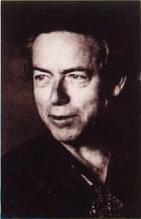 Alan Watts, a
professor, graduate school dean and research fellow of Harvard University, drew
heavily on the insights of Vedanta. Watts became well known in the 1960s as a
pioneer in bringing Eastern philosophy to the West. He wrote:
Alan Watts, a
professor, graduate school dean and research fellow of Harvard University, drew
heavily on the insights of Vedanta. Watts became well known in the 1960s as a
pioneer in bringing Eastern philosophy to the West. He wrote:
"To the philosophers of
India, however, Relativity is no new discovery, just as the concept of light
years is no matter for astonishment to people used to thinking of time in
millions of kalpas, ( A kalpa is about 4,320,000 years). The fact that the wise
men of India have not been concerned with technological applications of this
knowledge arises from the circumstance that technology is but one of innumerable
ways of applying it."
It is, indeed, a remarkable
circumstance that when Western civilization discovers Relativity it applies it
to the manufacture of atom-bombs, whereas Oriental civilization applies it to
the development of new states of consciousness."
(source: Spiritual
Practices of India - By Frederic Spiegelberg
Introduction by Alan Watts
p. 8-9).
 Dick Teresi author and coauthor of several books about
science and technology, including The
God Particle. He is cofounder of Omni
magazine and has written for Discover, The New York Times
Magazine, and The Atlantic Monthly. He says Dick Teresi author and coauthor of several books about
science and technology, including The
God Particle. He is cofounder of Omni
magazine and has written for Discover, The New York Times
Magazine, and The Atlantic Monthly. He says
"Indian cosmologists, the first to
estimate the age of the earth at more than 4 billion years. They
came closest to modern ideas of atomism, quantum
physics, and other current theories. India developed
very early, enduring atomist theories of matter. Possibly Greek
atomistic thought was influenced by India, via the Persian
civilization."
The cycle of
creation and destruction continues forever, manifested in the Hindu
deity Shiva, Lord of the Dance, who holds the drum
that sounds the universe’s creation in his right hand and the
flame that, billions of years later, will destroy the universe
in his left. Meanwhile Brahma is but one of untold numbers of
other gods dreaming their own universes.
The 8.64
billion years that mark a full day-and-night cycle in Brahma’s
life is about half the modern estimate for the age of the
universe. The ancient Hindus believed that each Brahma day and
each Brahma night lasted a kalpa, 4.32 billion years, with
72,000 kalpas equaling a Brahma century, 311,040 billion years
in all. That the Hindus could conceive of the universe in terms
of billions.
The
similarities between Indian and modern cosmology do not seem
accidental. Perhaps ideas of creation from nothing, or
alternating cycles of creation and destruction are hardwired in
the human psyche. Certainly Shiva’s
percussive drumbeat suggests the sudden energetic
impulse that could have propelled the big bang. And if, as some
theorists have proposed, the big bang is merely the prelude to
the big crunch and the universe is caught in an infinite cycle
of expansion and contraction, then ancient Indian cosmology is
clearly cutting edge compared to the one-directional vision of
the big bang. The infinite number of
Hindu universes is currently called the many world hypothesis,
which is no less undocumentable nor unthinkable.
(source: Lost
Discoveries: The Ancient Roots of Modern Science - By Dick
Teresi p.
159 and 174 -212). For more refer to chapter Advanced
Concepts).

Lord
Vishnu is said to rest in the coils of Ananta, the great serpent of Infinity,
while he waits for the universe to recreate itself.
"he falls back upon
the earliest and greatest of Revelations, those of the Sacred
Books of India with a Cosmogony which no European
conception has ever surpassed."
"While the West was still thinking,
perhaps, of 6,000 years old universe – India was already envisioning ages and
eons and galaxies as numerous as the sands of the Ganges. The Universe so vast
that modern astronomy slips into its folds without a ripple.”
Despite
the dawn of Enlightenment and advent of modern science, the
Semitic religions have still not matured enough to respect,
tolerate and understand a simple notion that “All paths
lead to the same summit (God).”
photo
courtesy: Dr. Deepak Shimkhada.
(image
source: A
Tribute to Hinduism: Thoughts and Wisdom spanning continents and
time about India and her culture - By Sushama Londhe).
***
 Count Maurice
Maeterlinck (1862-1949) was a Belgian writer of poetry, a wide
variety of essays. He won the 1911 Nobel Prize for literature. In his book Mountain
Paths, says: Count Maurice
Maeterlinck (1862-1949) was a Belgian writer of poetry, a wide
variety of essays. He won the 1911 Nobel Prize for literature. In his book Mountain
Paths, says:
"he falls back upon
the earliest and greatest of Revelations, those of the Sacred
Books of India with a Cosmogony which no European
conception has ever surpassed."
(source: Mountain
Paths - By Maurice Maeterlinck). Refer
to A
Map of Sacred Stories of the Ancient World
-
Contributed to this site by Dom Sturiale of Sydney, Australia.
Refer
to Indian
Institute of Scientific Heritage
and
Watch
Carl
Sagan and Hindu cosmology – video
Swami
Kriyananada (J. Donald Walters)
World renowned as a singer, composer, and lecturer, founder of the
Ananda Village is perhaps the most successful intentional community in
the world writes:
"Hindu
cosmography, for example born in hoary antiquity, strikes one in
certain ways as surprisingly modern. India has never limited its
conception of time to a few crowded millennia. Thousands of
years ago India's sages computed the earth's age at a little over two
billion years, our present era being what is called the seventh
Manuvantra. This is a staggering claim. Consider how much scientific
evidence has been needed in the West before men could even imagine so
enormous a time scale."
(source: Crises
in Modern Thought: The Crises of Reason - By Swami Kriyananda (J.
Donald Walters) vol. 1 p - 94).
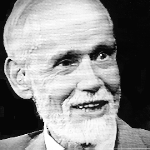 Huston Smith
( ? ) born in China to Methodist missionaries, a philosopher, most
eloquent writer, world-famous religion scholar who practices
Hatha Yoga. He has said in Hinduism: Huston Smith
( ? ) born in China to Methodist missionaries, a philosopher, most
eloquent writer, world-famous religion scholar who practices
Hatha Yoga. He has said in Hinduism:
“The invisible excludes nothing, the invisible that
excludes nothing is the infinite – the soul of India is the infinite.”
“Philosophers tell us that the Indians were the first ones
to conceive of a true infinite from which nothing is excluded. The
West shied away from this notion. The West likes form, boundaries
that distinguish and demarcate. The trouble is that boundaries also imprison –
they restrict and confine.”
“India saw this clearly and turned
her face to that which has no boundary or whatever.” “India anchored
her soul in the infinite seeing the things of the world as masks of the infinite
assumes – there can be no end to these masks, of course. If they express a
true infinity.” And It is here that India’s mind boggling variety links up
to her infinite soul.”
“India includes so much because her soul being infinite
excludes nothing.” It goes without saying that the universe that India saw
emerging from the infinite was stupendous.”
While the West was still thinking,
perhaps, of 6,000 years old universe – India was already envisioning ages and
eons and galaxies as numerous as the sands of the Ganges. The Universe so vast
that modern astronomy slips into its folds without a ripple.”
(source: The
Mystic's Journey - India
and the Infinite: The Soul of a People – By Huston Smith).
 Nancy
Wilson Ross (1901 -1986)
made her first trip to Japan, China, Korea and India in 1939. She
was the author
of several books including The World of Zen and
Time's Left Corner. Miss Ross lectured on Zen Buddhism at the Jungian
Institute in Zurich. She served on the board of the Asia Society
of New York which was founded by John D. Rockefeller III since
its founding in 1956 and was on the governing board of the India
Council. In private life she was known as Mrs. Stanley Young. Nancy
Wilson Ross (1901 -1986)
made her first trip to Japan, China, Korea and India in 1939. She
was the author
of several books including The World of Zen and
Time's Left Corner. Miss Ross lectured on Zen Buddhism at the Jungian
Institute in Zurich. She served on the board of the Asia Society
of New York which was founded by John D. Rockefeller III since
its founding in 1956 and was on the governing board of the India
Council. In private life she was known as Mrs. Stanley Young.
She
has written:
"Anachronistic as
this labyrinthine mythology may appear to the foreign mind, many
of India’s ancient theories about the universe are startlingly
modern in scope and worthy of a people who are credited with the
invention of the zero, as well as algebra and its application of
astronomy and geometry; a people who so carefully observed the
heavens that, in the opinion of Monier-Williams, they determined
the moon’s synodical revolution much more correctly than the
Greeks."
" Many hundreds of years before those
great European pioneers, Galileo and Copernicus, had to pay
heavy prices in ridicule and excommunication for their daring
theories, a section of the Vedas known as the Brahmanas
contained this astounding statement:
“The sun never sets or rises. When people think the sun is
setting, he only changes about after reaching the end of the day
and makes night below and day to what is on the other side.
Then, when people think he rises in the morning, he only shifts
himself about after reaching the end of the day night, and makes day below and night to what is on the
other side. In truth, he does not see at all.”
"The Indians, whose theory of
time, is not linear like ours
– that is, not proceeding consecutively from past to present
to future – have always been able to accept, seemingly without
anxiety, the notion of an alternately expanding and contracting
universe, an idea recently advanced by certain Western
scientists. In Hindu cosmology, immutable Brahman, at fixed
intervals, draws back into his beginningless, endless Being the
whole substance of the living world. There then takes place the
long “sleep” of Brahaman from which, in course of countless
aeons, there is an awakening, and another universe or
“dream” emerges. "
"This notion of the
sleeping and waking, or contracting and expanding, of the Life
Force, so long a part of Hindu cosmology, has recently been
expressed in relevant terms in an article written for a British
scientific journal by Professor
Fred Hoyle, Britain’s foremost
astronomer. "

Lord
Vishnu is said to rest in the coils of Ananta, the Cosmic couch, the great serpent of Infinity,
while he waits for the universe to recreate itself.
***
"Plainly, contemporary Western science’s description of an
astronomical universe of such vast magnitude that distances must
be measured in terms as abstract as light-years is not new to
Hinduism whose wise men, millennia ago, came up with the term
kalpa to signify the inconceivable duration of the period
elapsing between the beginning and end of a world system.
It is clear that Indian religious
cosmology is sharply at variance with that inherited by Western
peoples from the Semites. On the highest level, when
stripped of mythological embroidery, Hinduism’s
conceptions of space, time and multiple universes approximate in
range and abstraction the most advanced scientific thought.
(source:
Three Ways of Asian Wisdom – By Nancy
Wilson Ross p. 64 - 67 and 74 - 76). Refer
to
Sciences of the Ancient Hindus:
Unlocking Nature in the Pursuit of Salvation – By
Alok Kumar
Our Universe
is cyclic and eternal
 According to
Guy Sorman,
visiting scholar at Hoover Institution at Stanford and the leader of new
liberalism in France: According to
Guy Sorman,
visiting scholar at Hoover Institution at Stanford and the leader of new
liberalism in France:
" Temporal notions in
Europe were overturned by an India rooted in eternity. The
Bible had been the yardstick for measuring time, but the infinitely vast time
cycles of India suggested that the world was much older than anything the Bible
spoke of. It seem as if the Indian mind was better
prepared for the chronological mutations of Darwinian evolution and
astrophysics."
(source: The
Genius of India - By Guy Sorman ('Le Genie de l'Inde')
MacMillan January 2001 ISBN 0333936000 p.195).
Refer
to Visions
of the End of the World - By Dr. Subhash Kak - sulekha.com and also
Refer to A
Map of Sacred Stories of the Ancient World
-
Contributed to this site by Dom Sturiale of Sydney, Australia.
Refer
to The
World of Myth - By Ramesh N Rao - sulekha.com).
 Josh
Schrei
(?) is a
Marketing Director, Strategist, Producer, Writer, Critic, Activist. Josh
Schrei
(?) is a
Marketing Director, Strategist, Producer, Writer, Critic, Activist. 
He has written most eloquently about Hinduism's open source and staggering
contribution to the our spiritual world:
"Modern-day atheists, however, have come to assume that if one is “rational” or
“scientific” it means that one does not believe in god. Victims of the western
Church-Science split, these atheist casualties are so spooked by the atrocities
of religious power structure that they are unable to do any serious study of the
history of human thought on God."
"Any
two-bit religious scholar knows that Buddhists and Hindus count time in
Kalpas, or segments of millions of years,
and that they firmly believe the earth was created billions of years ago. There
are many prominent Hindu scholars, in fact, who posit that some of the best
loved Hindu legends from the Mahabharata and the Ramayana are in fact tales from
Neanderthal times."
"Indian
history, for example, contains a vast body of incredibly sophisticated
scientific/academic literature on god, concepts of god, consciousness at it
relates to god, the human body and human thoughts and emotions in relation to
god… and, in the case of Kashmiri Shaivism for example,
quantum
physics as it relates to god. The concept of spanda in
Kashmiri cosmology is one of the most intellectually complex and sophisticated
views on divinity ever put forth. Abhinavagupta
— the brilliant architect of much of Indian thought– penned theistic texts over
1,000 years ago that contain scientific truths that physicists are just now
confirming."
(source:
The God Project: Hinduism as Open-Source Faith - By Josh Schrei -
huffingtonpost.com
and
Christopher Hitchens is absurd - By Josh Schreiy).
Refer to
The Christian propaganda in Stephen Hawking’s
work
- By C K Raju
 Philip Goldberg ( )
is a spiritual counselor, Interfaith Minister, and author or coauthor of
numerous books, including Roadsigns on the Spiritual Path. His latest work,
American Veda: From Emerson and the Beatles to Yoga and Meditation How Indian
Spirituality Changed the West. Philip Goldberg ( )
is a spiritual counselor, Interfaith Minister, and author or coauthor of
numerous books, including Roadsigns on the Spiritual Path. His latest work,
American Veda: From Emerson and the Beatles to Yoga and Meditation How Indian
Spirituality Changed the West.
He has
observed:
"Their ancient philosophies have also influenced physicists, among them
Erwin Schrödinger,
Werner Heisenberg and
J. Robert Oppenheimer, who read from the
Bhagavad Gita
at a memorial service for
President Franklin D. Roosevelt. "
"In his landmark
TV series
Cosmos,
Carl Sagan
called Hinduism the only religion whose time-scale for the universe matches the
billions of years documented by modern science. Sagan filmed that segment in a
Hindu temple featuring a statue of the god Shiva
as the cosmic dancer, an image that now stands in the plaza of the
European
Organization for Nuclear Research in Geneva."
"Western religions would do well to emulate this history. Their historical and
faith-based claims conflict with empirical science and probably always will; but
to the extent that their practices directly impact human life, they can be
treated as testable hypotheses."
"Ages ago, the vast subcontinent of India birthed
explorers and innovators who focused on the inner realm. Those geniuses -
spiritual sages or scientists of consciousness, depending on your perspective -
gave us, through a series of modern translators and adapters, insights that have
profoundly influenced religion, healthcare, psychology, the arts and other areas
of life. The way we understand ourselves and the universe has been shaped by
India more than we can readily appreciate.
(source:
Are
Eastern Religions More Science-Friendly? - By Philip Goldberg -
huffingtonpost.com and
Obama should have thanked India -
By Philip Golberg - huffingtonpost.com).
 Jeffrey
Armstrong ( ? )
worked as a sales manager with Apple Computer for six years, is married to Sandy
Gramah, who shares his passion for all things Indian.
The couple, which has
founded an educational institute called the Vedic
Academy of Science and Arts (VASA), is now working on creating a
permanent library of Hindu and Vedic culture in Vancouver. Jeffrey
Armstrong ( ? )
worked as a sales manager with Apple Computer for six years, is married to Sandy
Gramah, who shares his passion for all things Indian.
The couple, which has
founded an educational institute called the Vedic
Academy of Science and Arts (VASA), is now working on creating a
permanent library of Hindu and Vedic culture in Vancouver.
"Indians of pre-modern history calculated the age of
the universe in trillions of years.
This is also the
culture that gave us
zero, the numerals that we
use – so-called Arabic have their roots in India – as do trigonometry and
calculus, astronomical calculation and a view that says the universe is not only
billions, but trillions of years in age and that we are eternal beings who are
simply visiting the material world to have the experience of being here.
So, the point is,
India holds a massive cosmological view of
us – and that humans have existed for trillions of years, in varying stages of
existence. And further, over time humans will continue to populate the many
universes again and again.
There is a lot of evidence that ancient Indian
civilization
was global and as I mentioned many were seafaring and using extremely accurate
astronomical, heliocentric calculations for both Earth and celestial motions,
indicating an understanding that the Sun is at the center of the solar system
and that the Earth is round. Elliptical orbits were also calculated for all
moving celestial bodies. The findings are remarkable. What India calculated
thousands of years ago, for example the wobble of the Earth's axis, which
creates the movement called precession of the equinoxes – the slowly changing
motion that completes one cycle every 25,920 years – has only recently been
validated by modern science.
The cosmology of India describes our universe as having
fourteen parallel realities on multiple levels,
all existing and intersecting within the material realm in which we are
currently living.
Was this knowledge given to them by divine beings as they claim? Was there
inter-galactic travel? Did the people in
India have contact with beings or knowledge from other planets? We don't know,
but what is certain is that they had mathematical/astronomical understanding
that is extremely precise and agrees with many of the results of astronomy
today. There is no other way to explain why India and these ancient cultures
would have such precise knowledge other than the fact that they were in a period
of impressive technology and culture beyond our present understanding."
(source:
Jeffrey Armstrong on the Mysteries of Indian Culture, the Relevance of Hindu
Vedas and the Reality of Ancient Flying Machines - thedailybell.com).
Refer to
The Christian propaganda in Stephen Hawking’s
work
- By
C K Raju
 Alexander
Gorbovsky (1930
- 2003) an expert at the
Russian
Munitions Agency
has written: Alexander
Gorbovsky (1930
- 2003) an expert at the
Russian
Munitions Agency
has written:
“The
Mahabharata - an ancient Indian epic compiled 3000
years ago - contains a reference to a terrible weapon. Regrettably, in our age
of the atomic bomb, the description of this weapon exploding will not appear to
be an exaggeration:
".... a blazing shaft possessed of the effulgence
of a smokeless fire (was) let off...'. That was how this weapon was perceived.
The consequences of its use also evoke involuntary associations. '... This makes
the bodies of the dead unidentifiable. ... The survivors lose their nails and
hair, and their food becomes unfit for eating. For several subsequent years
the
Sun, the stars and the sky remain shrouded with clouds and bad weather'.
"This
weapon was known as the Weapon of Brahma or the Flame of Indra......".
(source:
Riddles of Ancient History -
Alexander
Gorbovsky, The Sputnik Magazine, Moscow, Sept. 1986, p. 137).
***
Vedic India
and the Primordial Tradition
Vishnunabhi
is the navel of Lord Vishnu, the emanation point of the cosmos.
According to John Major Jenkins,
a leading independent researcher of ancient cosmology:
 "Our
understanding of the true age of the ancient Vedic civilization
has undergone a well-documented revolution. Feuerstein,
Frawley, and Kak have shown conclusively (In
Search of the Cradle of Civilization) that the
long-accepted age of the Vedic culture—erroneously dated by
scholars parading a series of assumptions and unscientific
arguments to roughly 1500 BC—is much too recent. Evidence comes
from geological, archaeological, and literary sources as well as
the astronomical references within Vedic literature. The corrected
dating to eras far prior to 1500 BC was made possible by
recognizing that precessional eras are encoded in Vedic mythology,
and were recorded by ancient Vedic astronomers. As a result, the Indus Valley
civilization appears to be a possible cradle of civilization,
dated conservatively to 7000
BC. Western India may thus be a true
source of the civilizing impulse that fed Anatolia in Turkey, with
its complex Goddess-worshipping city-states of Çatal Hüyük and
Hacilar. However, there are layers upon layers of even
older astronomical references, and legends persist that the true
“cradle” might be found further to the north, in Tibet or
nearby Central Asia. "Our
understanding of the true age of the ancient Vedic civilization
has undergone a well-documented revolution. Feuerstein,
Frawley, and Kak have shown conclusively (In
Search of the Cradle of Civilization) that the
long-accepted age of the Vedic culture—erroneously dated by
scholars parading a series of assumptions and unscientific
arguments to roughly 1500 BC—is much too recent. Evidence comes
from geological, archaeological, and literary sources as well as
the astronomical references within Vedic literature. The corrected
dating to eras far prior to 1500 BC was made possible by
recognizing that precessional eras are encoded in Vedic mythology,
and were recorded by ancient Vedic astronomers. As a result, the Indus Valley
civilization appears to be a possible cradle of civilization,
dated conservatively to 7000
BC. Western India may thus be a true
source of the civilizing impulse that fed Anatolia in Turkey, with
its complex Goddess-worshipping city-states of Çatal Hüyük and
Hacilar. However, there are layers upon layers of even
older astronomical references, and legends persist that the true
“cradle” might be found further to the north, in Tibet or
nearby Central Asia.
The work of these three writers shows that biases and
assumptions within scholarly discourse can prevent an accurate
modeling of history and an underestimation of the accomplishments
of ancient cultures. The analogous situation in modern Egyptology
and Mesoamerican studies also requires that well-documented new
theories — often exhaustively argued, interdisciplinary, and
oriented toward a progressive synthesis of new data — should be
appraised fairly and without bias.
Next to the Australian aborigines,
the Vedic civilization
is perhaps the oldest continuous living tradition in the world.
Its extremely ancient doctrines and insights into human
spirituality are unsurpassed. We might expect that its cosmology
and science of time has been as misunderstood as its true antiquity. In
looking closely at Vedic doctrines of time, spiritual growth,
calendars, and astronomy, we will see that a central core idea is
that of our periodic alignment to the Galactic Center. And,
according to these ancient Vedic beliefs,
the galactic alignment we are currently experiencing
heralds our shift from a millennia-long descent of deepening
spiritual darkness to a new era of light and ascending
consciousness. "
Lord Vishnu
is the infinite ocean from which the world emerges - Lord is shown
lying down on a thousand-headed snake (named Shesha or Ananta Nag
- Timeless or Ageless snake).
According to ancient Vedic beliefs,
the galactic alignment we are currently experiencing
heralds our shift from a millennia-long descent of deepening
spiritual darkness to a new era of light and ascending
consciousness. "
Refer
to Indian
Institute of Scientific Heritage
and Watch
Carl
Sagan and Hindu cosmology – video
***
Vishnunabhi:
Yugas and Galactic Center
 One of the oldest writings in Vedic literature comes from a
pseudo-historical god-man called Manu. René
Guénon pointed out that Manu belongs to a family of
related archetypal figures, which include Melchezidek, Metatron,
St Michael, Gabriel, and Enoch. As an angelic inspiration for the
rebirth of humanity at the dawn of a new era, or Manvantara, Manu
is the primal law-giver, and his laws were recorded in the
extremely ancient Vedic text called the Laws of Manu.
Much of its contents describe moral and ethical codes of right
behavior, but there is a section that deals with the ancient Vedic
doctrine of World Ages - the Yugas. Manu indicates that
a period of 24,000 years — clearly a reference to precession —
consists of a series of four yugas or ages, each shorter and
spiritually darker than the last.
In one story this process of increasing limitation is
envisioned as a cosmic cow standing with each leg in one quarter
of the world; with each age that passes a leg is lost, resulting
in the absurd and unstable world we live in today—a cow
balancing on one leg. One of the oldest writings in Vedic literature comes from a
pseudo-historical god-man called Manu. René
Guénon pointed out that Manu belongs to a family of
related archetypal figures, which include Melchezidek, Metatron,
St Michael, Gabriel, and Enoch. As an angelic inspiration for the
rebirth of humanity at the dawn of a new era, or Manvantara, Manu
is the primal law-giver, and his laws were recorded in the
extremely ancient Vedic text called the Laws of Manu.
Much of its contents describe moral and ethical codes of right
behavior, but there is a section that deals with the ancient Vedic
doctrine of World Ages - the Yugas. Manu indicates that
a period of 24,000 years — clearly a reference to precession —
consists of a series of four yugas or ages, each shorter and
spiritually darker than the last.
In one story this process of increasing limitation is
envisioned as a cosmic cow standing with each leg in one quarter
of the world; with each age that passes a leg is lost, resulting
in the absurd and unstable world we live in today—a cow
balancing on one leg.
According to the information in the Laws of Manu, the
morning and twilight periods between the dawn of each new era
equals one-tenth of its associated yuga, as shown in the following
table:
Dawn
Era Dusk
Total Name
400 + 4000 + 400 = 4800 years. Satya Yuga (Golden Age)
300 + 3000 + 300 = 3600 years. Treta Yuga (Silver Age)
200 + 2000 + 200 = 2400 years. Dwapara Yuga (Bronze Age)
100 + 1000 + 100 = 1200 years. Kali Yuga (Iron Age)
12,000 years
In
Vedic mythology, a fabled dawn time existed in the distant past,
when human beings had direct contact with the divine intelligence
emanating from Brahma—the seat of creative power and
intelligence in the cosmos. This archaic Golden Age (the Satya
Yuga) lasted some 4800 years. After the Golden Age ended, humanity
entered a denser era, that of the Silver Age, lasting only 3600
years. In this age, humanity’s connection with the source was
dimmed, and sacrifices and spiritual practices became necessary to
preserve it. The
Bronze Age followed, and humanity forgot its divine nature. Empty
dogmas arose, along with indulgence in materialism. Next we
entered the Kali Yuga—in
which we remain today—where the human spirit suffers under gross
materialism, ignorance, warfare, stupidity, arrogance, and
everything contrary to our divine spiritual potential.
As
the teachings tell, Kali, the creator-destroyer Goddess, will
appear at the end of Kali Yuga to sweep away the wasted detritus
of a spirit-dead humanity, making way for a new cycle of light and
peace. Notice that the Manu text takes us from a pinnacle of light
to the ultimate end-point of the process—the darkness of Kali
Yuga. And notice that the four ages, when the overlap period is
added, amounts to only half of the 24,000-year period of the Vedic
Yuga cycle.
(source:
Galactic Alignment - By
John Major Jenkins).
The
Indian astronomers went even further, giving a physical reason for
how the dual star or binary motion might allow the rise and fall
of human consciousness to occur. They said that the Sun (with the
Earth and other planets) traveled along its set orbital path with
its companion start, it would cyclically move close to, then away
from, a point in space referred to as Vishnunabhi,
a supposed magnetic center or "grand center".
***
The
Indian astronomers went even further, giving a physical reason for
how the dual star or binary motion might allow the rise and fall
of human consciousness to occur.
They said that the Sun
(with the Earth and other planets) traveled along its set orbital
path with its companion start, it would cyclically move close to,
then away from, a point in space referred to as Vishnunabhi,
a supposed magnetic center or "grand center". They
implied that being close to this region caused subtle changes in
human consciousness that brought about the Golden Age, and
conversely, our separation from it resulted in an age of great
darkness, the Kali Yuga or Dark Age. "When the Sun in its
revolution around its dual comes to the place nearest to this
grand center, ... (an event which takes place when the autumnal
equinox comes to the first point of Aries), dharma, the mental
virtue, becomes so much developed that man can easily comprehend
all, even the mysteries of the Spirit."
(source:
Lost
Star of Myth and Time - By Walter Cruttenden). Also
refer to Hamlet's
Mill - By Giorgio de Santillana and Hertha von Dechend.
(For
more refer to chapter on Greater
India: Suvarnabhumi and
Sacred Angkor).
Page < 1 2 3 >
|